
Thermo Fisher Scientific Announces Collaboration to Advance Disease Biomarker Validation
Thermo Fisher and Newomics to optimize performance of high-throughput analytical workflows
4 Jun 2019
Thermo Fisher Scientific, the world leader in serving science, and Newomics, a leading supplier of microfluidic emitters for liquid chromatography-mass spectrometry (LC-MS) applications, will combine their expertise and innovative technologies to develop and optimize sensitive, robust and reproducible microflow LC-MS workflows for the validation of disease biomarkers.
Unlike nanoflow chromatography, which slows the speed of analysis and can be difficult to maintain consistent performance during extended studies, microflow LC-MS provides a balance of speed, sensitivity and throughput for biomarker discovery and validation in translational proteomics laboratories. The collaboration brings together Thermo Scientific microflow LC-MS systems and Thermo Scientific Nanospray Flex ion source with Newomics’ multi-nozzle emitters to achieve the benefit of nanospray flowrates, with the improved throughput and robustness of microflow LC-MS.
"Translating cutting-edge biomarker discoveries into clinically-meaningful applications requires validation workflows that allow rapid, sensitive, high-throughput analysis to run large numbers of samples," said Emily Chen, senior director, Precision Medicine Science Center, Thermo Fisher Scientific. "The goal of our collaboration with Newomics is to enable greater sensitivity and reproducibility using microflow LC-MS analyses to support the expanding need for high throughput analyses by our clinical research customers."
Daojing Wang, founder and chief executive officer, Newomics, said, "Combining our unique emitters with Thermo Fisher’s microflow LC-MS expertise will improve the selectivity and sensitivity of workflows, helping scientists to detect even low-abundance analytes in clinically relevant samples, like blood and urine. We look forward to working closely with Thermo Fisher to develop and optimize microflow LC-MS solutions that we hope will advance our understanding and diagnosis of complex diseases."
Do you use Thermo Fisher products in your lab? Write a review today for your chance to win a $400 Amazon gift card>>
Related products
Request Quote for All Products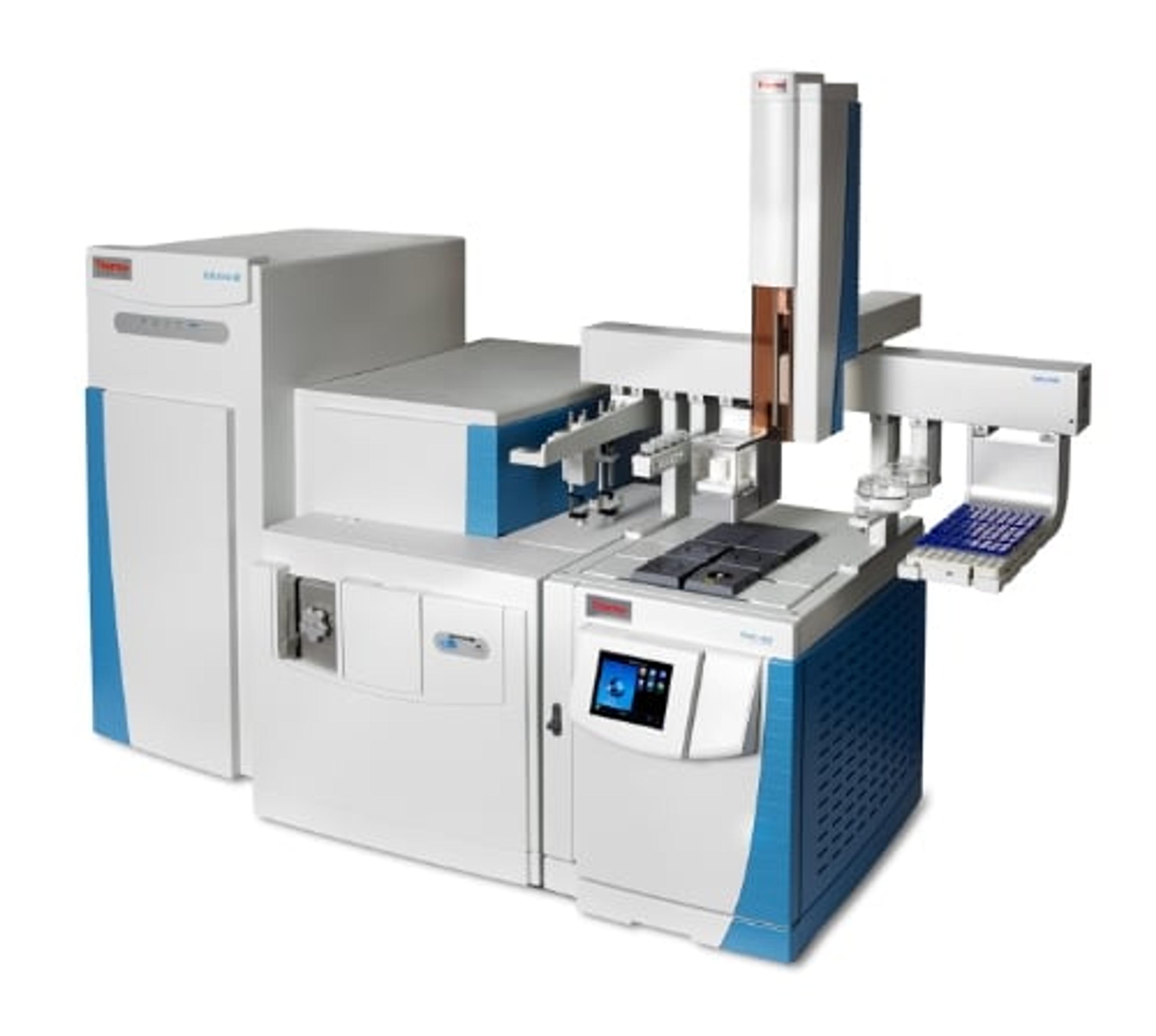
Thermo Scientific™ Q Exactive™ GC Orbitrap™ GC-MS/MS System
Thermo Fisher ScientificThe Thermo Scientific™ Q Exactive™ GC system is the first-ever combination of high resolution gas chromatography with high-resolution/accurate-mass (HR/AM) Orbitrap detection for the most comprehensive sample characterization. This easy-to-use system provides the most comprehensive characterization of samples in a single analysis for the highest confidence in compound discovery, identification, and quantitation. Building upon the flexible modularity of the Thermo Scientific™ TRACE™ 1300 Series GC, including user-exchangeable injectors and detectors, the Q Exactive GC system has the quantitative power of a GC triple quadrupole MS combined with the high precision, full scan high-resolution/accurate-mass capability that only Orbitrap technology can offer. Key Features: Advanced quadrupole technology (AQT) for high transmission of selected masses Resolving power up to 120,000 at m/z 200 Part-per-trillion-level sensitivity Thermo Scientific™ Extractabrite™ ion source for robust, rugged electron impact (EI) and chemical ionization (CI) performance Curved linear C-trap for precise ion injection HCD collision cell for higher energy collisional dissociation provides MS/MS ion characterization Intelligent identification software elucidates the nature of each injected sample. Applications: Untargeted and targeted metabolomics Food and beverage Industrial analyses Environmental Pharmaceutical Clinical and toxicology
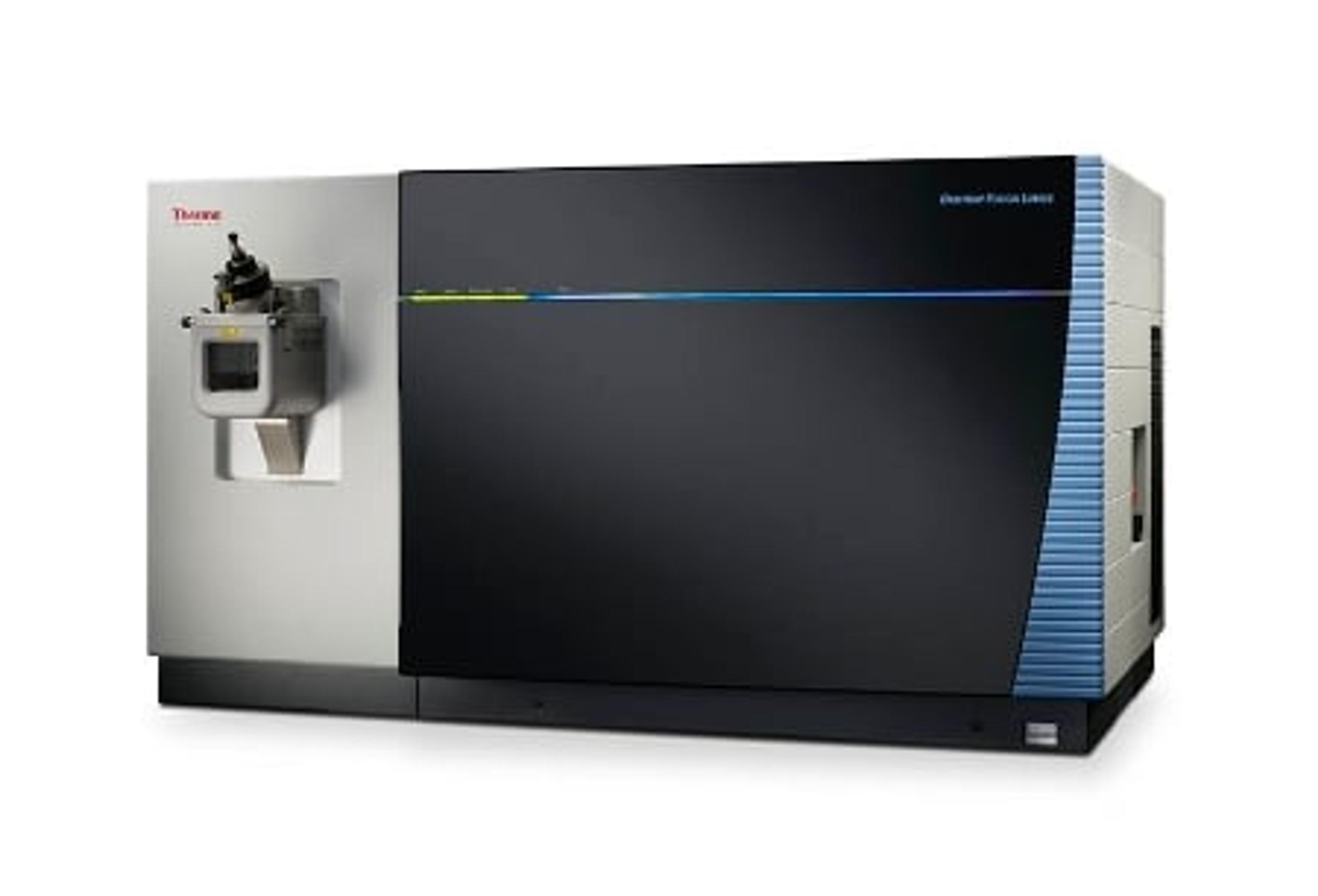
Thermo Scientific™ Orbitrap Fusion™ Lumos™ Tribrid™ Mass Spectrometer
Thermo Fisher ScientificTest new limits of detection, characterization and quantitation with the latest Tribrid™ mass spectrometer. The Thermo Scientific™ Orbitrap Fusion™ Lumos™ Tribrid™ Mass Spectrometer is designed to expand performance in advanced proteomics, biopharma and metabolomics applications, including quantitation using isobaric tags, low level PTM analysis, data independent acquisition (DIA), and top down proteomics. The new instrument features enhanced sensitivity resulting in improved analyte detection, characterization and quantitation, enabling scientists to perform more comprehensive sample analyses faster and with better accuracy than ever before. Novel Orbitrap Fusion Lumos MS Features: Novel high-sensitivity API interface combines a High Capacity Transfer Tube and an Electrodynamic Ion Funnel for increased ion flux and lower limits of detection Advanced Active Beam Guide prevents neutrals and high velocity clusters from entering the resolving quadrupole Advanced Quadrupole Technology combines high selectivity and efficiency of transfer for selected ions symmetrically across the isolation window Advanced Vacuum Technology improves transmission of high molecular weight ions to the Orbitrap analyzer Novel ETD HD—high dynamic range ETD provides significantly increased fragment ion coverage Established Tribrid MS Features: Tribrid architecture — includes quadrupole mass filter, linear ion trap and Orbitrap mass analyzers Ultrahigh resolving power up to 500,000 FWHM, with isotopic fidelity up to 240,000 FWHM at m/z 200 Acquisition rates of up to 20 Hz for both Orbitrap and linear ion trap MSn analyses Full parallelization of MS and MSn analyses with intelligent ADAPT™ (All Dynamically Available Parallelizable Time) technology Synchronous Precursor Selection (SPS) for MS and MSn experiments significantly increases the number of peptides and proteins identified and improves quantitative accuracy when using isobaric mass tags Flexibility of fragmentation — CID, HCD and optional ETD and EThcD available at any stage of MSn with detection in either the Orbitrap or linear ion trap detector enables detailed structure determination of metabolites, glycans and other small molecules Universal Method provides maximal peptide identifications without method optimization for samples of unknown concentration, reducing sample and instrument time requirements for routine peptide identifi cation experiments Intuitive and flexible drag-and-drop user interface simplifies method development and enables unique and complex workflows