
The Latest Innovations in Laboratory Instrumentation: Pittcon 2018 Highlights

Celebration, communication and innovation - plus a time-travelling car - make it a forward-looking show to remember in Florida

15 Mar 2018

Finn Price
Administrator / Office Personnel

Editorial article

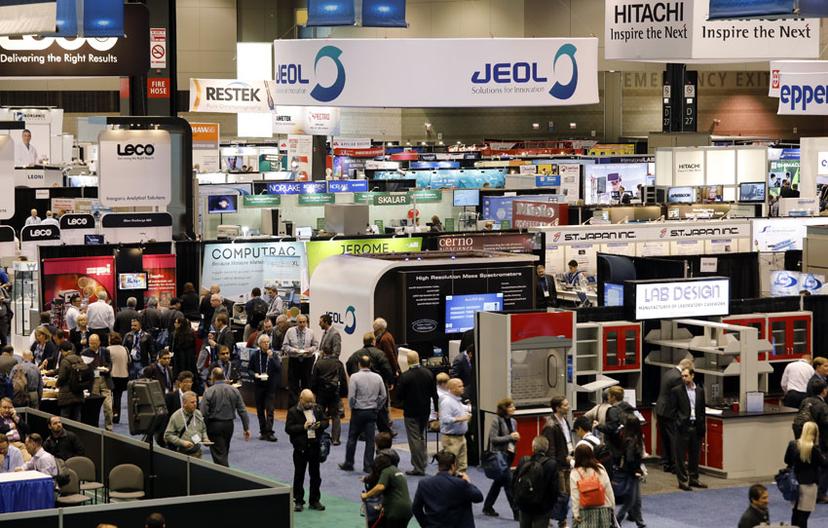
Academics, industry leaders and lab scientists from over 90 countries worldwide attended Pittcon Conference & Expo 2018. With exhibitors showcasing the latest innovations in analytical and lab instrumentation, from sample containers to chromatography systems, the conference hall was packed with colorful booths and the buzz of conversation. Read on to discover some of our highlights from the three-day event in Orlando, USA.   Pittcon 2018 show floor. Image courtesy of Pittcon 2018

Analytical Science in Precision Medicine: Facing the Challenges of the 21st Century Healthcare

Prof. Jeremy Nicholson. Image courtesy of Pittcon 2018

SelectScience attended the Wallace H. Coulter Lecture given by Professor Jeremy Nicholson, Head of the Department of Surgery and Cancer and Director of the UK National Phenome Centre Faculty of Medicine.

Prof. Nicholson’s lecture addressed many emergent medical threats and healthcare challenges that we face in the 21st Century and how analytical chemistry will become increasingly important in delivering healthcare solutions. He discussed how precision medicine may offer more efficient and effective healthcare solutions, and in an effort to achieve that objective, how individual patient descriptions will be required at the level of the genome, proteome, metabolome, or a combination of these, aided by state-of-the-art technologies. High-resolution analytical technologies and sophisticated computational modeling will be able to create both new diagnostics and prognostics of disease ultimately leading to disease prevention in the future.

A showcase for innovation

Bruker highlighted its new solution for fast analysis of edible oils by microESR. This instrument measures the oxidation profile of edible oils and provides a prediction of shelf life before the product is packaged and distributed, enabling scientists to make informed process control decisions to reduce rancidity of edible oils.

Fluid Imaging Technologies, Inc. presented the new Nano-Flow Imaging Particle Analyzer. This new instrument, for the first time ever, provides digital images of particles ranging in size from 300nm to 30µm using oil immersion technology for enhanced optical resolution.

Elementar introduced a new modular elemental analysis platform – the acquray® Series. This system enables total organic carbon analysis with the option to add nitrogen and phosphorus analysis and a combustion furnace as necessary, allowing labs to invest in only what they need at the time without inhibiting growth.

Thermo Fisher Scientific unveiled an expanded portfolio of analytical instruments, consumables, software and services to make technology more available to scientists worldwide, enabling faster, more informed decisions based on advanced scientific data. Among their new releases were the Thermo Scientific Dionex ICS-600 HPIC system, Thermo Scientific iCAP TQs ICP-MS and the Thermo Scientific Chromeleon XTR Laboratory Management System.

We were also excited to see the launch of the new ACQUITY Arc BioSystem by Waters Corporation. This system is a versatile, iron-free, bio-inert, quaternary liquid chromatograph specifically engineered to enable the efficient transfer and improvement of bioseparation analytical methods regardless of the LC platform on which the original method was developed.

Celebrating success

SelectScience hosted a Scientists’ Choice Awards party to announce the winners of the General lab/Separations/Spectroscopy categories of the annual awards, and to mark our 20th anniversary as a dynamic, independent online publisher. Among the awards presented at the party were:

All other winners and runners-up can be viewed on the Scientists’ Choice Awards website.

The first annual Pittcon Today Excellence Awards
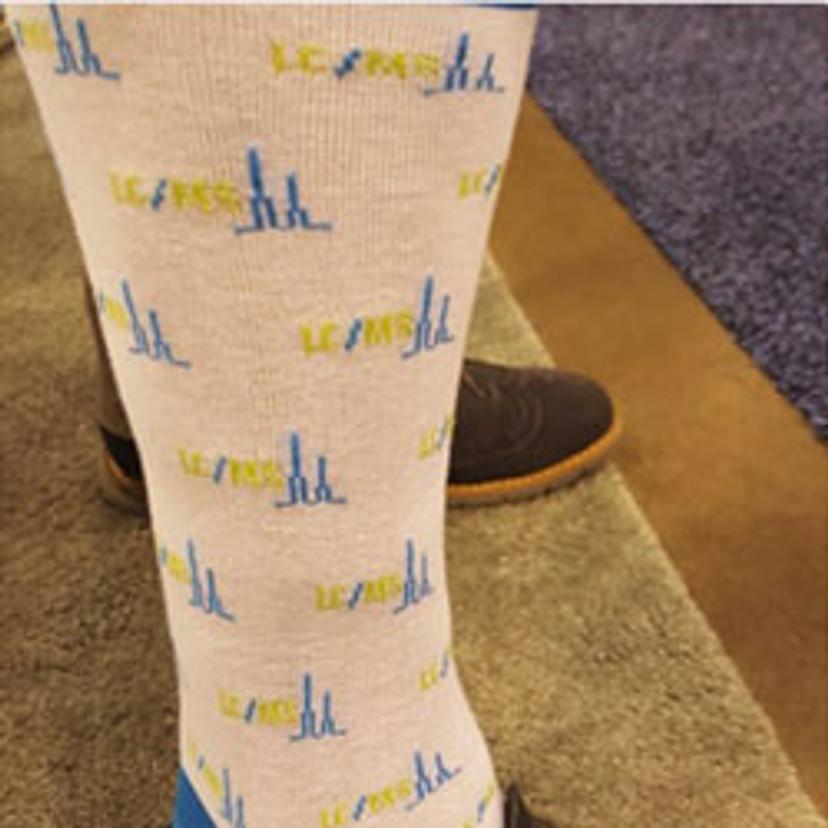
Sartorial excellence: Waters’ LC-MS socks were a hit – the latest example in the emerging trend of stylish conference socks

This year, the Pittcon Editors' Awards were revived in the form of the Pittcon Today Excellence Awards in order to give recognition to exhibitors for product innovations. Finalists were selected from a diverse pool of submissions by a panel of judges, consisting of thought leaders from across academia, industry and trade media.

Gold, Silver and Bronze were awarded in three categories based on reported sales. Congratulations to the 2018 winners, which included:

A revolutionary new video platform for scientists

The Scientists’ Channel, a new website that puts scientists and their work first, was unveiled to an excited Pittcon audience. The platform connects scientists worldwide through video and enables scientists to present their work, share innovations and expertise, and publicize their organization.

Arif Butt, CEO of The Scientists’ Channel, says: “The Scientists’ Channel is the very essence of scientists communicating innovation. We are proud to be collaborating with many fantastic scientists who are sharing their knowledge through video and I look forward to welcoming many more onto the platform in the near future.”

The future of science

This year at the SelectScience booth, attention was drawn to our Future of Science special feature and our 20th anniversary as an online publisher. To bring together the company’s history as a pioneer of innovation and the science industry’s exciting future, we brought the DeLorean time machine from Back to the Future onto the booth.

Pittcon attendees were invited to take photos with the time machine and share their predictions for the “future of science”, looking ahead to the year 2040. From instrument miniaturization, to increased automation, to greener fuel solutions - visit our Future of Science special feature to find out what leading scientists worldwide have to say about the next 20 years of science and how it will affect our lives.

Links

Tags

Gas ChromatographyGas chromatography (GC) is an analytical technique used to separate and quantitate mixtures of small and volatile compounds. Gas chromatographs or GC systems include components such as GC columns, detectors, pumps and autosamplers. Choose from packed or capillary GC columns, flame ionization (FID), photoionization (PID) electron capture detectors and selective or non-selective detectors. Find the best gas chromatographs in our peer-reviewed product directory: compare products, check customer reviews and receive pricing direct from manufacturers.UHPLC and HPLCHigh performance liquid chromatography (HPLC) and ultra high performance liquid chromatography (UHPLC), also known as UPLC, are analytical techniques used to separate, identify and quantitate components of complex mixtures including biological samples such as proteins and lipids as well as chemical mixtures of pesticides, drugs and oils. Both techniques are liquid chromatographic methods but differ by operating pressures (HPLC < 6000 psi < UHPLC ). Components of HPLC and UHPLC systems include columns, detectors, pumps, autosamplers and column heaters. Explore a range of UHPLC and HPLC columns for your specific sample needs including reverse phase, normal phase, ion exchange, HILIC, ion exclusion and size exclusion columns. For more specialized HPLC, explore FPLC, countercurrent LC and simulated moving bed systems. Find the best UHPLC and HPLC equipment in our peer reviewed product directory: compare products, check customer reviews and receive pricing direct from manufacturers.Sample PreparationSample preparation can improve the quality and speed of separation techniques. Products to assist sample preparation include filtration equipment, evaporators, membranes and sieves.Infrared / IR SpectroscopyInfrared (IR) spectroscopy measures the interaction of infrared light with a sample, including transmission, reflectance & absorbance, facilitating the identification of analytes. Equipment used for quantitative analysis includes Fourier-transform infrared (FTIR) spectrometers, infrared cameras, FTIR gas analyzers, as well as attenuated total reflectance (ATR) accessories and pellet or film presses. Find the best IR spectroscopy products in our peer-reviewed product directory: compare products, check customer reviews and receive pricing direct from manufacturers.LC-MSLC-MS (liquid chromatography-mass spectrometry) systems and equipment are used for separation and quantitative analysis of complex mixtures, combining liquid chromatography and mass spectrometry. Quantify proteins, contaminants, pesticides or screen for drug metabolites with a high level of sensitivity. LC-MS systems and equipment include reverse phase, normal phase and specialized columns integrated with various MS detectors such as time-of-flight (TOF), quadrupole, orbitrap or ion trap mass analyzers. LC-MS/MS instruments equipped with a qTOF or triple quadrupole analyzer give greater sensitivity and resolving power to your analysis. Find the best LC-MS equipment in our peer-reviewed product directory: compare products, check customer reviews and receive pricing direct from manufacturers.Mass SpectrometryMass spectrometry (MS) is a powerful analytical technique used to identify and quantify molecules based on the mass-to-charge ratio of gas-phase ions. It provides detailed information about the structure, composition, and properties of compounds and is widely used across fields such as environmental monitoring, materials science, drug discovery and development, food and beverage testing, and wider chemical research. Key MS techniques include tandem mass spectrometry (MS/MS), liquid chromatography–mass spectrometry (LS-MS) and inductively coupled plasma (ICP-MS). Choosing from these wide range of techniques and technologies can be a daunting task, so keep up to date with scientific applications, performance expectations, and customer reviews here all in one place. Visit our product directory to receive quotes direct from the manufacturer. NMR and EPR SpectroscopyNuclear magnetic resonance (NMR) spectroscopy is used to resolve the local chemical environment of atomic nuclei with spin, revealing information on molecular structure, dynamic processes and chemical reactions of organic molecules, from proteins to synthetics. Electron paramagnetic resonance (EPR) also known as electron spin resonance (ESR) spectroscopy is used to detect and quantify paramagnetic species in a sample, including free radicals as transition metal ions. By immersing the sample in a strong magnetic field, both NMR and EPR spectrometers probe the sample with either radio waves or microwaves respectively. A range of benchtop, solid-state and time domain NMR spectrometers & EPR spectrometers are available, as well as NMR tubes, NMR solvents, software, coils, and magnets. Find the best NMR & EPR equipment in our peer-reviewed product directory: compare products, check customer reviews and receive pricing direct from manufacturers.Raman SpectroscopyRaman spectroscopy is used to discern the vibrational and rotational states of molecules and hence the chemical composition of a sample by measuring the inelastic scattering of monochromatic light. Explore a range of Raman spectrometers, including handheld/portable Raman spectrometers for QC/QA labs and in situ spectrometers for processes. Conduct Raman imaging for microanalysis of mixed samples using a Raman microscope. Raman spectrographs are also available. Find the best Raman spectroscopy products in our peer-reviewed product directory: compare products, check customer reviews and receive pricing direct from manufacturers.UV-Visible SpectroscopyUltraviolet-visible (UV-Vis) spectrophotometers are used to measure the interaction of UV and visible light with a sample, including transmission, reflectance & absorbance. The two major instrument classes are single-beam or double-beam spectrophotometers. More specialized equipment includes colorimeters, spectroradiometers and refractometers. Portable and microvolume spectrophotometers are also available. For the modular spectroscopy lab, explore a range of light sources for combination with a spectrograph/spectrometer and optics. Find the best UV-Vis spectroscopy products in our peer-reviewed product directory: compare products, check customer reviews and receive pricing direct from manufacturers.Balances and Moisture AnalyzersBalances & Moisture Analyzers / weighing scales measure static or dynamic loads. Features to consider when choosing an analytical balance include accuracy, capacity and resolution. Additional features and specialized balances include enclosures for weighing powder, microbalances for measuring small quantities, portable balances, moisture analyzers, top loading balances and internal calibration for measurements over time or with varied temperature.FiltrationFiltration and microfiltration are used to separate solids, particulates or large molecules from fluids (liquid or gases) in order to purify the filtrate. Explore a range of filter formats, including filter paper, plates and membranes for your separation needs. While larger particulates may be separated by gravity filtration, smaller particulates may require additional force for timely separation. Microfiltration equipment includes vacuum filters, as well as positive pressure, crossflow and centrifugal filtration devices. Find the best filtration products in our peer-reviewed product directory: compare products, check customer reviews and receive pricing direct from manufacturers.IncubatorsLaboratory incubators are used to provide a stable environment to cultivate and store samples in, giving you optimal control of temperature, humidity, oxygen and CO<sub>2</sub> levels. Incubators are necessary equipment for cell culture and microbial research. Control temperature with heated or refrigerated incubators, or the levels of CO<sub>2</sub> and oxygen with CO<sub>2</sub> incubators. Using environmental chambers, create a humid climate for testing samples. Find the best incubators in our peer-reviewed product directory: compare products, check customer reviews and receive pricing direct from manufacturers.pH Meters and ElectrodesIon and pH meters are electrochemical equipment used to measure the pH (acidity or alkalinity) or specific ion concentration of a solution. Other meters can also measure the conductivity or dissolved oxygen content of a solution. pH meters, specific ion meters, conductivity meters and dissolved oxygen meters can come as benchtop or portable equipment. A meter’s electrodes can be replaced with easy to clean electrodes or electrodes for difficult media. pH, ion and conductivity meters are typically used in life science research, pharmaceutical testing, food and beverage, environmental and water analysis. Find the best pH meters and electrodes in our peer-reviewed product directory: compare products, check customer reviews and receive pricing direct from manufacturers.Pipettes and DispensersPipettes and dispensers are essential lab equipment used to dispense measured volumes of liquid accurately. Explore a range of manual and electronic pipettes, including single and multichannel, serological and volumetric pipettes, as well as a range of pipette tips. Bottle-top dispensers are also available for simple and fast solvent dispensing. Find the best pipettes & dispensers in our peer-reviewed product directory: compare products, check customer reviews and receive pricing direct from manufacturers.Shakers, Stirrers and MixersShakers, stirrers and mixers are used for mixing liquids and solids for laboratory applications. There is a wide range of laboratory mixing equipment available, including magnetic stirrers, orbital shakers, linear shakers, microplate shakers, 3D gyratory rockers, rotators & vortexers. Additional platforms and clamps can also be attached to shakers to increase capacity. Find the best shakers, stirrers and mixers in our peer-reviewed product directory: compare products, check customer reviews and receive pricing direct from manufacturers.