The importance of saliva: A simple sample type for COVID-19 diagnostics

Hear from a microbiology expert at Yale School of Public Health about a simplified PCR test for COVID-19

26 May 2021


Charlie Carter
Life Sciences Editor

Editorial article

Dr. Anne Wyllie, associate research scientist at the Yale School of Public Health

The School of Public Health at Yale University is one of the oldest nationally accredited schools of public health in the US. It aims to serve local, national, and international communities with interdisciplinary knowledge, expertise, and leadership to protect and improve the health of the public.

In this exclusive interview, we speak with Dr. Anne Wyllie, associate research scientist at the Yale School of Public Health (YSPH). With a background in medical microbiology, Wylie is currently working with saliva as a sample type for the detection of upper respiratory tract pathogens, including SARS-CoV-2. Here, Wylie shares her current work at the YSPH, the invaluable pipetting technology she uses, and the importance of saliva as a sample type1.

What are your overall research goals and intended impacts of your work?

AW: My research aims to better understand how bacteria and viruses move between healthy individuals in the community and how this relates to disease. This improved understanding of potential pathogens can better inform preventative measures and/or vaccination strategies.

Can you tell us about your work developing a saliva test for COVID-19?

AW: We simplified the standard PCR test by removing the cumbersome and resource-intensive RNA extraction step and replaced it with a simplified workflow2. While experiencing many issues with nasopharyngeal swabs early in the pandemic, I wondered whether saliva could overcome these. I proposed this to the team and they agreed that it could be evaluated3.

We collected a number of paired samples, then compared them for SARS-CoV-2 detection and saliva indeed seemed promising. I had also seen an early paper testing nasopharyngeal swabs directly into PCR and wondered if we could do the same with saliva. So, when setting up a PCR I decided to try putting some raw saliva into a few reactions. Results were mixed but certainly some were promising so, based on my previous experience of working with saliva, we optimized the approach further until we had a workflow that had comparable sensitivity to the full RNA extraction-based approach.

We were terrified of what false negatives could mean. This was being developed in April/May last year when we didn't really know what Ct values of 37-40 meant in terms of infectiousness, so we just worked to make sure that this method was as comparable as possible to the full RNA-extraction procedure.

How do you use HandyStep touch repeating pipettes in your work?

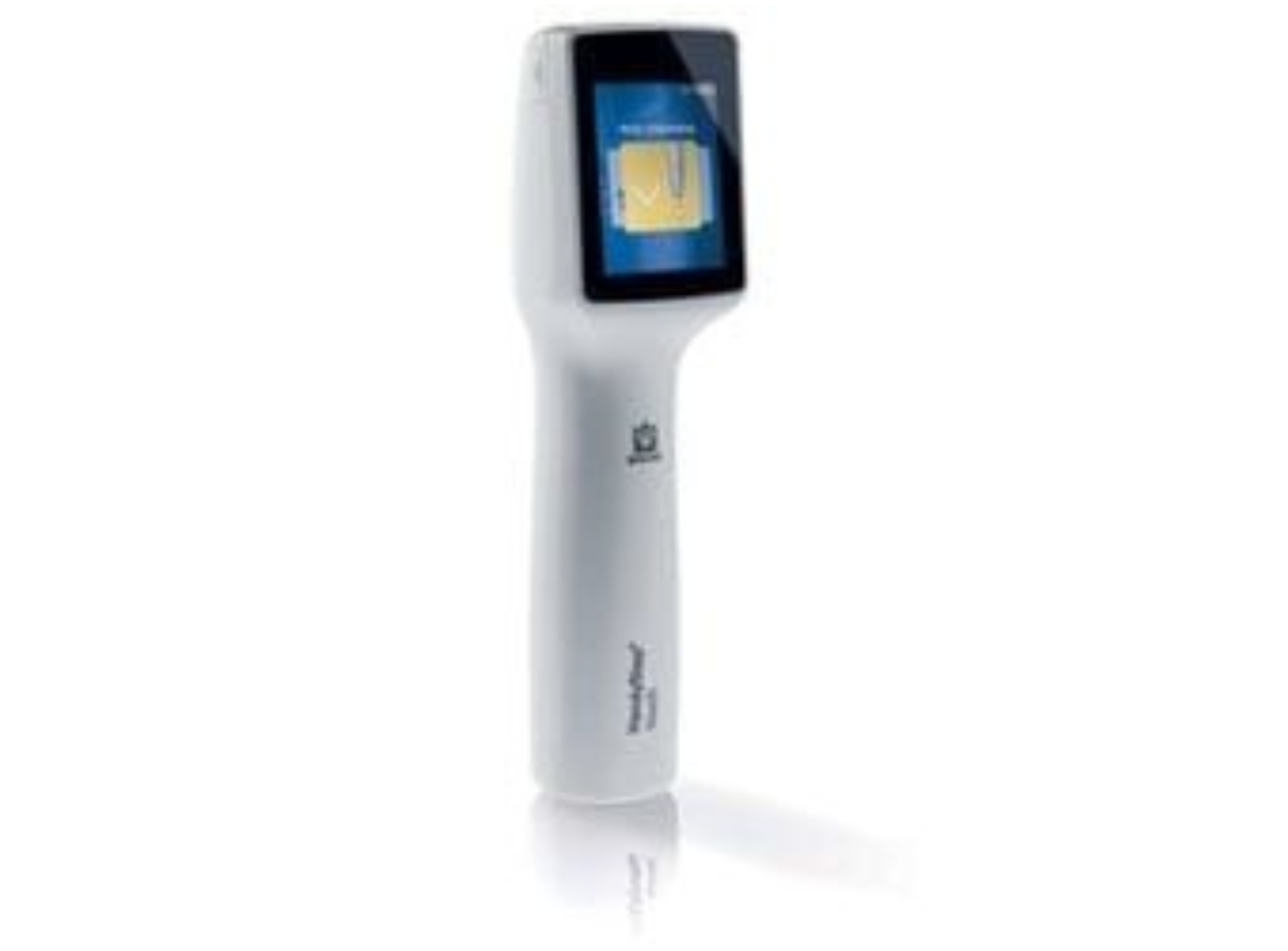
AW: The HandyStep touch repeating pipettes from BrandTech Scientific have been critical to our RNA extractions for SARS-CoV-2 testing, enabling us to achieve faster, more accurate pipetting. We were already using one of these pipettes for DNA extractions in my usual pneumococcal work and I was hesitant at first about whether we actually needed another expense - being mindful of our limited budgets. However, the additional cost is definitely outweighed by the time it saves. Plus, these pipettes also ensure a greater level of accuracy, especially with harder-to-pipette reagents, for example, viscous binding buffers.

What do you see for the future of your work?

AW: Funding is a constant challenge, particularly finding the time to research and write grants that have a limited chance of success. It's hard to balance the time away from research and work that desperately needs to be done, with placing efforts needed for grant writing. I've seen many incredible researchers effectively lost to science due to the constant grant writing that is required to support their lab and projects.

More affordable alternatives can make our funding go further - we can collect a greater number of samples making our research more valuable. As a result, I think we will see the continued validation and optimization of saliva as a sample type for clinical diagnostics. It is an easy and affordable sample to collect, which can have a major impact on research studies that can be very expensive to implement and carry out.

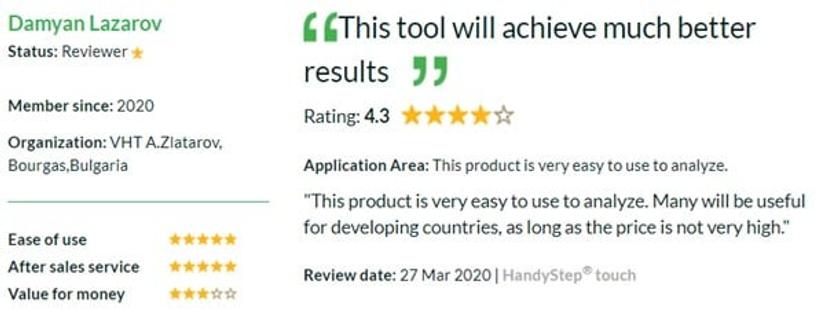
Find out what like-minded scientists think of the HandyStep touch repeating pipettes:
References

Tan SH, Allicock O, Armstrong-Hough M, Wyllie AL. Saliva as a gold-standard sample for SARS-CoV-2 detection. The Lancet. 2021

Vogels CBF et al. SalivaDirect: A simplified and flexible platform to enhance SARS-CoV-2 testing capacity. CellPress. 2021

Wyllie AL et al. Saliva or Nasopharyngeal Swab Specimens for Detection of SARS-CoV-2. The New England Journal of Medicine. 2020

Do you use BrandTech products in your lab? Write a review today for your chance to win a $400 Amazon gift card >>

Links

Tags

Pipettes and DispensersPipettes and dispensers are essential lab equipment used to dispense measured volumes of liquid accurately. Explore a range of manual and electronic pipettes, including single and multichannel, serological and volumetric pipettes, as well as a range of pipette tips. Bottle-top dispensers are also available for simple and fast solvent dispensing. Find the best pipettes & dispensers in our peer-reviewed product directory: compare products, check customer reviews and receive pricing direct from manufacturers.MicrobiologyMicrobiology is the study of microorganisms including protists, prokaryotes, fungi, and, often, viruses. Microorganisms are a useful research tool as genetic vectors and, in immunology, for antibiotic susceptibility testing, cellular biology and genetics. Microorganisms commonly grow readily in incubators with microbial culture media; this can contain chromogenic supplements to differentiate between cell lines. Estimate your culture’s density of microorganisms with colony counters, or screen and select colonies for desirable clones with automated colony pickers. Additionally, equipment is available to monitor environments for the presence of microbes and identify with microbial identification instruments. Find the best microbiology products in our peer-reviewed product directory: compare products, check customer reviews and receive pricing direct from manufacturers.Clinical MicrobiologyMicrobiology is the study of microorganisms including protists, prokaryotes, fungi, and, often, viruses. Microorganisms are a useful research tool as genetic vectors and, in immunology, for antibiotic susceptibility testing, cellular biology and genetics. Microorganisms commonly grow readily in incubators with microbial culture media; this can contain chromogenic supplements to differentiate between cell lines. Estimate your culture’s density of microorganisms with colony counters, or screen and select colonies for desirable clones with automated colony pickers. Additionally, equipment is available to monitor environments for the presence of microbes and identify with microbial identification instruments. Find the best microbiology products in our peer-reviewed product directory: compare products, check customer reviews and receive pricing direct from manufacturers.PCR and Thermal CyclingPolymerase chain reaction (PCR) kits and thermal cyclers are used for the in vitro amplification of DNA permitting subsequent analysis and experimental procedures. Explore a range of high-quality polymerase, primers and nucleotides or simplify your workflow with a PCR mastermix. Find reverse transcription PCR (RT-PCR) and cDNA synthesis kits for RNA products and libraries. Quantitatively measure the amplification of DNA with real-time PCR (qPCR) and droplet digital PCR (ddPCR) kits and systems, and discover automated PCR setup solutions to increase throughput. Alternative DNA amplification methods also include recombinase polymerase amplification (RPA) kits. Find the best PCR kits and thermal cyclers and purification equipment in our peer-reviewed product directory: compare products, check customer reviews and receive pricing direct from manufacturers.Electronic PipetteElectronic pipettes are precision instruments used to transfer measured volumes of liquid in laboratory settings. They offer high accuracy, ease of use, and ergonomic benefits compared to traditional pipettes, reducing the risk of repetitive strain injuries. Electronic pipettes are widely used in molecular biology, chemistry, and diagnostics. Browse our peer-reviewed product directory to find the best electronic pipettes; compare products, check reviews, and get pricing directly from manufacturers.MicrobiologyCoronavirusCoronaviruses are a large family of viruses that can cause illnesses ranging from the common cold to more severe diseases like COVID-19. Research into the biology, transmission, and treatment of coronaviruses has become a global priority, particularly since the emergence of SARS-CoV-2. Understanding the virus�s structure and behavior is essential for developing vaccines, diagnostics, and antiviral treatments. Explore our peer-reviewed product directory to discover the latest research tools, diagnostic tests, vaccines, and treatments for coronavirus, compare products, read reviews, and receive pricing directly from manufacturers.Covid-19COVID-19, caused by the SARS-CoV-2 virus, has led to a global health crisis with profound impacts on societies and economies. Research into diagnostics, vaccines, treatments, and understanding viral mechanisms continues to evolve. The pandemic has accelerated innovations in healthcare and biopharmaceuticals, including novel vaccine platforms and rapid testing technologies. Browse our peer-reviewed product directory to find top COVID-19 testing kits, research tools, vaccines, and treatments, compare products, read reviews, and receive direct pricing from manufacturers.