
Tahmina Hussain redefines the path from lab bench to patient care
Discover how Manchester-based expert Tahmina Hussain is bridging the gap between clinical pathology and biomedical science degree apprenticeships at the University of Salford
19 Apr 2026
Medical Laboratory Professional Week shines a spotlight on the often-invisible experts powering healthcare. This year, we sit down with Tahmina Hussain, a HCPC Registered Biomedical Scientist, Chartered Scientist and Programme Leader at the University of Salford, whose career spans the high-stakes world of haematology and blood transfusion and the evolving landscape of biomedical education.
From managing massive haemorrhage protocols in clinical practice to pioneering degree apprenticeships and EDI initiatives, Tahmina shares her unique perspective on the human impact behind every sample and how she is training the next generation of scientists to remain adaptable in a rapidly changing industry.
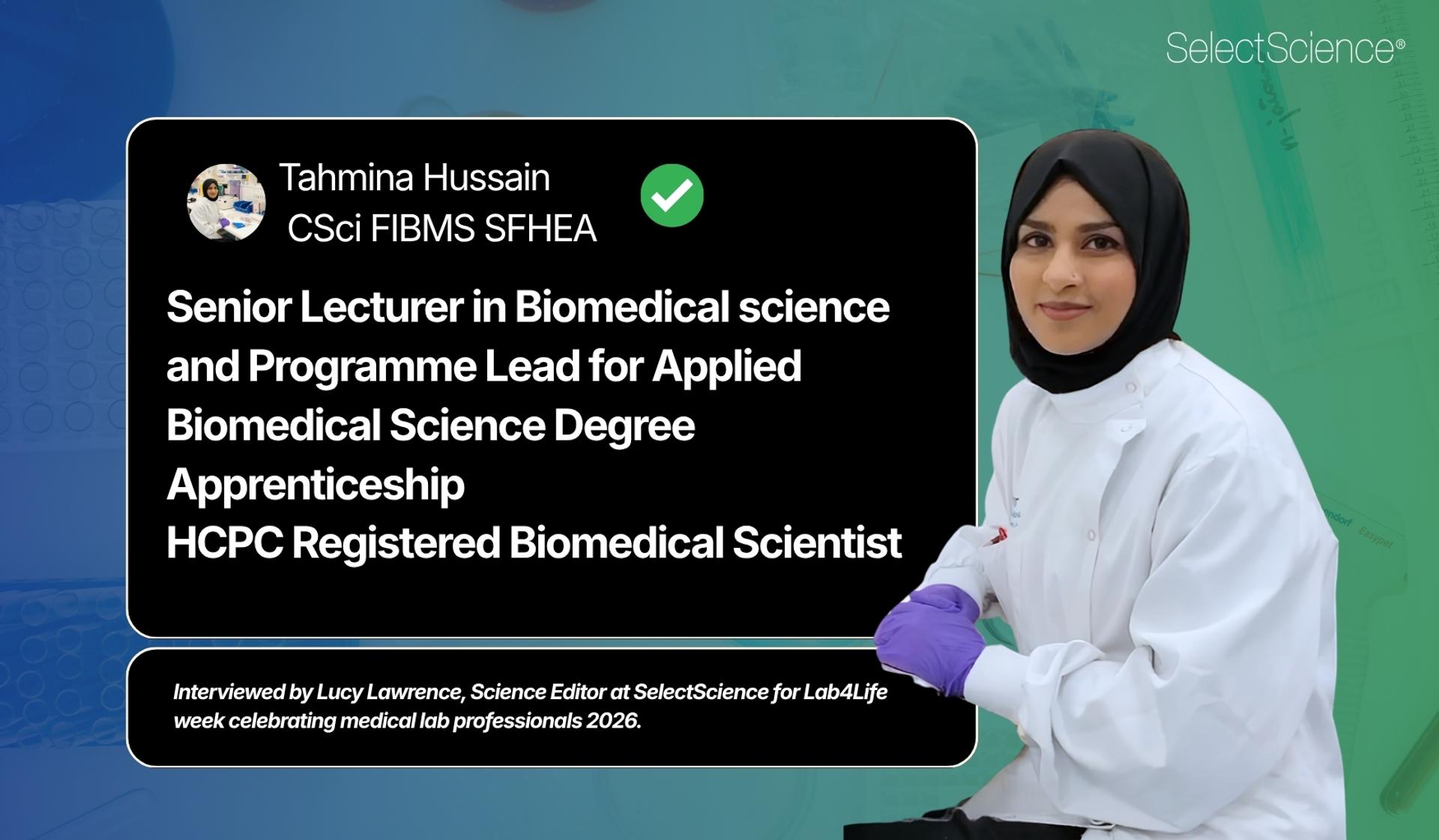
Tahmina Hussain, CSci FIBMS SFHEA.
Lucy Lawrence (LL): Could you tell us about your background and current role?
Tahmina Hussain (TH): I am the Programme Lead for the Applied Biomedical Science Degree Apprenticeship and a Senior Lecturer in Biomedical Science at the University of Salford. I began my career as a Biomedical Scientist in 2009, specialising in Haematology and Blood Transfusion. Over the years, I have advanced through various leadership roles, including Biomedical Scientist Team Manager, Blood Sciences Training Officer and Pathology Training Coordinator.
In my academic role, I am passionate about developing the next generation of biomedical scientists, equipping them with the skills and knowledge needed to thrive in the workforce. I am committed to strengthening the profession by enhancing training pathways, improving employability and ensuring graduates are well-prepared to meet the evolving demands of biomedical science and clinical diagnostics within pathology services.
Beyond my academic and clinical roles, I am a Fellow of the Institute of Biomedical Science (IBMS) and a Chartered Scientist (CSci)—recognitions that reflect my expertise and dedication to advancing the profession. I actively contribute to the field as an IBMS Council Member, a verifier and examiner for registration and specialist portfolios and as the Deputy Chair of the IBMS Education and Professional Standards Committee. Additionally, I serve as the IBMS Equality, Diversity and Inclusion (EDI) Lead, as well as the EDI lead for staff within the Human and Natural Sciences Directorate at the University of Salford.
LL: What first drew you to the lab, and what makes you proud to put on your lab coat every day?
TH: I always knew I wanted to work in healthcare and make a difference in patient care, but I also knew I didn't want a patient-facing role. I had a strong interest in human biology, so combining this with medical diagnostics as a biomedical scientist felt like the perfect fit.
I truly enjoyed working in clinical laboratories—especially in haematology and blood transfusion within a cancer specialist hospital—where I knew my work was directly contributing to patient care. After a busy day in the lab, particularly in blood transfusion, there was a real sense of satisfaction knowing the impact we had on patients' lives.
My role now is different as a clinical academic. I work closely with students and apprentices to ensure they are well-equipped for laboratory environments, which is equally rewarding in a different way.
LL: What is a project or area you are currently working on that you’re particularly excited about?
TH: I am developing further simulation-based learning at the university to help bridge gaps where placement capacity is limited. This allows students to build confidence and employability skills, helping them prepare for the workplace.
I am also expanding the 'portfolio club' I implemented and collaborating with other universities to better support students in preparing for clinical placements. Additionally, I am working with the IBMS to explore equity in access to placements so that all students have fair opportunities to gain vital laboratory experience.
LL: Every sample is a person waiting for an answer. What specific moment reminds you of the human impact behind the data?
TH: During my time in clinical practice, this was most evident in blood transfusion, particularly when issuing blood for patients in critical situations. Knowing that our laboratory work had an immediate, potentially lifesaving impact,especially during massive haemorrhage situations,was a constant reminder of the patient behind every sample.
In my current role, that connection remains, but it manifests differently. It comes through when I see students and apprentices develop their confidence and competence. Supporting their journey ultimately contributes to the quality and safety of laboratory services for future patients.
LL: What "soft skill" is actually the secret to being a truly great scientist?
TH: Adaptability. Working in busy environments where unexpected situations arise requires flexibility to ensure services run safely and efficiently.
The field of biomedical science is constantly evolving, whether through new technologies, updated guidance, or changing service demands, so being open to learning and willing to embrace change is essential.
Strong communication skills are equally important. Working effectively within multidisciplinary teams and sharing information clearly are key to delivering high-quality service.
LL: How can the industry better support the next generation, and what is your advice for students considering a career "at the bench"?
TH: We can better support the next generation by continuing to invest in training pathways like degree apprenticeships and by strengthening collaboration between universities, employers and professional bodies. Providing clear progression routes and mentorship can make a significant difference in retaining talent.
My advice to students is to be proactive. Seek out placement opportunities and work experience, ask questions and take ownership of your learning. It is a challenging but incredibly rewarding profession where your work has a direct impact on patient care, even if you aren't always on the front line.
Tahmina Hussain was speaking with Lucy Lawrence , Science Editor for Select Science.
Explore the full feature.