
Strengthening quality control in clinical laboratories: Lessons from real-world practice
17 Aug 2026
Quality control in clinical laboratories underpins every diagnostic decision. From routine electrolyte panels to critical care markers, the reliability of results depends on systems that can consistently detect error, track performance, and ensure alignment with clinical standards. Yet despite advances in instrumentation, many laboratories still face practical challenges in clinical chemistry QC, particularly around workflow efficiency, data visibility, and benchmarking.

Holyoke Medical Center
As testing demand increases and expectations around accuracy tighten, laboratories are being pushed to rethink how they approach laboratory quality management. Incremental improvements in QC materials, data tools, and processes can have a significant impact. Understanding how these changes play out in real-world settings is therefore valuable.
At Holyoke Medical Center, Valeriya Sullivan, Chemistry Laboratory Supervisor, has been working to refine these systems. Her experience provides a practical perspective on how improving QC data management, adopting analyzer-ready controls, and leveraging peer group data can enhance both efficiency and confidence in results.
The role of quality control in a community hospital laboratory
Sullivan’s role reflects the dual demands of operational oversight and quality assurance. “I serve as the Chemistry Laboratory Supervisor at Holyoke Medical Center. In this role, I oversee daily laboratory operations, ensure quality and regulatory compliance, manage inventory and instrumentation, and support staff in delivering accurate and timely test results,” she explains.
Working within a community hospital setting brings its own pressures. Laboratories must deliver fast turnaround times while maintaining high standards. “Our center is a community hospital focused on providing reliable routine chemistry laboratory services that support patient care,” she says. “We perform a broad range of diagnostic testing to assist clinicians in monitoring and managing common medical conditions, with an emphasis on efficiency, accuracy, and high-quality service for our local population.”
This environment makes laboratory workflow efficiency and consistency central to success. QC processes must be robust but also practical enough to integrate seamlessly into daily operations.
Building a structured approach to clinical chemistry QC
At Holyoke Medical Center, quality control is grounded in standardized processes and disciplined execution. “We approach quality control through well-established policies and procedures, with a strong emphasis on staff adherence to standardized guidelines,” Sullivan explains. “Consistent compliance ensures that all testing processes are performed accurately and uniformly.”
However, structured processes alone are not sufficient. Continuous monitoring is essential for identifying trends before they become problems. “To monitor QC performance, we utilize IAMQC, which provides comprehensive tools to review and track QC data on a daily, weekly, and monthly basis,” she says. “This allows us to quickly identify trends, shifts, or potential issues and take corrective action as needed.”
This type of QC data management reflects a broader shift in laboratories toward data-driven quality systems. Rather than reacting to failures, labs are increasingly focused on early detection and prevention.
Sullivan also points to future plans that align with this approach. “Looking ahead, we are planning to implement a Six Sigma program to further enhance our quality performance, reduce variability, and drive continuous improvement in our testing processes.”
The adoption of Six Sigma in laboratories highlights the growing emphasis on reducing variability and improving process control across the testing cycle.
What laboratories need from QC materials and partners
Selecting appropriate QC materials is a critical decision that directly affects assay performance monitoring. Sullivan outlines several key criteria. “When evaluating external controls and partners, we prioritize high-quality materials that are stable, comprehensive, and compatible with our testing platforms,” she explains.
Equally important is how closely control materials reflect real patient samples. “It is important that control materials closely mirror patient samples across a wide range of analyte levels to ensure accurate performance monitoring,” she adds.
One of the most influential factors in modern QC is benchmarking. “Peer group data plays a significant role in our selection process, as it allows us to benchmark our results against comparable laboratories and verify that the materials perform consistently across systems,” shares Sullivan.
Access to peer group data strengthens confidence in assay performance by providing an external reference point. It allows laboratories to detect subtle shifts that may not be visible internally.
QC challenges before workflow improvements
Before implementing new QC solutions, Sullivan’s laboratory faced several common obstacles. “One of the primary limitations was the lack of access to peer group data, which made it difficult to benchmark our performance against other laboratories,” she recalls.
Workflow inefficiencies were also a concern. “In addition, the controls were not optimized for direct use on our analyzers, meaning we were unable to place original vials on board. This required manual pipetting, increasing hands-on time and the potential for variability or error.”
Issues with material stability further complicated QC processes. “We also encountered issues with matrix stability, leading to concerns about consistency and reliability over time,” she adds.
These challenges highlight how both technical and practical limitations can undermine quality control in clinical laboratories.
Improving workflow and performance with new QC solutions
The introduction of solutions from LGC Diagnostics and Genomics - SeraCare Clinical Diagnostics addressed several of these issues simultaneously. “Products from SeraCare Clinical Diagnostics have significantly improved our laboratory workflows by increasing efficiency and enhancing quality monitoring,” Sullivan explains.
A significant enhancement was the move to analyzer-ready controls that can be placed on the analyzer in their original vials. “One of the most impactful changes has been the elimination of manual pipetting, as the controls can be placed directly on the analyzer,” she says. “This has reduced hands-on time and minimized the risk of human error.” This shift directly improves laboratory workflow efficiency, reducing manual intervention and standardizing processes – not only saving time but also lowering the risk of variability, an important factor in maintaining consistent QC outcomes.
Another important development relates to calibration verification. “The extended typical range of the calibration verification / linearity products allows us to effectively monitor assay performance across a broader spectrum of values, including critical and abnormal levels,” Sullivan notes. This capability supports more comprehensive assay performance monitoring, particularly at the extremes of measurement ranges.
The stability of SeraCare Clinical Diagnostics solutions provided another critical advantage. “Additionally, the extended outdate of the QC materials allows us to purchase larger quantities at once, reducing the frequency of revalidation,” she says. “This not only improves operational efficiency but also ensures greater consistency in our quality control processes over time.”
Access to benchmarking data also transformed QC oversight. “Access to robust peer group data has also been a major advantage, enabling us to benchmark our performance against similar laboratories and quickly identify trends or deviations,” she says. These features illustrate how practical improvements can support long-term laboratory quality management.
“Overall, these improvements have streamlined our QC processes, increased reliability, and strengthened confidence in our results,” summarizes Sullivan.
Advice for clinical laboratories looking to strengthen QC
Sullivan’s experience offers clear guidance for other laboratories evaluating their QC strategies. “I would recommend that laboratories strongly consider products from SeraCare Clinical Diagnostics if they are looking to improve efficiency and strengthen their quality control processes,” she says.
She emphasizes the combined benefits of workflow improvements and data access. “The ability to use controls directly on the analyzer, access peer group data, and benefit from extended stability can significantly reduce hands-on time and variability while enhancing confidence in results,” she explains.
Digital tools also play an important role. “In addition, the use of the IAMQC application greatly improves quality assurance by enabling close, continuous monitoring of QC data alongside peer group performance,” she adds, noting that applications such as MSDRx® Infinity support real-time calibration verification across analyzers.
Ultimately, her experience reflects a broader shift in quality control in clinical laboratories. Effective QC is no longer just about meeting minimum standards. It is about building systems that are efficient, data-driven, and capable of continuous improvement, ensuring that laboratories can deliver reliable results with confidence in an increasingly demanding clinical landscape.
VALIDATE® products are manufactured and distributed by LGC Clinical Diagnostics, Inc. (USA). SeraCare and Maine Standards are brands of LGC Clinical Diagnostics.
Related products
Request Quote for All Products
MSDRx® Infinity
LGC Diagnostics & Genomics - SeraCare Clinical DiagnosticsMSDRx® Infinity data reduction software enables real-time data analysis, peer group comparison and reporting for clinical labs.
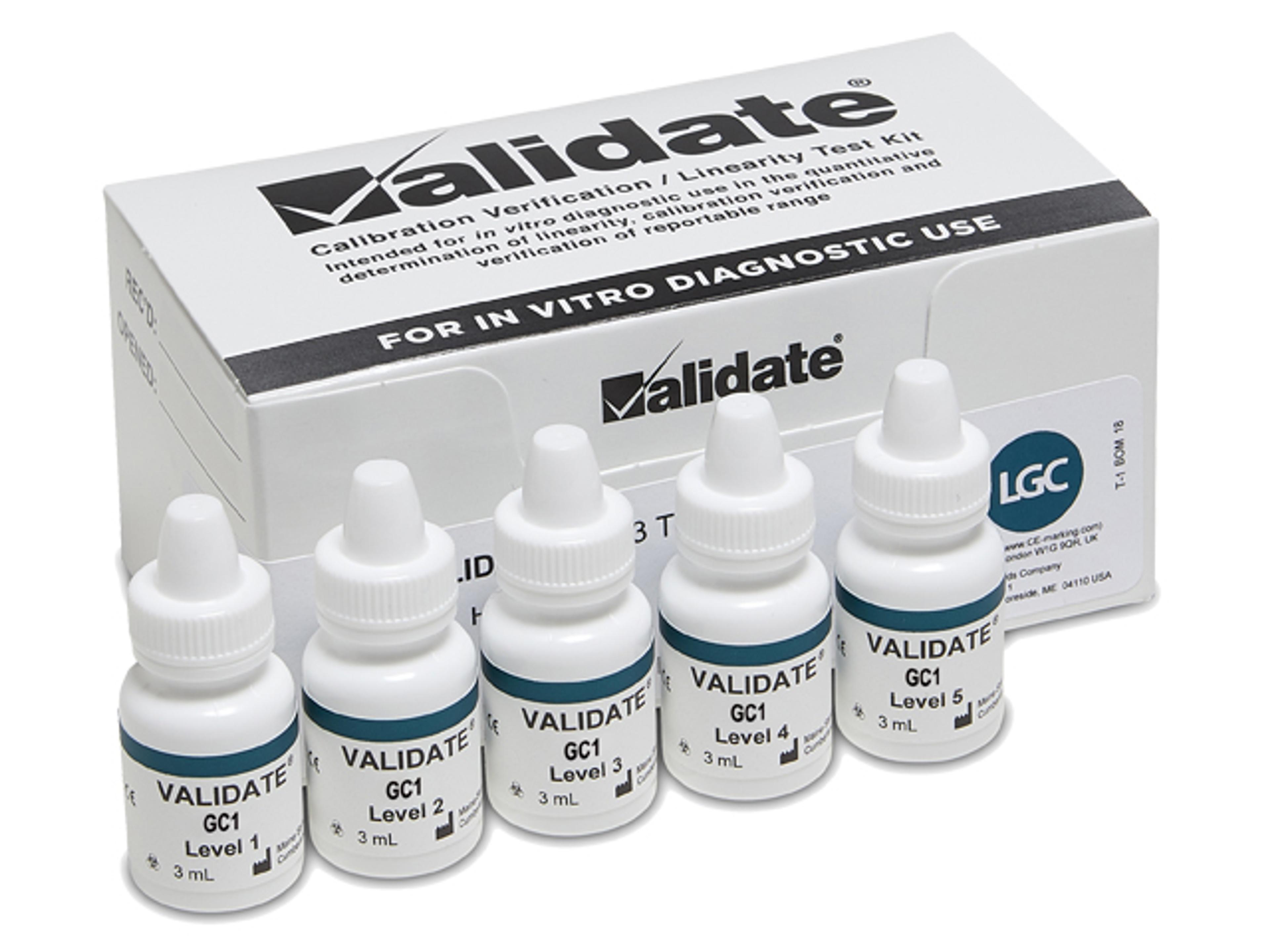
VALIDATE® Calibration Verification & Linearity
LGC Diagnostics & Genomics - SeraCare Clinical DiagnosticsAssists in the documentation of calibration verification and linearity