
Engineering evolved: Reimagining how to better meet laboratory demands
Guest editorial from Siemens Healthineers explores how automation, predictive maintenance, connected informatics, and assay innovation can support modern core laboratories
10 Aug 2026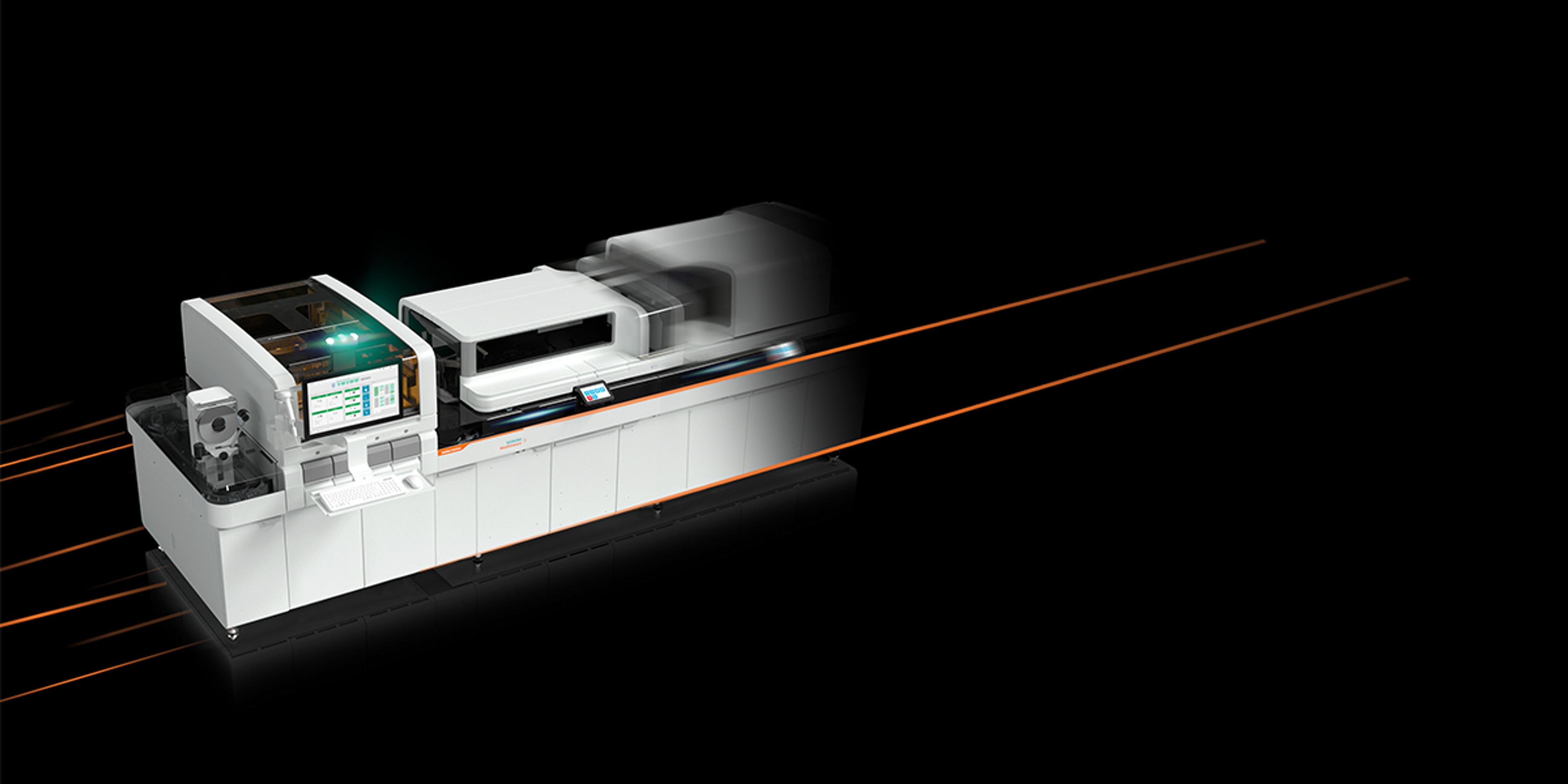
Atellica Solution
Key points of the article:
- This article explores how modern laboratories are responding to workforce constraints, operational complexity, healthcare consolidation, rising clinical demands, and sustainability expectations.
- It discusses the continued evolution of the Atellica Solution Portfolio, including automation, machine-learning-supported monitoring, predictive maintenance, integrated informatics, network visibility, and assay development.
- It considers how these advancements are designed to support laboratory teams, enable more consistent operations, expand clinical insight, and contribute to more sustainable laboratory performance.
For many years, success in the laboratory was defined primarily by analytical performance. While that remains essential, it is no longer enough. Today’s laboratories require systems that do more than deliver accurate results. They need solutions that reduce complexity, support overwhelmed teams, and adapt as demands continue to evolve.
Across the industry, we consistently hear the same themes from laboratory leaders:
- Teams are being asked to consistently deliver the highest quality results amid cost pressures and increasing operational complexity
- Workflows are reaching breaking points and becoming increasingly complex, while staffing levels are stretched thinner
- Healthcare consolidation is expanding networks, requiring greater standardization, consistency and control
- Clinical demands are shifting rapidly, driven by increasing burden of chronic diseases, aging populations, consumerization of healthcare and growing personalized care
- Sustainability is becoming a real operational priority, not a future consideration
These are not isolated challenges. They are interconnected pressures reshaping how laboratories operate and what they expect from their partners.
As a result, it has become essential for innovation to do more than keep pace. It must be grounded in today’s realities while actively preparing laboratories for what comes next.
That thinking guides the continued evolution of the Atellica Solution Portfolio. Our focus is on delivering purposeful advancements that help laboratories simplify complexity, support their teams, and stay ahead of the curve by leveraging AI-driven logic and connected workflows amidst a climate of clinical and operational demands.
Innovation, when done right, should not add to that burden. It should quietly remove it.

Software-driven enhancements help labs adopt improvements quickly so your teams can spend less time managing systems and more time focused on delivering timely, reliable insights.
Making complexity feel manageable
Laboratory leaders consistently describe a common challenge: not just that complexity is increasing, but that it is becoming harder to manage.
Innovation, when done right, should not add to that burden. It should quietly remove it.
The primary focus of the Atellica Solution Portfolio is to help simplify how work gets done, bringing together intelligent systems, connected data, and proactive support in ways that help teams maintain control with less effort.
New enhancements will apply machine learning algorithms within service and predictive maintenance tools to continuously analyze system performance data, enabling proactive issue detection and helping reduce unplanned downtime for customers. Instead of managing systems individually, integration with informatics allows laboratories to gain a unified view of performance across their network. Continuous quality monitoring is embedded directly into everyday workflows providing early insight and reducing testing interruptions. Data driven service capabilities represent a shift from reactive service models to predictive, self-monitoring systems – reducing downtime and redefining how laboratories maintain performance at scale.
To further support operational continuity, software-driven enhancements are easy to access and install immediately upon release, allowing labs to adopt improvements quickly with minimal disruption. Updates provide innovations and improvements that elevate operator experience, minimize administrative burden, and reduce disruption to already constrained laboratory schedules.
The goal is simple: help teams spend less time managing systems, and more time focused on what matters most—delivering timely, reliable insights that support patient care.
Supporting the people behind the work
Technology alone does not transform a laboratory. People do.
Yet staffing shortages, burnout, and increasing workloads continue to put significant pressure on laboratory teams. Laboratory leaders frequently describe a constant balancing act: maintaining quality and turnaround times while supporting already stretched staff.
This is where thoughtful automation and intelligent design can make a meaningful difference.
Reducing manual intervention and the complexity of balancing workloads with AI-enabled workflow intelligence that automates routine processes and anticipates potential disruptions helps remove hands-on steps, standardize workflows, and makes systems easier to manage. Through use of a tablet that acts as a true second interface, multiple users gain extended system accessibility to remotely monitor and manage instruments, providing flexibility to rapidly identify and act on issues while sustaining routine workflow.
Specifically designed to help relieve some of the mounting pressure and manual oversight, the Atellica Solution Portfolio transforms tasks previously requiring constant attention to being more predictable.
When systems are easier to use, training becomes simpler, onboarding becomes faster, and teams can focus more of their time on essential clinical work.
Because ultimately, innovation should not replace people. It should enable them.
Technology alone does not transform a laboratory. People do.
Enabling growth without adding strain
Whether operating within a single hospital or across an extensive network, laboratories are under increasing pressure to expand capacity while maintaining consistency, efficiency, and quality.
This is where connected systems and standardized experiences become vital.
The Atellica Solution portfolio is designed to address these needs, through harmonized user experiences, consistent clinical performance, standardized workflows, and integrated informatics via Atellica Data Manager. This open, scalable platform enables customizable KPI dashboards, comprehensive data archiving, end-to-end sample and consumable traceability, and automated reporting. Real-time visibility into quality metrics, along with benchmarking across network sites, allows teams to spend less time analyzing data and more time driving performance improvements.
The result is greater transparency, more effective resource allocation, and ability for teams to operate within familiar workflows regardless of location.
Advancing clinical impact where it matters most
At the heart of every laboratory is a simple but powerful purpose: to provide answers that help guide patient care.

ELF test
As chronic diseases continue to rise and clinical pathways become more complex, the need for earlier, more actionable insights have never been greater. It has been well established and widely recognized that laboratory testing provides 70%-85% of the objective data that physicians use in the diagnosis and treatment of their patients, increasing the importance of reliable, high-quality results1. The Atellica Solution Portfolio supports this need through ongoing assay development focused on clinically meaningful insights where clinicians increasingly rely on advanced biomarkers to detect disease earlier and guide treatment decisions. The Enhanced Liver Fibrosis (ELF) test2 for example, provides a noninvasive method for assessing liver fibrosis risk. By offering prognostic insight without requiring invasive procedures, the test supports earlier disease detection and patient management while outperforming traditional biopsy for risk assessment.
Atellica Solution Portfolio assays are developed in synchrony with analyzers, aligning technology and workflow to deliver reliable performance and solutions that support rapid clinical decision-making. Built to meet the demands of modern cardiac care, the Atellica IM High‑Sensitivity Troponin I assay integrates intelligent STAT routing with rapid turnaround, enabling results in approximately 10 minutes for patients presenting with suspected acute myocardial infarction (AMI)3. This efficient workflow supports timely triage and confident diagnosis, essential in acute settings. With the addition of algorithm driven prognosis claims in the US and risk stratification claims outside the US, the assay further extends its clinical value by helping clinicians transition from acute diagnosis to informed risk-based care decisions across the continuum of care. By designing assay in concert with instrumentation and laboratory workflows, the Atellica Solution Portfolio is designed to bring clinically meaningful insights into everyday practice, supporting earlier detection, more informed decisions, and ultimately, better patient outcomes.
Importantly, these advancements are designed to fit naturally into existing workflows, so laboratories can expand their capabilities without increasing operational burden.
Moving toward more simply sustainable operations
Sustainability has become an immediate priority across healthcare systems worldwide. As organizations work to reduce environmental impact while maintaining high-quality care, the clinical laboratory plays a critical role in delivering against both objectives.
From reducing water use and lowering energy consumption by up to 48%, to extending system lifespan, the Atellica Solution Portfolio is designed to improve operational performance while advancing environmental responsibility.
From a clinical and procurement perspective, the portfolio also enables more informed, sustainable decision-making. It is the first clinical laboratory product line to receive My Green Lab ACT Ecolabels for both clinical chemistry and immunoassay analyzers and associated reagents. These independently verified labels provide transparent data on environmental impact across manufacturing, energy and water use, and end-of-life considerations.
This is not about trade-offs. It is about redefining performance to extend operational efficiency, clinical excellence, and sustainability together.
Building confidence through future-forward innovation
When innovation is intentional, grounded in real-world needs and shaped through ongoing customer collaboration, it becomes something laboratories can rely on, not something they have to manage.
That is the approach guiding the evolution of the Atellica Solutions Portfolio. In an increasingly complex environment, confidence is one of the most valuable outcomes we can help deliver.
Please visit the Atellica Solution page on the Siemens Healthineers website to explore how future-forward innovation can help your laboratory simplify operations, support staff, and expand diagnostic capabilities.

About the author
As Head of R&D Engineering for Core Laboratory Solutions at Siemens Healthineers, Paavana Sainath leads with vision, purpose, and a passion for advancing healthcare innovation. She is helping shape the future of smart laboratories, where AI, automation, and robotics enable faster, more accurate diagnoses at scale. She holds more than 20 issued patents, has contributed to several technical publications, and earned an MS in Biomedical Engineering from Texas A&M University and an MBA from NYU Stern.
1 Jackson BR. Managing laboratory test use: principles and tools. Clin Lab Med. 2007;27(4):733–748. doi: 10.1016/j.cll.2007.07.009.S0272-2712(07)00084-4 [DOI] [PubMed] [Google Scholar]
2, 3 The products/features mentioned herein are not commercially available in all countries. Their future availability cannot be guaranteed.