Rigaku is Presenting its XRD and XRF Technology at EAS 2016

14 Nov 2016

Emily Adam
Publishing / Media

Industry news

Rigaku Corporation is presenting its diverse range of X-ray analytical instrumentation at the 2016 Eastern Analytical Symposium and Exhibition.

The event is taking place November 14-16, 2016 at the Garden State Exhibit Center in Somerset, NJ. Rigaku is presenting its latest benchtop X-ray diffraction (XRD), X-ray fluorescence (XRF) and Raman spectroscopy instrumentation at booth 438.

EAS is held each year to provide professional scientists and students continuing education in analytical sciences and showcase the latest instrumentation and services for the community of analytical scientists.

The three-day event highlights the latest innovations in analytical chemistry and features a number of courses and professional development workshops along with a technical program and exhibition.

Rigaku manufactures a complete line of X-ray analytical instrumentation and components for research, testing, industrial process control, and product development.

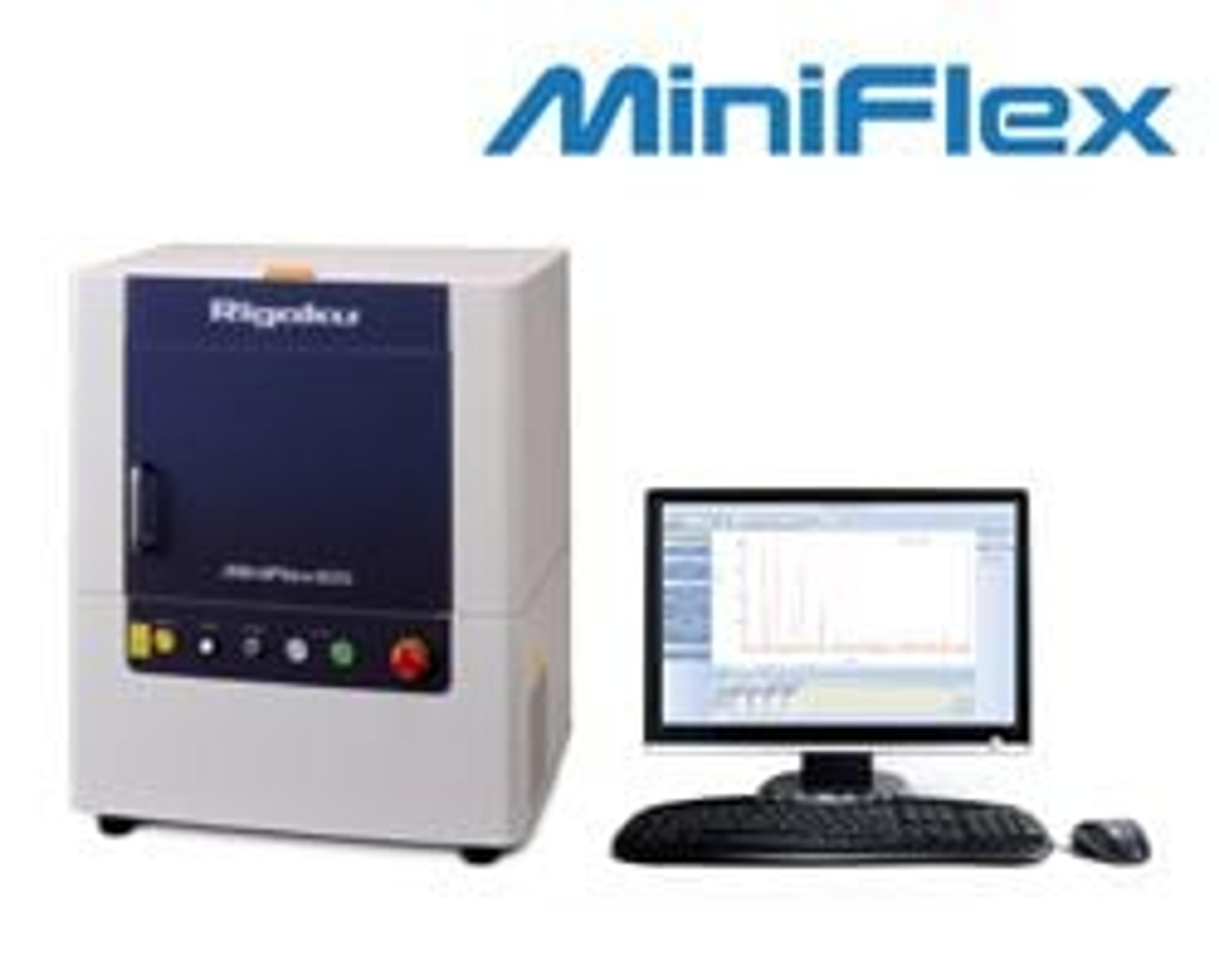
Featured at the exhibition is the Rigaku MiniFlex benchtop X-ray diffractometer. The fifth generation MiniFlex™ is a general purpose X-ray diffractometer designed to deliver speed and sensitivity through innovative technology enhancements such as the optional D/teX high-speed detector coupled with a 600 W X-ray source, and can perform qualitative and quantitative analysis of polycrystalline materials. The 600 W MiniFlex is the most powerful system of its type and features an available sample changer.

MiniFlex Benchtop XRD

Rigaku Corporation

New 6th-generation general purpose benchtop XRD system for phase identification and phase quantification. New sixth generation MiniFlex X-ray diffractometer (XRD) is a multipurpose analytical instrument that can determine: phase identification and quantification, percent (%) crystallinity, crystallite size and strain, lattice parameter refinement, Rietveld refinement, and molecular structure. It is widely used in research, especially in material science and chemistry, as well as in industry for research and quality control. It is the newest addition to MiniFlex series of benchtop X-ray diffraction analyzers from Rigaku, which began with the introduction of the original MiniFlex system decades ago.   Overview: New 6th generation design Compact, fail-safe radiation enclosure Incident beam variable slit Simple installation and user training Factory aligned goniometer system Laptop computer operation Measurements: Phase identification Phase quantification Percent (%) crystallinity Crystallite size and strain Lattice parameter refinement Rietveld refinement Molecular structure Options: 8-position autosampler Graphite monochromator D/teX Ultra: silicon strip detector HyPix-400 MF: 2D HPAD detector Air sensitive sample holder Travel case

(11)

Links

Tags

Fluorescence SpectroscopyFluorometers and spectrofluorometers (also called fluorescence spectrometers) are used to measure the intensity and wavelength of fluorescent light emitted from a sample after excitation by illumination. Spectrofluorometers utilize monochromators to select the desired wavelengths, whereas filter fluorometers employ a set of filters. Spectrofluorometers for measuring steady-state fluorescence and lifetime fluorescence (or time-resolved fluorescence) are available, as well as fluorescence microscopes and microplate readers. Find the best fluorescence spectroscopy products in our peer-reviewed product directory: compare products, check customer reviews and receive pricing direct from manufacturers.Mass SpectrometryMass spectrometry (MS) is a powerful analytical technique used to identify and quantify molecules based on the mass-to-charge ratio of gas-phase ions. It provides detailed information about the structure, composition, and properties of compounds and is widely used across fields such as environmental monitoring, materials science, drug discovery and development, food and beverage testing, and wider chemical research. Key MS techniques include tandem mass spectrometry (MS/MS), liquid chromatography–mass spectrometry (LS-MS) and inductively coupled plasma (ICP-MS). Choosing from these wide range of techniques and technologies can be a daunting task, so keep up to date with scientific applications, performance expectations, and customer reviews here all in one place. Visit our product directory to receive quotes direct from the manufacturer. Raman SpectroscopyRaman spectroscopy is used to discern the vibrational and rotational states of molecules and hence the chemical composition of a sample by measuring the inelastic scattering of monochromatic light. Explore a range of Raman spectrometers, including handheld/portable Raman spectrometers for QC/QA labs and in situ spectrometers for processes. Conduct Raman imaging for microanalysis of mixed samples using a Raman microscope. Raman spectrographs are also available. Find the best Raman spectroscopy products in our peer-reviewed product directory: compare products, check customer reviews and receive pricing direct from manufacturers.Spectroscopy LampsMonochromators, filters and spectroscopy lamps are available for specific applications of spectroscopy instruments. Available spectroscopy lamps include xenon, hollow cathode, ultraviolet, tungsten, halogen, mercury and deuterium.X-ray CrystallographyX-ray crystallography is an analytical technique used to determine the arrangement of atoms in a crystal. Monochromatic x-rays are produced from a synchrotron or x-ray generator. An x-ray crystallography system uses a detector to measure the x-ray diffraction from the crystal. The information is used to generate a 3D image of the crystal.X-Ray Diffraction and SpectroscopyX-Ray diffraction & spectroscopy are used in material characterization to discern the structure and elemental composition of a sample. X-Ray diffractometers (XRD) are superior instruments in elucidating the dimensional atomic structure of crystalline materials, including powders, thin films and single crystals. For large unit cells or ordered macromolecules, consider small-angle X-ray scattering (SAXS). X-ray spectroscopic techniques include X-ray fluorescence (XRF) and X-ray photoelectron spectroscopy (XPS), both providing simple and accurate methods for determining the elemental composition of a material. Energy dispersive (EDXRF) and wavelength dispersive (WDXRF) XRF spectrometers are available, as well as handheld/portable devices. High-resolution, 3D microstructure characterization of materials can be achieved with X-ray microscopes combining sub-micron resolution imaging with 3D computed tomography. Find the best XRD and XRF spectrometers in our peer-reviewed product directory: compare products, check customer reviews and receive pricing direct from manufacturers.X-Ray FluorescenceX-ray fluorescence (XRF) is an analytical technique used to determine the elemental composition of materials. It is widely used in geology, materials science, and environmental testing for detecting heavy metals and other elements. Browse our peer-reviewed product directory to find the best XRF systems, compare products, check reviews, and get pricing directly from manufacturers.SpectroscopySpectroscopy is a technique that analyzes the interaction of light with matter to study molecular properties, concentrations, and structural information. Widely used in chemical, pharmaceutical, and environmental analysis, spectroscopy offers insights into molecular composition and helps identify unknown compounds. It plays a key role in quality control, research, and diagnostics. Browse our peer-reviewed product directory to compare spectroscopy tools, read reviews, and get prices directly from manufacturers.Raman