
Reviewers of the Month - Crystal Daniels and Joe Otto from the University of South Alabama, Mitchell Cancer Institute

22 Mar 2017

Weylan Kiam-Laine
Microbiologist

Editorial article

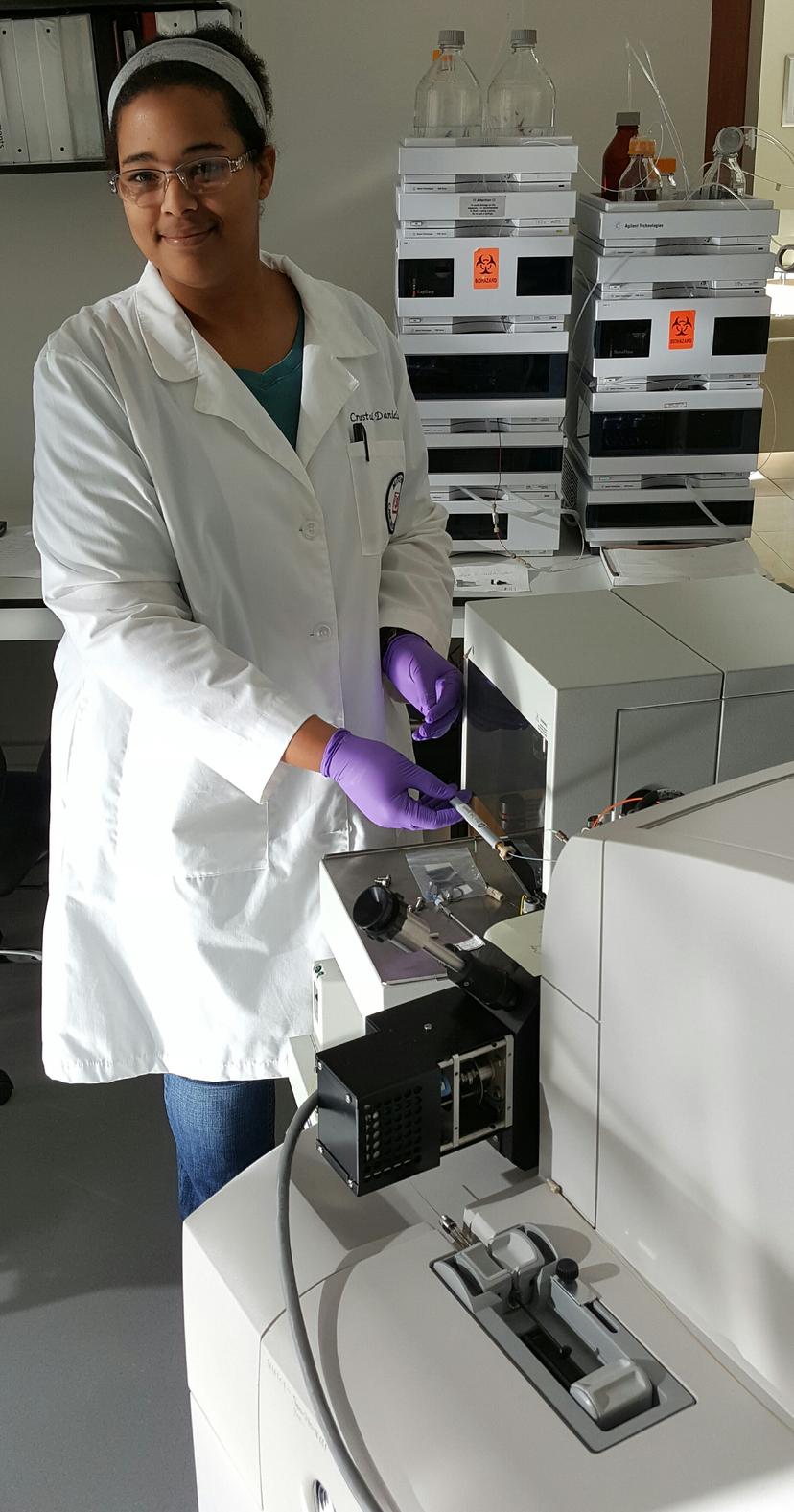
Crystal Daniels, The University of South Alabama Mitchell Cancer Institute

Crystal Daniels and Joe Otto work at the University of South Alabama Mitchell Cancer Institute and are both Advanced Reviewers on SelectScience. They joined SelectScience last year after visiting our stand at Pittcon and have uploaded an impressive 22 reviews between them.

We asked Crystal and Joe to tell us a little about themselves:

What are you working on?

Crystal: I’m a Graduate Student Researcher (Doctoral Candidate) working on Proteomics and Cancer Biology specifically studying glycosylation changes in cancer.

Joe: I've recently finished my Ph.D. and am a postdoctoral research fellow in the area of biomarkers. I am working to discover proteins that can serve as a means of early detection for gastrointestinal cancers.

Tell us what a typical day looks like for you…

Crystal: I generally spend the mornings doing sample preparation and handling and my afternoons are used for data analysis. Data analysis is the larger time consuming activity as the data that is generated in our lab is very extensive.

Joe: A typical day starts with checking the mass spectrometers that had been running samples overnight to ensure all runs look appropriate. I then queue additional samples to run for the remainder of the day and prepare samples at the bench or HPLC system. I spend most afternoons on data analysis.

Why are reviews important?

Crystal: I like seeing what other people who are actually doing the science have to say about how it works.

Joe: Reviews are almost essential when investigating products in my mind as they provide an unbiased view. They can be very informative concerning ease of use which can often be hard to interpret from online descriptions. I take reviews into account for most product selections both inside and outside of science.
Why is communication in science key?

Crystal: The scientific community relies on being able to accurately share the findings of the research to others, without this, precious time and funds are wasted pursuing false leads from which no advancement can be made.

Joe: All forms of communication are important in science primarily because it is a means of sharing discoveries and knowledge. Many researchers investigate areas of the unknown where information and data are the first of their kind concerning the topic. The information must be communicated to the rest of the scientific community to be taken into the collective knowledge. This sharing initiates additional communications leading to collaborations, discussions, ideas, concepts, and advancements. Communication allows for the scientific progress.

What inspired you to get into the world of science?

Crystal: I've always been a really big science nerd even from early childhood when I had my parents get me a microscope to look at the water in my fish tank. I've just always been curious about the living things around me and how they work.

Joe: My undergraduate academic advisor really opened my eyes to graduate school and scientific research. I typically had many questions in class, and he said my questions were the type that researchers asked and tried to answer as no one actually knows. It was very intriguing to realize just how many things we don’t know about science and being able to contribute to the collective scientific knowledge is an exciting thought.
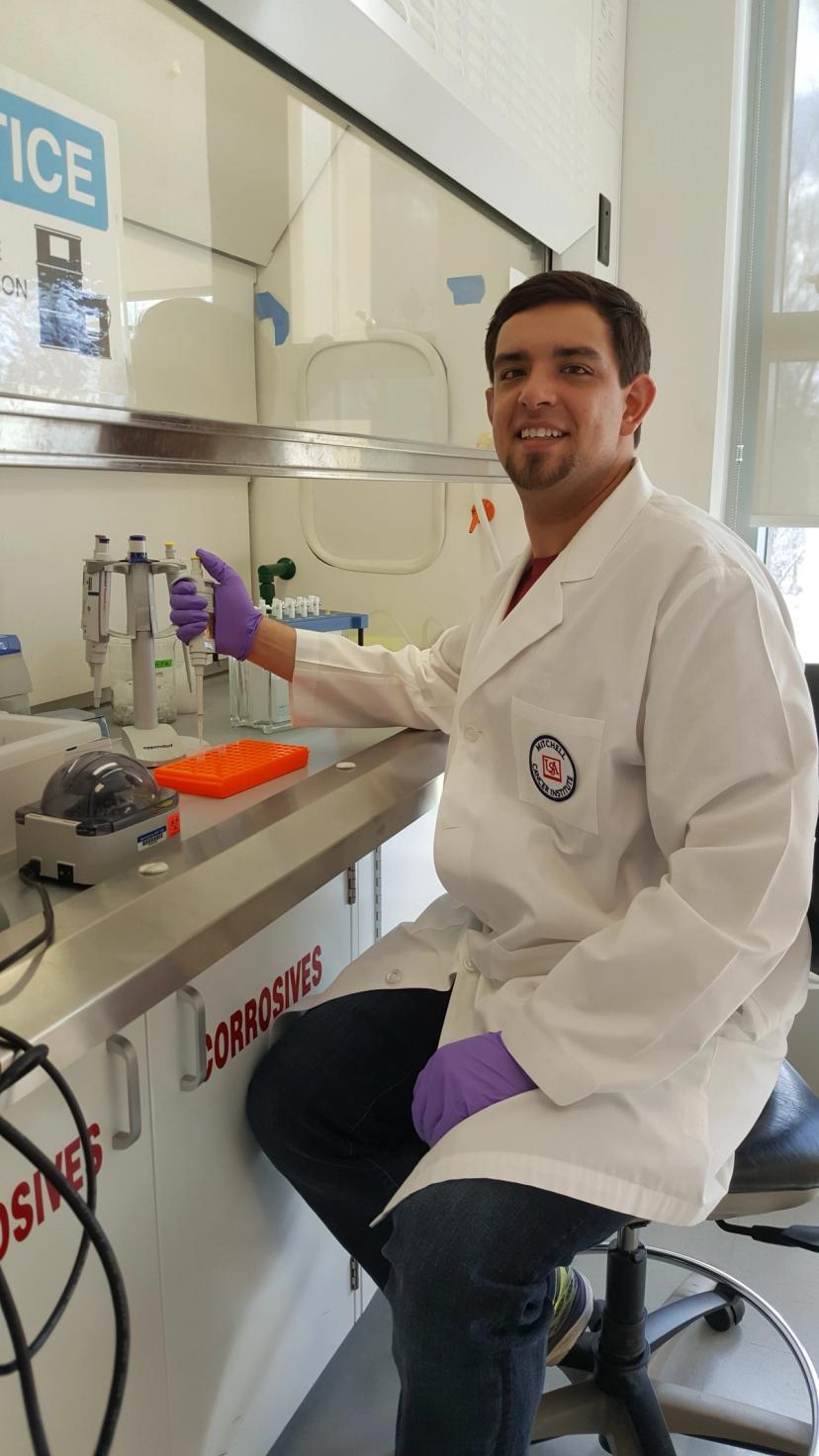
Joe Otto, The University of South Alabama Mitchell Cancer Institute

How did you get into your specific field of work?

Crystal: I came from Spring Hill College with a Bachelor’s of Science in Biology. I studied under my now professor, Dr. Lewis Pannell, for several years before formally joining the graduate school as a doctoral student in cancer biology. I am currently a Doctoral Candidate within 2 years of graduation.

Joe: I did rotations in several areas including, biochemistry, microbiology and immunology, and cancer biology. I really enjoyed cancer biology with a proteomics focus as it seemed the most clinically relevant.

What’s the most innovative piece of lab equipment you use?

Crystal: I currently use a Thermo Q-Exactive Plus mass spectrometer for high resolution mass spectrometry data acquisition from glycosylated protein samples.

Joe: I would have to say the actual Orbitrap mass analyzer in two of our instruments. It allows for high-resolution spectrum and high-accuracy mass of many analytes at a time.

What’s your favorite piece of lab equipment?

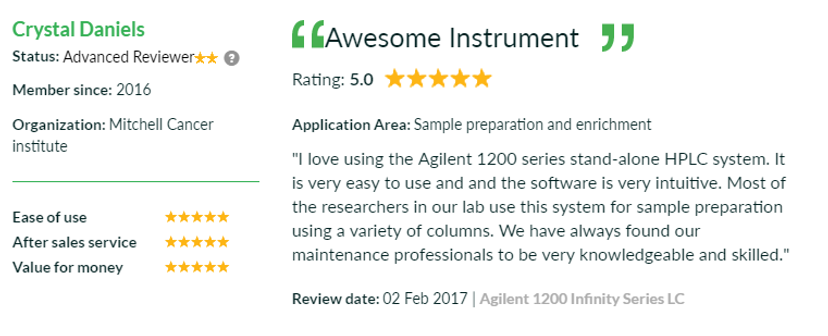
Crystal: Agilent 1100 series high performance liquid chromatography system is my favorite because of the ease-of-use and the versatility for accommodating many different lab members’ needs.

Joe: Thermo Fisher Scientific LTQ-Orbitrap XL

Who is your hero in science and why?

Crystal: I'm amazed by the work of Alexander Alexeyevich Makarov the creator of the Orbitrap technology.

Joe: Paul Ehrlich. He did much in the early days in the field of cancer immunology. He proposed ideas that became the immune surveillance hypothesis and also won the Nobel Prize in 1908.

What’s the biggest story in science right now?

Crystal: Though I don't use it myself the CRISPR/Cas9 technology is really big right now and has potential to make a large impact on the scientific community.

Joe: I think the CRISPR/Cas9 genome editing adventure has just begun, even though it is not necessarily brand new. I’m no expert in the area but recognize its immense potential. I believe some research is starting to reach ethical issues using the technology too. It will be interesting to see how these are dealt with over time.

Complete this sentence: In my lifetime, I’d like science to achieve...

Crystal: ...the discovery of a biomarker that would extend the life expectancy of those diagnosed with cancer, so that people may spend more time with their loved ones.

Joe: ...a simple way of monitoring an individual’s health allowing for early and personalized intervention when aberrations are detected.

Thanks Crystal and Joe.

Would you like to be a Reviewer of the Month?

Write your review here and you'll be in with a chance of winning this fabulous box of luxurious Easter chocolate treats!

Links

Tags

UHPLC and HPLCHigh performance liquid chromatography (HPLC) and ultra high performance liquid chromatography (UHPLC), also known as UPLC, are analytical techniques used to separate, identify and quantitate components of complex mixtures including biological samples such as proteins and lipids as well as chemical mixtures of pesticides, drugs and oils. Both techniques are liquid chromatographic methods but differ by operating pressures (HPLC < 6000 psi < UHPLC ). Components of HPLC and UHPLC systems include columns, detectors, pumps, autosamplers and column heaters. Explore a range of UHPLC and HPLC columns for your specific sample needs including reverse phase, normal phase, ion exchange, HILIC, ion exclusion and size exclusion columns. For more specialized HPLC, explore FPLC, countercurrent LC and simulated moving bed systems. Find the best UHPLC and HPLC equipment in our peer reviewed product directory: compare products, check customer reviews and receive pricing direct from manufacturers.LC-MSLC-MS (liquid chromatography-mass spectrometry) systems and equipment are used for separation and quantitative analysis of complex mixtures, combining liquid chromatography and mass spectrometry. Quantify proteins, contaminants, pesticides or screen for drug metabolites with a high level of sensitivity. LC-MS systems and equipment include reverse phase, normal phase and specialized columns integrated with various MS detectors such as time-of-flight (TOF), quadrupole, orbitrap or ion trap mass analyzers. LC-MS/MS instruments equipped with a qTOF or triple quadrupole analyzer give greater sensitivity and resolving power to your analysis. Find the best LC-MS equipment in our peer-reviewed product directory: compare products, check customer reviews and receive pricing direct from manufacturers.Mass SpectrometryMass spectrometry (MS) is a powerful analytical technique used to identify and quantify molecules based on the mass-to-charge ratio of gas-phase ions. It provides detailed information about the structure, composition, and properties of compounds and is widely used across fields such as environmental monitoring, materials science, drug discovery and development, food and beverage testing, and wider chemical research. Key MS techniques include tandem mass spectrometry (MS/MS), liquid chromatography–mass spectrometry (LS-MS) and inductively coupled plasma (ICP-MS). Choosing from these wide range of techniques and technologies can be a daunting task, so keep up to date with scientific applications, performance expectations, and customer reviews here all in one place. Visit our product directory to receive quotes direct from the manufacturer. OligonucleotidesOligonucleotides are small nucleic acid polymers, usually less than 20 bases in length. Oligonucleotides can be made via enzymatic cleavage or more commonly by chemical synthesis with polymerases. Their use includes FISH, southern blots, microarrays and as primers in PCR. High fidelity synthesis kits and detection systems are available for easy production and detection, respectively.ProteomicsProteomics is the systemic bioinformatics study of proteins and amino acids, including their structure, size, function and identification. Tools used in proteomics include chromatography, blotting and gels, protein arrays, mass spectrometry and ELISA and associated analysis software. Analyzers and proteomic systems should be sensitive, high resolution, fast and may be automated for high-throughput.Data AnalysisData analysis hardware and software is available to make data processing straight-forward yet powerful. Data software can be used for math and stats, technical graphing and image analysis. In addition, software is available for specific data analysis of electrophoresis, densitometry, ELISA and DNA sequencing.BiomarkersBiomarkers are biological markers which can be measured and evaluated to indicate a biological state. The use of biomarkers in research and diagnosis can indicate a normal or disease state or drug response of cells / tissues. Biomarkers include genetic markers, cell surface markers such as antigens, antibodies or receptors and secreted molecules such as cytokines. An assay system is required for identification of biomarkers. :Clinical ChemistryBiochemistry (or clinical chemistry) involves the analysis of bodily fluids using chemical tests. Techniques used include HPLC, chromatography, spectroscopy, mass spectrometry, immunochemical, electrophoresis, turbidometric / spectrophotometric assay, MRI and ISE analysis. Tests are often carried out on plasma or serum but urine (urinalysis) and fecal specimens are also processed.Data AnalysisThe analysis of data is the process of transforming, modeling and evaluating data to discover useful information from experimental results. Cancer ResearchCancer research aims to understand the mechanisms of cancer development and progression to improve prevention, diagnosis, and treatment. From molecular biology to clinical trials, research spans a wide range of disciplines, including immunotherapy, targeted therapies, and drug discovery. Explore the best cancer research products in our peer-reviewed product directory; compare products, check reviews, and get pricing directly from manufacturers.ReviewsHPLCHigh-performance liquid chromatography (HPLC) is a technique for separating, identifying, and quantifying components in mixtures. It is widely used in chemical, pharmaceutical, and environmental analysis to ensure purity and identify unknown compounds. Explore the best HPLC systems in our peer-reviewed product directory; compare products, read reviews, and get pricing directly from manufacturers.CRISPRCRISPR technology enables precise editing of genes, allowing scientists to modify DNA at specific locations. This revolutionary tool is used in genetic research, drug development, and gene therapy. CRISPR has applications in agriculture, disease treatment, and creating genetically modified organisms (GMOs). Explore CRISPR solutions in our peer-reviewed product directory; compare products, check reviews, and get pricing directly from manufacturers.Protein BiologyReviewer of the Month