Rapid characterization of fats in the chocolate industry

Sample preparation usually takes a lot more time than decision makers have

9 Dec 2019
Laura Sisman
Administrator / Office Personnel

Industry news

Chocolate producers and suppliers of fats and fat mixtures to the chocolate industry are often under pressure to decide within the shortest time after the arrival of a new shipment; if the crystallization behavior of the fat or fat mixture matches the requirements of the respective product.

The time-domain nuclear magnetic resonance (TD-NMR) measurement of Solid Fat Content (SFC) in fats and fat compositions using the Direct and Indirect method are well established official standard methods (ISO, AOCS, IUPAC).

While the measurement takes just 6 seconds, the sample preparation (including melting the fat or fat mixture, filling the sample tube, tempering it at melting temperature, and crystallizing the fat sample in a certain polymorph plus the subsequent tempering at the measurement temperature) takes a lot of time. Especially for cocoa butter. When using cocoa butter equivalents and similar fats the whole sample preparation takes 44.5 hours. This is far too long to decide if the crystallization behavior of the fat or fat mixture matches the requirements of the product or not. At chocolate industry sites, shipments arrive with the fat composition and the decision has to be made within 2 hours to unload them or not. Moreover, the end-use of the fat in processing (filling, covering, etc.) has to be decided.

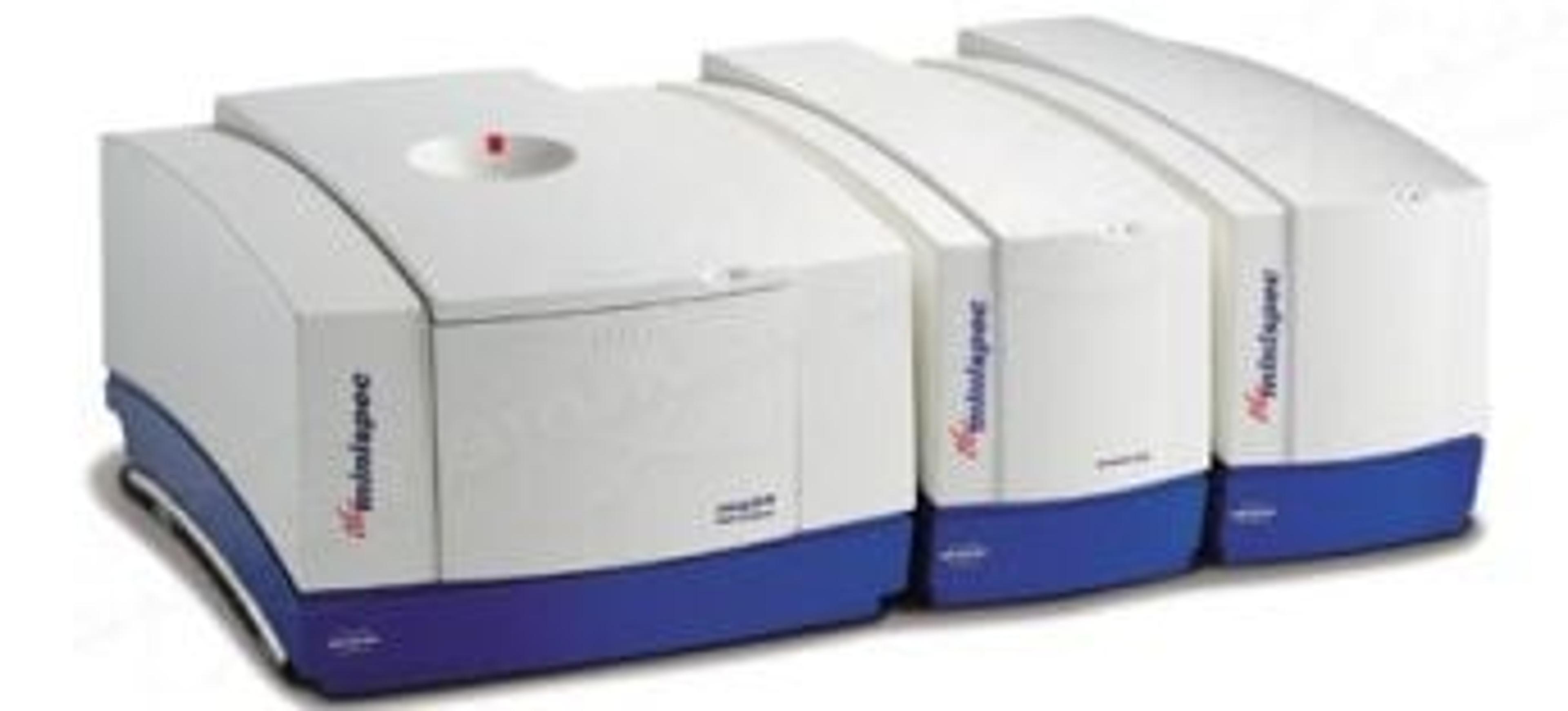
Based on these requirements Analytik partner Bruker BioSpin developed the Dynamic Fat Crystallisation application using the Minispec MQ 20. It provides a crystallization pattern of fat on a timeline by measuring the solid fat content. This indirectly shows the initial crystallization, the main crystallization step, and the final Solid Fat Content within 2 hours. Based on the speed of the crystallization and the final Solid Fat Content, QC managers at factories can decide if the delivered fat is acceptable and unloaded or rejected, or if fat or mixtures are used for filling or covering applications. A correlation between the measured fat crystallization pattern and product crystallization in the production line helps to improve product quality.

Want more of the latest science news straight to your inbox? Become a SelectScience member for free today>>

Links

Tags

Mass SpectrometryMass spectrometry (MS) is a powerful analytical technique used to identify and quantify molecules based on the mass-to-charge ratio of gas-phase ions. It provides detailed information about the structure, composition, and properties of compounds and is widely used across fields such as environmental monitoring, materials science, drug discovery and development, food and beverage testing, and wider chemical research. Key MS techniques include tandem mass spectrometry (MS/MS), liquid chromatography–mass spectrometry (LS-MS) and inductively coupled plasma (ICP-MS). Choosing from these wide range of techniques and technologies can be a daunting task, so keep up to date with scientific applications, performance expectations, and customer reviews here all in one place. Visit our product directory to receive quotes direct from the manufacturer. NMR and EPR SpectroscopyNuclear magnetic resonance (NMR) spectroscopy is used to resolve the local chemical environment of atomic nuclei with spin, revealing information on molecular structure, dynamic processes and chemical reactions of organic molecules, from proteins to synthetics. Electron paramagnetic resonance (EPR) also known as electron spin resonance (ESR) spectroscopy is used to detect and quantify paramagnetic species in a sample, including free radicals as transition metal ions. By immersing the sample in a strong magnetic field, both NMR and EPR spectrometers probe the sample with either radio waves or microwaves respectively. A range of benchtop, solid-state and time domain NMR spectrometers & EPR spectrometers are available, as well as NMR tubes, NMR solvents, software, coils, and magnets. Find the best NMR & EPR equipment in our peer-reviewed product directory: compare products, check customer reviews and receive pricing direct from manufacturers.Food and Beverage AnalyzersFood and Beverage Analyzers are commonly used to provide information about the chemical composition, structure and physical properties of food materials.SpectroscopySpectroscopy is a technique that analyzes the interaction of light with matter to study molecular properties, concentrations, and structural information. Widely used in chemical, pharmaceutical, and environmental analysis, spectroscopy offers insights into molecular composition and helps identify unknown compounds. It plays a key role in quality control, research, and diagnostics. Browse our peer-reviewed product directory to compare spectroscopy tools, read reviews, and get prices directly from manufacturers.Food QualityFood quality refers to the attributes of food that influence its safety, nutrition, and taste. Monitoring and ensuring food quality are essential in production to meet health regulations and consumer expectations. Techniques like spectroscopy, chromatography, and microbial testing are used to assess food properties and detect contaminants. Browse our peer-reviewed product directory to find food quality testing solutions; compare products, check reviews, and get pricing directly from manufacturers.Chocolate