PerkinElmer launches solutions to streamline analysis for labs in pharmaceuticals, semiconductors, biomonitoring, food, and materials

Multi-Quadrupole ICP-MS, FT-IR, and automation innovations provide testing and research performance, flexibility, and ease of use

26 Jun 2022

Blake Forman
Content Creator

Product news

PerkinElmer, Inc., a global leader committed to innovating for a healthier world, has expanded its analysis and automation portfolio for quality, safety, and content testing. Geared for pharmaceutical, semiconductor, biomonitoring, food, materials, and academia labs, the new offerings are designed to help streamline workflows, sharpen insights, and meet regulations and include:

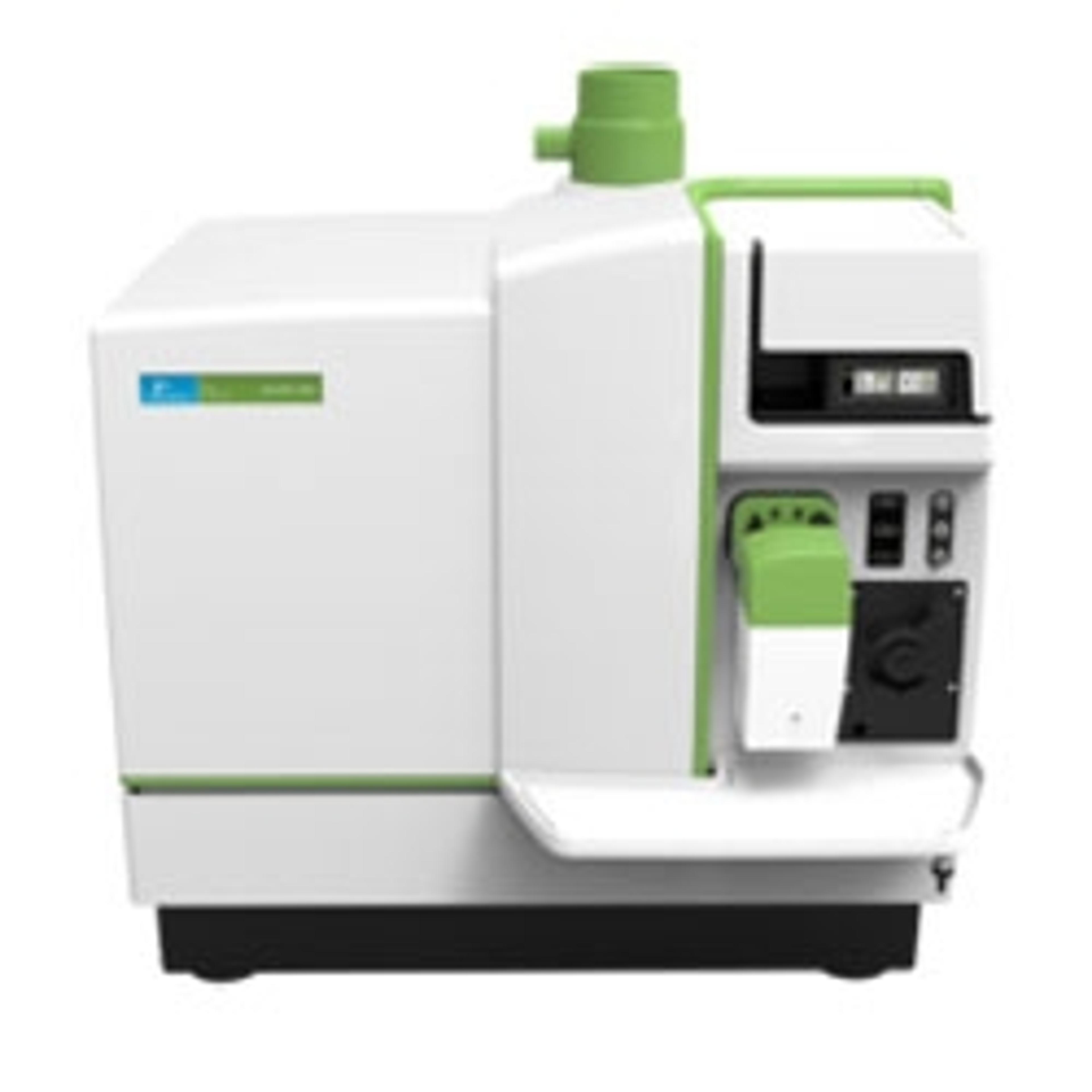
NexION® 5000 Multi-Quadruple ICP-MS for demanding trace element analyses, this multi-quadrupole ICP-MS solution drives accurate and repeatable results, while helping to future-proof labs. Leveraging new and proprietary technologies, the NexION 5000 is the first in its category to offer four quadrupoles – meeting and exceeding rigorous trace-elemental testing requirements for labs working in areas like semiconductor R&D and device manufacturing as well as biomonitoring. The new offering goes beyond current triple-quad ICP-MS performance to deliver exceptionally low background equivalent concentrations (BECs) at <1 ppt even in hot plasma and outstanding detection limits in a matrix-tolerant, low-maintenance solution.

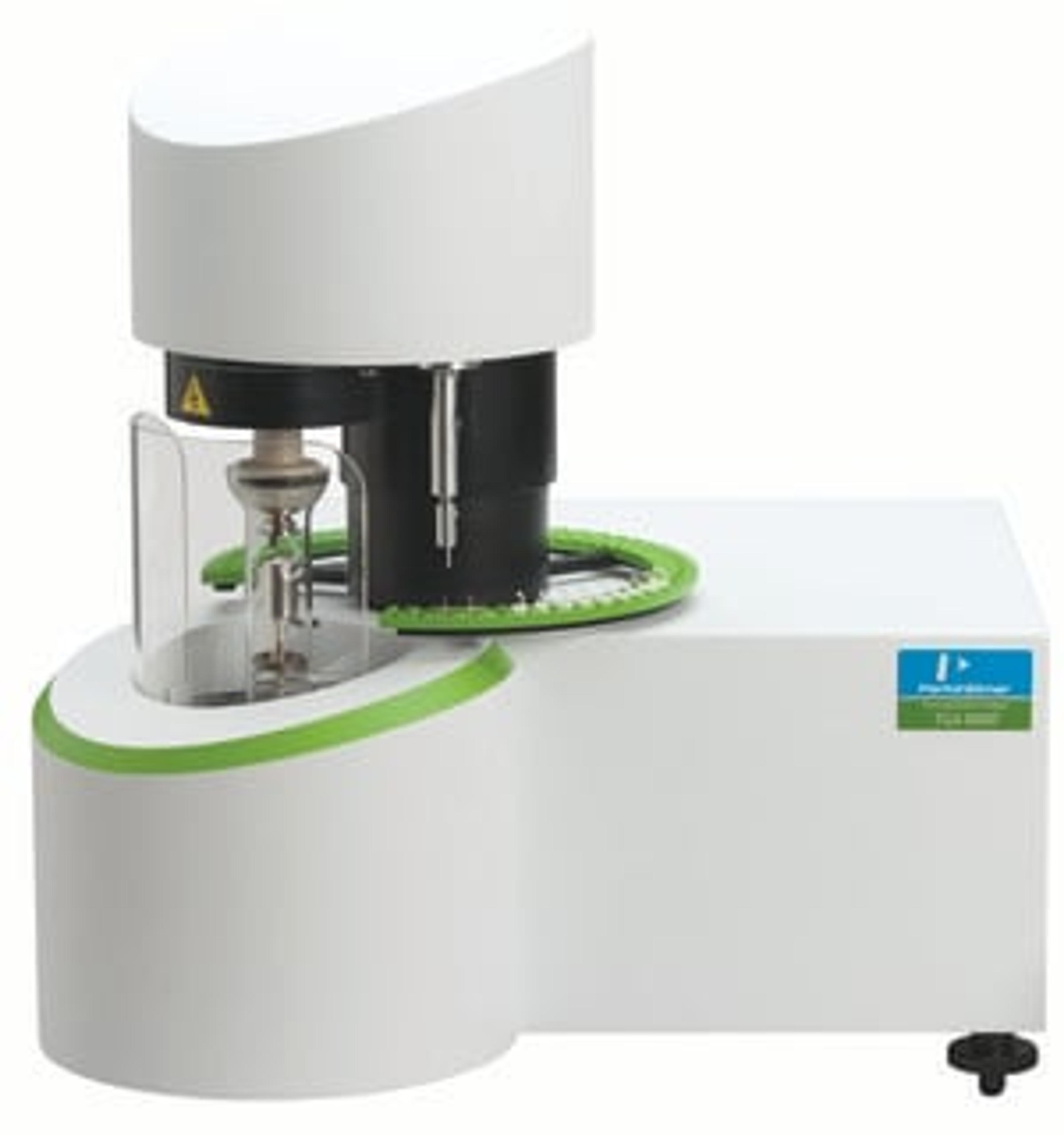
Spectrum™ 3 spectrometer– a tri-range FT-IR spectroscopy solution featuring 100 scans/second for pharmaceutical, polymer, materials, food, academic, or chemical labs doing advanced research, product development, or reaction monitoring. Working across solid, liquid, or gas samples and including options for near, mid and far-IR ranges it brings strong flexibility. It is also suitable for users of varying skill levels as it is the first FT-IR platform to offer a fully integrated TG-IR hyphenation (EGA4000) solution.

For more advanced applications, it can be easily hyphenated with PerkinElmer’s TGA™ 8000 thermogravimetric analyzer and Clarus® SQ8 GC/MS chromatography system. Spectrum 3 also leverages PerkinElmer’s Spectrum™ 10 software (including integrated time-resolved software and CFR 21 Part 11 compliance options) and cloud connectivity via NetPlus™ software – delivering accurate results, integrated workflows, and global, real-time collaboration.

Spectrum™ Two + spectrometer - a powerful FT-IR solution for routine compositional and quality analyses that delivers fast and accurate results with secure, cloud-connectivity. It also offers a compact footprint, advanced UATR (universal attenuated total reflectance) accessory, and rugged touchscreen.

S20 Autosamplers Serieshttps://www.perkinelmer.com/product/s23-three-rack-autosampler-dual-rinse-n0830015 - brings sample automation speed, ruggedness, and versatility to labs looking to boost their productivity and cost savings, as well as future-proof their spectroscopy capabilities.

“Whether lab professionals are working to ensure the efficacy of pharmaceuticals, meeting materials regulations, aiming for zero impurities in semiconductor processes, or testing for food adulteration, they want to be more productive and collaborative and create highly reliable results and fresh insights,” said Suneet Chadha, VP/GM, Applied Markets, PerkinElmer. “Our new four quadrupole ICP-MS, FT-IR and automation solutions are designed to empower scientists and technicians to look deeper, work smarter, and prepare for future needs or requirements.”

Want the latest science news straight to your inbox? Become a SelectScience member for free today>>

Links

Tags

Atomic Absorption / Emission SpectroscopyAtomic absorption spectroscopy (AAS) and atomic emission spectroscopy (AES) — also called optical emission spectroscopy (OES) — are used to detect the elemental constituents in samples. Both techniques involve the atomization of a sample. Atomic absorption spectrometers may use a flame or furnace to create an atomic vapor of the sample before irradiation with spectral light. Optical emission spectrometers may use a flame, inductively coupled plasma (ICP), microwave plasma (MP) or spark arcs to atomize and excite the sample. At higher excitation energies, electrons can be emitted instead of photons, which can be useful for samples that can’t be atomized and for surface analysis. Explore electron spectroscopy equipment such as Auger spectrometers and photoelectron spectrometers for surface elemental analysis of samples. Find the best atomic absorption, photoelectron and optical emission spectrometers in our peer-reviewed product directory: compare products, check customer reviews and receive pricing direct from manufacturers.Infrared / IR SpectroscopyInfrared (IR) spectroscopy measures the interaction of infrared light with a sample, including transmission, reflectance & absorbance, facilitating the identification of analytes. Equipment used for quantitative analysis includes Fourier-transform infrared (FTIR) spectrometers, infrared cameras, FTIR gas analyzers, as well as attenuated total reflectance (ATR) accessories and pellet or film presses. Find the best IR spectroscopy products in our peer-reviewed product directory: compare products, check customer reviews and receive pricing direct from manufacturers.LC-MSLC-MS (liquid chromatography-mass spectrometry) systems and equipment are used for separation and quantitative analysis of complex mixtures, combining liquid chromatography and mass spectrometry. Quantify proteins, contaminants, pesticides or screen for drug metabolites with a high level of sensitivity. LC-MS systems and equipment include reverse phase, normal phase and specialized columns integrated with various MS detectors such as time-of-flight (TOF), quadrupole, orbitrap or ion trap mass analyzers. LC-MS/MS instruments equipped with a qTOF or triple quadrupole analyzer give greater sensitivity and resolving power to your analysis. Find the best LC-MS equipment in our peer-reviewed product directory: compare products, check customer reviews and receive pricing direct from manufacturers.Process ChemistryProcess chemistry is an important stage of drug development for scaling-up drug production or chemical synthesis reactions. It is useful for optimizing economical and efficient drug production. Process chemistry uses reactors and pump systems as well as reagents, standards and buffers.Food TestingFood testing refers to a variety experiments including PCR, mass spectrometry, processing, QuEChERS, analyzing and Kjeldahl.ICP-MSInductively Coupled Plasma Mass Spectrometry (ICP-MS) is a powerful analytical technique used to determine the concentrations of elements and their isotopes in a variety of samples, including water, soil, and biological tissues. It involves ionizing elements in the samples with extremely high-temperature Argon (Ar) plasma and then using a mass spectrometer to measure the number of ions based on their mass-to-charge ratio (m/z). Explore ICP-MS systems in our peer-reviewed product directory; compare products, check reviews, and get pricing directly from manufacturers.SpectroscopySpectroscopy is a technique that analyzes the interaction of light with matter to study molecular properties, concentrations, and structural information. Widely used in chemical, pharmaceutical, and environmental analysis, spectroscopy offers insights into molecular composition and helps identify unknown compounds. It plays a key role in quality control, research, and diagnostics. Browse our peer-reviewed product directory to compare spectroscopy tools, read reviews, and get prices directly from manufacturers.PharmaceuticalsPharmaceuticals are medicinal drugs used in healthcare to diagnose, prevent, cure and treat illnesses. Pharmaceuticals that are excreted after use appear in wastewater and can have detrimental effects on the environment.Infrared