
New Technique Involving Roche´s LightCycler<sup>®</sup> 480 Instrument Enables Efficient and Economic Studies on RNA Editing
4 Mar 2008Current research in the area of RNA editing is limited by the lack of cheap, effective approaches for screening for new editing sites or for mutants affected in the editing process. Previously used methods to study RNA editing, such as cDNA sequencing, primer extension or pyrosequencing are either too expensive, not sensitive enough, or too labor intensive for high-throughput screens.
Now, a one-step, high-throughput method using High Resolution Melting on the LightCycler® 480 System is described (see Chateigner-Boutin, A-L, Small, I (2007) Nucleic Acids Research, 1–8, doi:10.1093/nar/gkm640). It allows both the scanning of transcripts for new editing sites (without any prior knowledge of their nature or location) and the quantification of editing. The method, originally designed to detect DNA mutations and genotype individuals in clinical research and diagnostics, can be simply adapted to research on RNA editing. This new approach can be simply and directly applied to samples from any organism, so this breakthrough should stimulate research in many laboratories.
RNA editing is reported in a wide range of organisms from viruses to mammals and plants where it has different functions such as regulating gene expression, increasing protein diversity or reversing the effect of mutations in the genome. It is defined as a site-specific modification of RNA molecules, occurring by nucleotide insertion/deletion, substitution or modification. In many cases, RNA editing is essential for correct production of the protein encoded, e.g., in humans, where this process is essential for the absorption of dietary fats in small intestine by producing the lipid-carrying protein apolipoprotein B48. In other cases, RNA editing modulates the functional properties of the encoded protein as in the case of the glutamate and serotonin receptors in the central nervous system.
Related products
Request Quote for All Products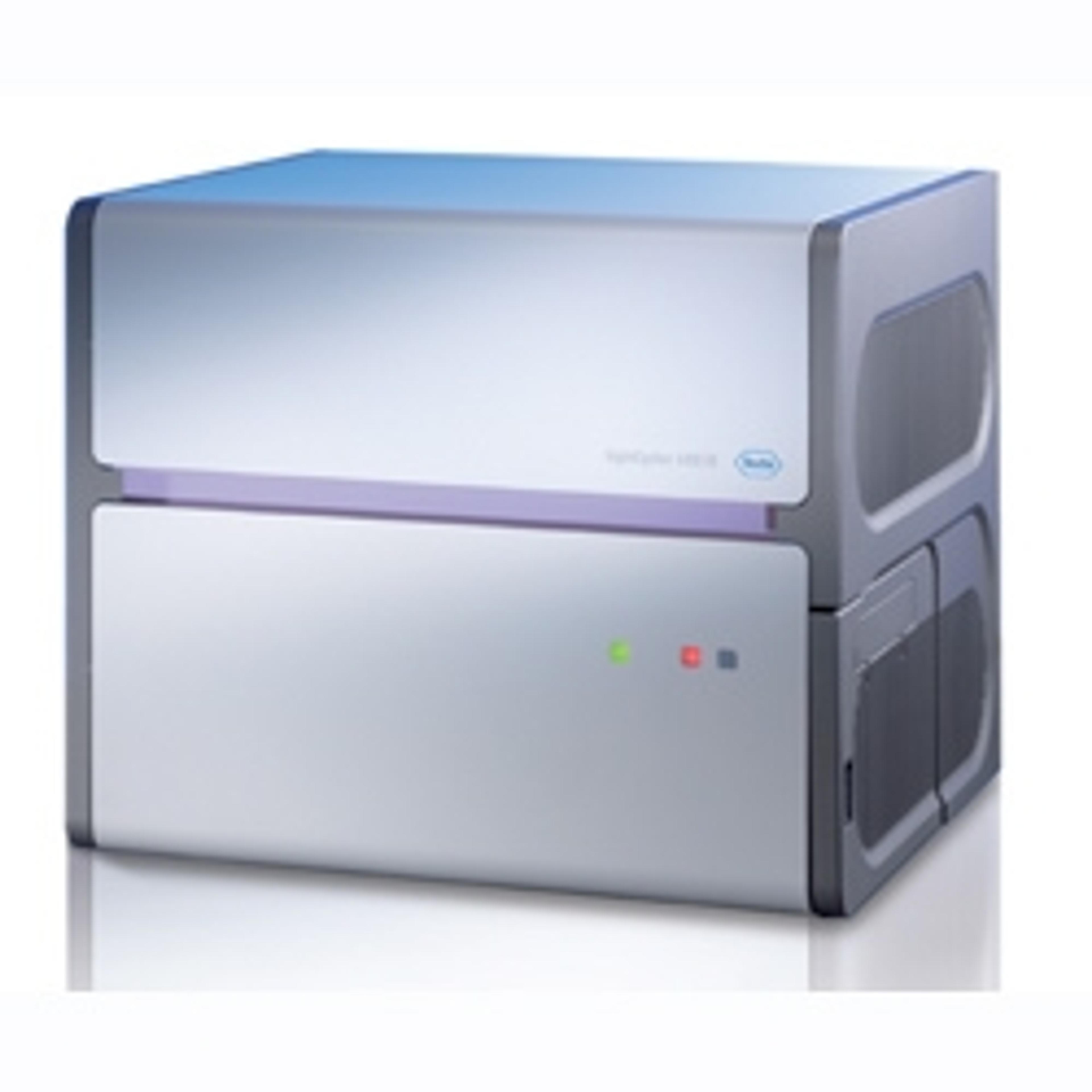
LightCycler® 480 Real-Time PCR System
The Roche LightCycler 480 System - Another breakthrough in real-time PCR analysis of gene expression and melting curve-based mutation analysis.The Roche LightCycler 480 RT-PCR System combines amazing speed with exceptional accuracy and will meet the needs of a broad range of scientific applications in genomics research including array validation, gene-knockdown studies, and SNP analysis.This Roche Light Cycler PCR supports all current probe formats and applications and its built-in versatility allows adaptation to future technological advances in genomics research.Customer benefits from the Roche LightCycler® 480 System: Speed – rapid temperature control for superb specificity and yield.The LightCycler 480 PCR System utilizes a novel block technology to allow the rapid heating and cooling required to complete a 40-cycle, 384-well quantitative PCR run in less than 40 minutes and leads to extraordinary well-to-well temperature homogeneity and maximized inter-well, inter-cycle reproducibility. Accuracy – unbiased conditions for unambiguous results Special arrangement of optical components ensures the uniform collection of signals across the plate and makes analysis independent of sample position or differences in reaction volume. Versatility – utmost flexibility for maximum efficiency Five excitation and six emission filters of the Roche LightCycler allow you to work with the assay format of your choice, including SYBR Green I, hydrolysis probes, probes, probes, Molecular Beacons, and others. High-performance optical system from the LightCycler 480Fluorescence excitation by a high-intensity xenon lamp, and a specially developed signal-collection system, result in maximal sensitivity for any assay format in all channels. Additional Features of the LightCycler 480 PCR System: Customizable modular system concept Building on the principles of the well-established, performance-proven LightCycler® Software 4.0, the Roche LightCycler® 480 platform comes equipped with modules for run control, Tm calling, and absolute quantification. Further customize your system to your specific needs by adding separately offered advanced analysis modules. Especially developed reagents A tailor-made hot-start PCR enzyme master mix is available for each type of LightCycler® 480 application. Built on Roche Diagnostics’ performance proven FastStart technology, these reagents ensure optimal reproducibility and high dynamic ranges. Perfect integration into laboratory workflow Compatibility for automated sample-preparation, automated loading and connectivity to laboratory information management systems (LIMS) for integrated workflow monitoring offer uncompromising adaptability for a perfect fit.