
Mercury Monitoring System Enhancements Designed to Assist Users with Meeting EPA Standards
14 Feb 2014
Environmental managers and equipment engineers at industrial facilities--including utilities, industrial boilers and cement kilns--now have a National Institute of Standards and Technology (NIST) traceable quality control method designed to help them meet EPA standards.
The new Thermo Scientific Model 84i Mercury Permeation Source provides a NIST-traceable quality control method for customers who are seeking to comply with the U.S. Environmental Protection Agency’s (EPA) Utility Mercury and Air Toxics Standards (MATS) and Cement and Industrial Boiler Maximum Achievable Control Technology (MACTs) requirements for mercury monitoring. Mercury gas generating industrial facilities are required by the EPA to have a NIST-traceable quality control method for monitoring mercury emissions.
A complete mercury monitoring solution
The new model 84i is an enhancement to the existing Thermo Scientific Mercury Freedom System, offering customers a complete mercury monitoring solution.
Thermo Fisher recently showcased the 84i mercury permeation source at the Energy, Utility and Environment Conference (EUEC) 2014.
High quality mercury monitoring
“The model 84i source was designed and manufactured by the same team who released the Mercury Freedom System, enabling us to offer a consistently high quality mercury monitoring system with the goal of helping our customers monitor and reduce mercury emissions,” said Jeff Socha, chief scientist, environmental and process monitoring, Thermo Fisher Scientific.
The 84i Permeation Source benefits and features include:
• Audits can be triggered on an automated or manual basis
• Quick integration into the Thermo Scientific Mercury Freedom System’s rack
• Utilizes Thermo Scientific common components for faster parts replacement
Related products
Request Quote for All Products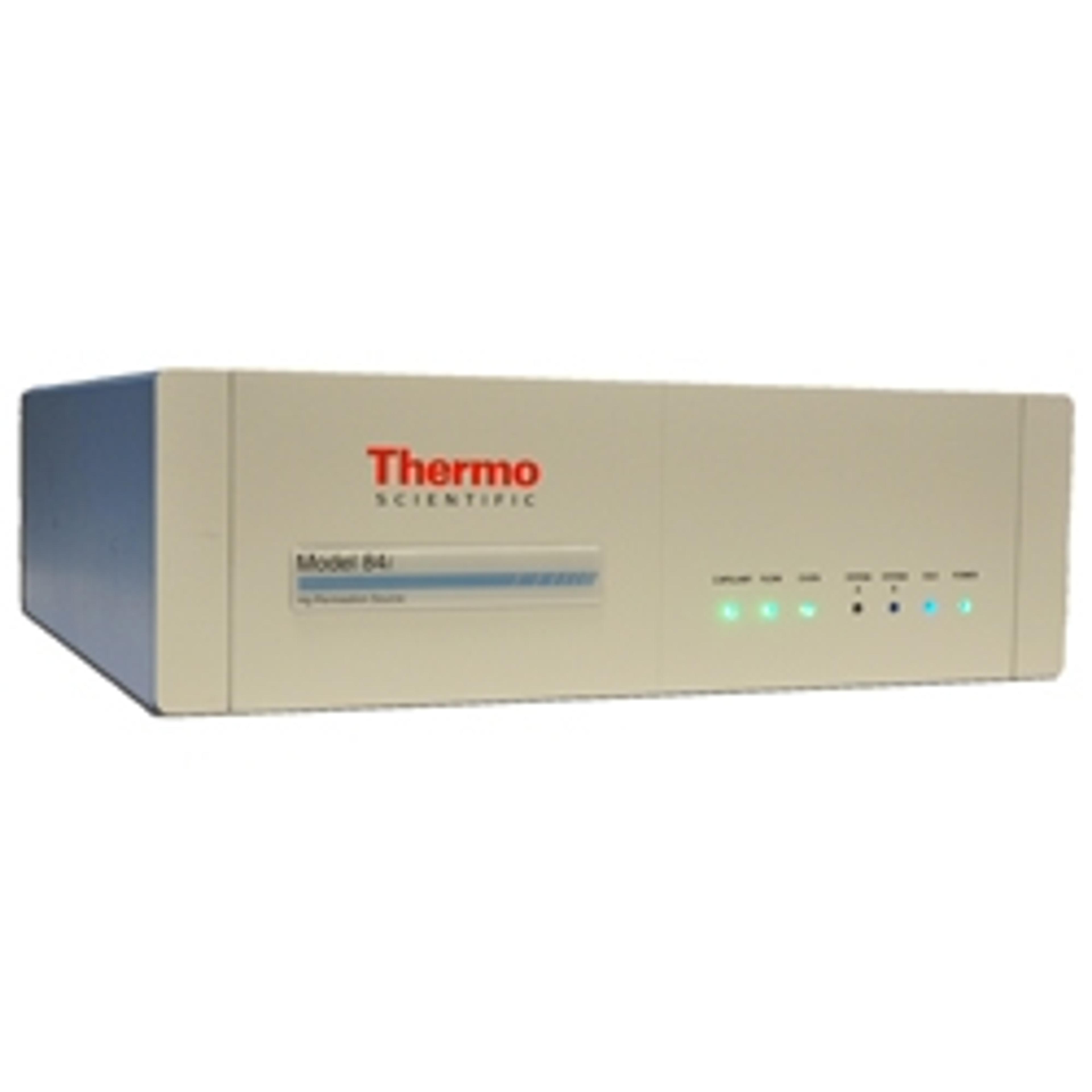
Mercury Freedom System
Thermo Fisher ScientificMeasure elemental, ionic and total mercury in exhaust stacks from coal-fired boilers and waste incinerators with the Thermo Scientific™ Mercury Freedom System. Meet or exceed performance specifications outlined in U.S. EPA PS-12A and/or Part 75 provisions for continuous Mercury CEM systems in addition to the latest MATS and MACT rules.Ensure complete regulatory compliance with unattended, true continuous monitoring. The Thermo Scientific Mercury Freedom System integrated mercury emissions monitoring systems measures elemental, ionic and total mercury in exhaust stacks from coal-fired boilers, waste incinerators, cement kilns and other industrial combustion sources.Mercury Freedom System Features: Meets U.S. EPA 40 CFR Part 75 requirements with true continuous monitoring Get ahead of the curve and be prepared for increasingly stringent regulations with the highly sensitive direct cold vapor atomic florescence technology Reduced umbilical temperature extends life of umbilical line and reduces service needs Split umbilical available as separate cold/hot lines which can further extend umbilical life No expensive consumables Modular design allows for easy access to equipment and reduced maintenance time and cost Highly sensitive cold vapor atomic fluorescence analyzer requires no wet chemicals or costly gold amalgamation concentrator Rack-mountable components integrate seamlessly into most existing stack monitoring configurations No argon carrier gas is required, saving space and expense No interference with Bromine Dilution-based measurement High sensitivity Consistent performance in harsh conditions