
Membrane emulsification transforms long-acting injectable manufacturing
A breakthrough approach that overcomes scale-up and consistency challenges in microsphere production
25 Feb 2026
Long-acting injectable microspheres offer numerous benefits to patients and pharmaceutical companies alike. These long-acting drugs release medication steadily over weeks or months, eliminating dosage spikes, improving patient compliance, and ultimately improving patient outcomes. However, the complexity of aseptic manufacturing has historically made these formulations difficult to develop and scale economically.

Camden Cutright, President of Micropore Technologies
To combat this, Micropore Technologies has developed biodegradable polymer microspheres, which are formulated via emulsification. These microspheres are then used for controlled delivery of a variety of active ingredients, including hydrophobic small molecules and hydrophilic proteins.
Camden Cutright, President of Micropore Technologies, is excited about the company’s membrane emulsification platform, an innovative advancement making microsphere manufacturing at scale viable. "People are always looking to improve patient outcomes, and I think packaging small-molecule drugs into microspheres is absolutely something that could work from both a commercial perspective and more importantly improving patient health," he explains.
Why conventional homogenization falls short for microsphere manufacturing
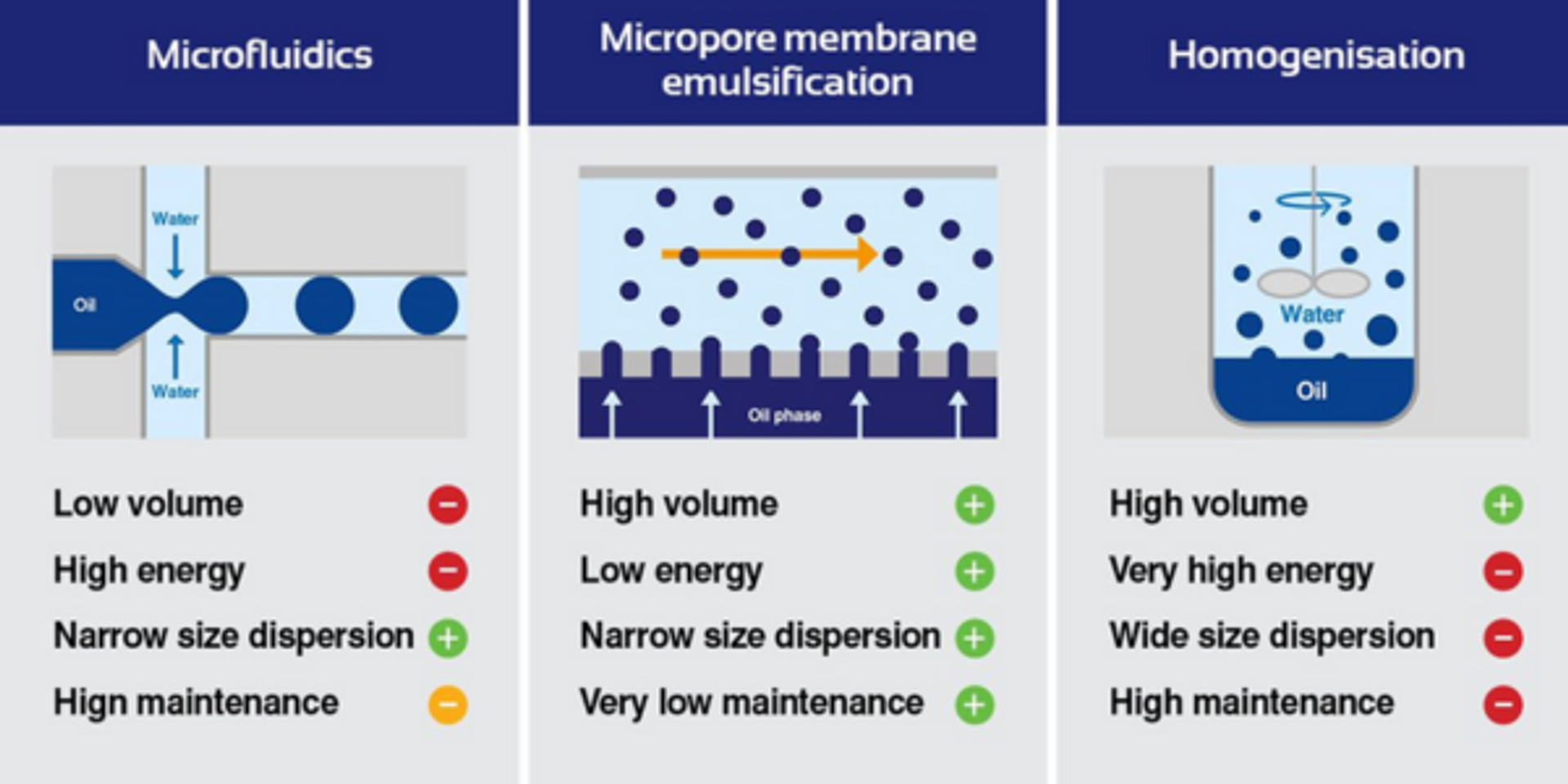
The company has moved away from traditional emulsification methods to membrane emulsification, which solves two major problems with the old approach. Firstly, that traditional homogenization is a batch or semi-batch process, making it hard to scale. Second, the energy dispersion inside the homogenizer is hard to control. For long-acting injectable formulations, this inconsistency is particularly problematic because droplet size directly determines how quickly the drug is released into the body.
Membrane emulsification takes a fundamentally different approach, utilizing advanced crossflow membrane emulsification to enable commercial production of mono dispersed single emulsion and double emulsion particles in a reliable, gentle, and energy efficient manner. "By controlling that energy dispersion, you get a very uniform population of droplets. Everything is essentially exactly the same size when it comes out," says Cutright.
During development there have been two key innovations that distinguish Micropore's platform. The first, the development of straight-through pores created by drilling rather than sintering, eliminating blockage and reducing operating pressure. The second breakthrough came in 2016 with the crossflow platform, which transformed membrane emulsification from a semi-batch to a truly continuous process. "It's really a step change in bringing membrane emulsification into an actually viable manufacturing process," notes Cutright.
Precise size control enables predictable drug release profiles
The uniform microsphere size distribution achieved through membrane emulsification directly translates to precise control over therapeutic outcomes. "From a technical perspective, the benefit that Micropore brings is that we get that nice size distribution control. You can make your long-acting injectables to whatever size you want and make them uniformly that size. Importantly you have absolute control over that release profile," explains Cutright.
This predictability is a huge advantage for formulation scientists designing sustained-release products, as it allows them to specify precise microsphere dimensions and confidently predict the resulting pharmacokinetic profile. Uniform size distribution also has a clear real-world effect, with Cutright sharing an example of a veterinary client developing a 90-day long-acting injectable for dogs.
"The client needed to get enough big droplets that would let you last the full three months," he explains. “Their previous method involved filtering out undersized particles, but at tremendous cost, throwing away roughly 60% of everything that they made. Whereas, with our platform, 99% of everything that came through the membrane emulsifier was usable and it didn't require being filtered."
Removing the filtration step offers both clear economic advantages as well as simplifying manufacturing processes. "From a manufacturing perspective, it’s a great benefit. It's a huge benefit in cost, and ultimately it also means one less unit in operation at the end of your process," Cutright points out.
The platform is also designed with aseptic manufacturing in mind – it is small and there are no moving parts or seals. “You don't have to worry about product contamination as a result of the process that you're using," says Cutright.
The same device scales from lab bench to commercial production
Undoubtedly one of the biggest benefits is the elimination of traditional scale-up challenges. Cutright keenly uses a vivid analogy to illustrate why traditional scale-up proves so difficult, "When you're trying to scale up, you think that what you're doing is going from making a cupcake to making a real cake. However, when you are actually doing the process, you realize that every element of the cake is different. The batter is different, the pan is different, the baking time is different, and the temperature is different. You have to change the whole recipe in order to try to get the same cake, just bigger."
Excitingly, continuous manufacturing sidesteps this entirely, as Cutright explains, "The benefit of the continuous process is that you don't have to do that. Once you get your operating conditions to work at the small scale, you're sorted. Your scale-up is ready to go.”
New possibilities for microsphere drug delivery
Looking ahead, Cutright sees substantial opportunity for expanding microsphere applications beyond their current limited presence. "Our platform is a step in the right direction. I think that the control we give to distribution and the ability to save on products improves the economics of all this pretty dramatically. I see a lot of drug development moving towards long-acting injectables in the future," he concludes.
The combination of contamination-free processing, efficiency gains, and seamless scalability offered by membrane emulsification secures its position as an enabling technology for the next generation of long-acting injectable formulations.
Related products
Request Quote for All Products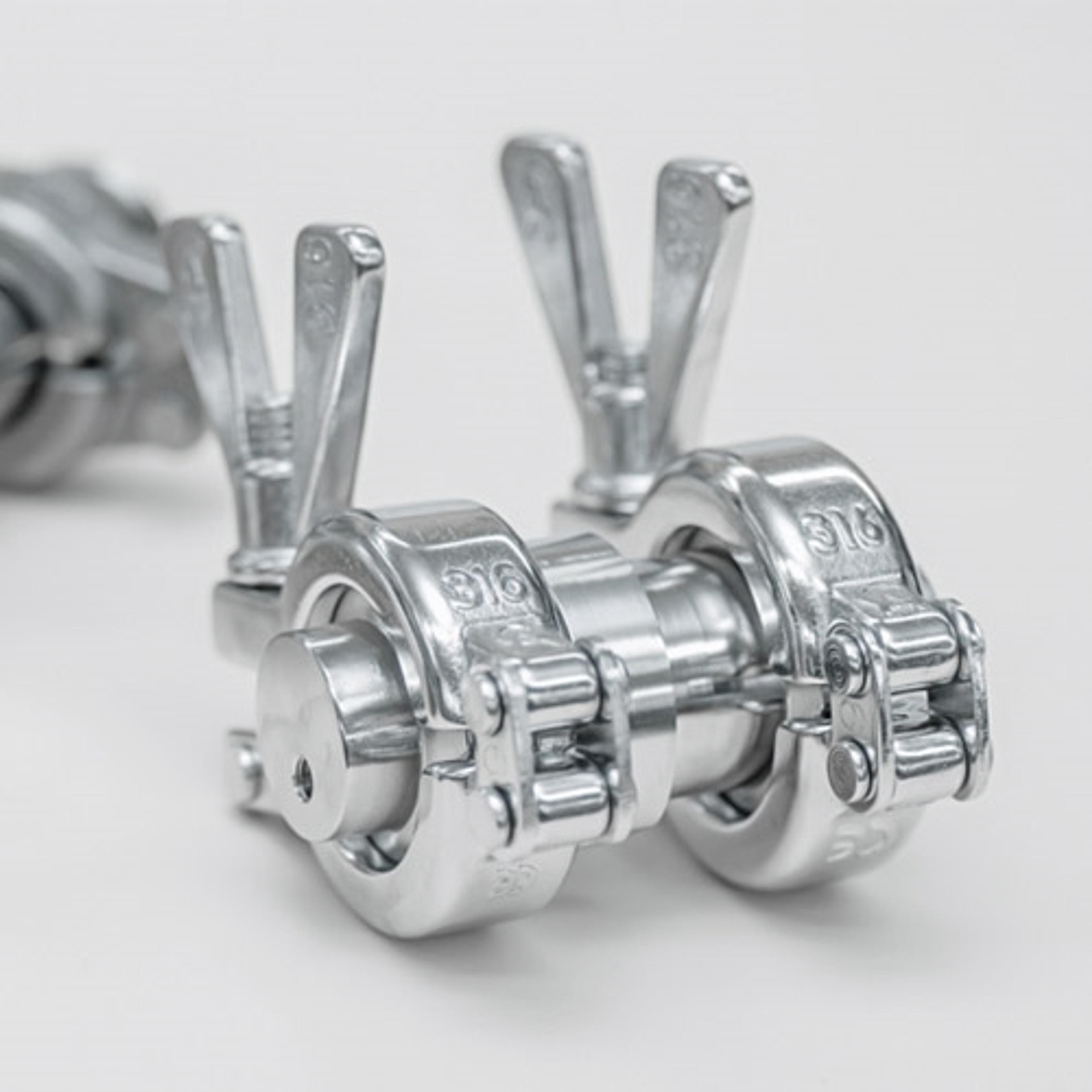
Micropore AXF-mini advanced crossflow micro mixer
Micropore TechnologiesAdvanced crossflow (AXF) mixing has solved the problem of how to efficiently create the highest quality micro and nano-spheres, emulsions, and crystals around a chosen size with a robust, cost-effective, scalable technology.
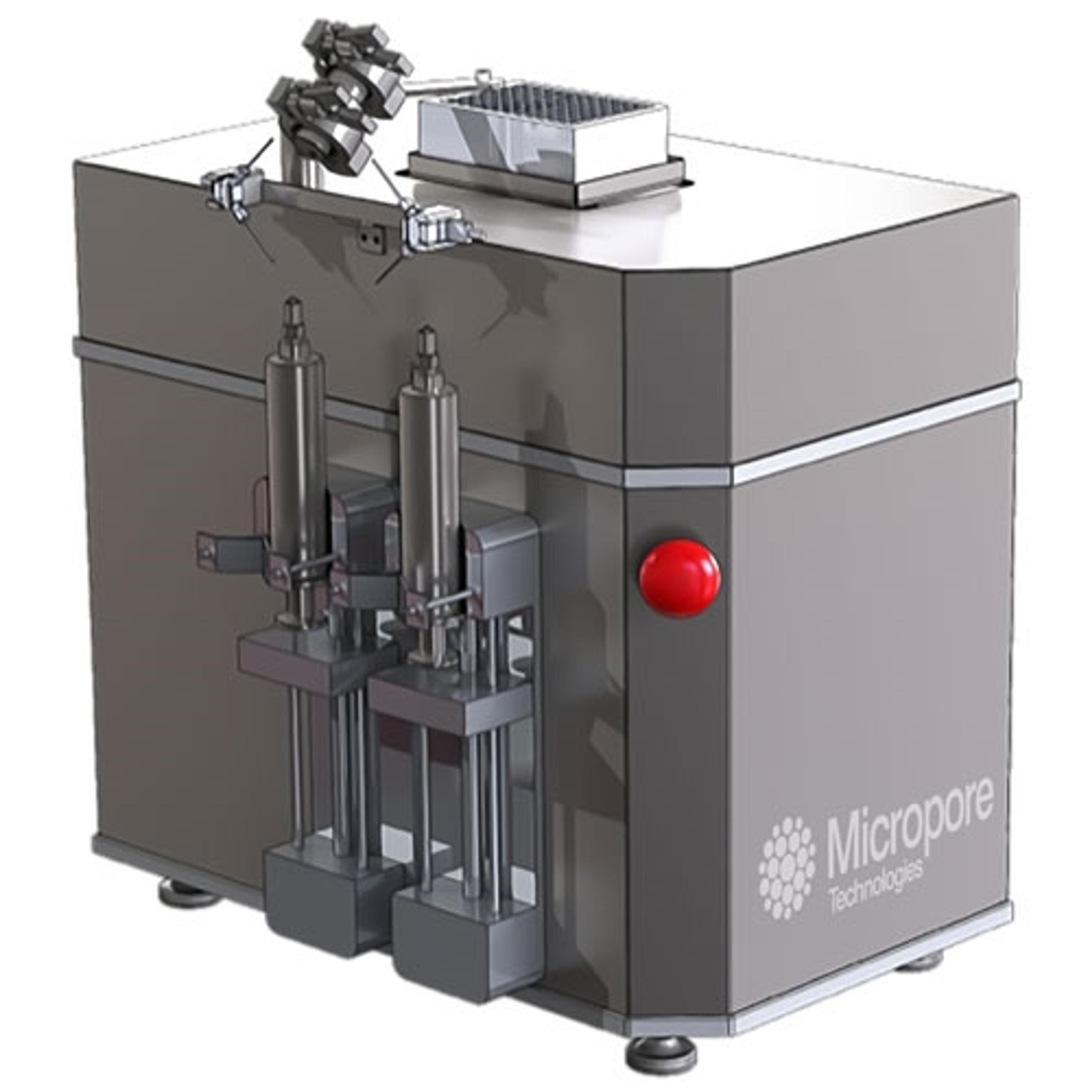
Micropore AXF-Pathfinder compact integrated crossflow DOE device
Micropore TechnologiesThe AXF-Pathfinder is a benchtop system, based on Micropore’s well-established AXF-mini crossflow nano/micro-mixing device, which generates high throughput formulation development samples using an intuitive software platform to deliver DOE samples into a standard multi-well plate. The system benefits from the AXF-mini’s extremely low internal volume to minimize waste both during start-up and during operation. Start-up waste is approx. 400 μL.
Links
Tags
Frequently asked questions
Show frequently asked questions
How does Micropore Technologies’ membrane emulsification platform improve the manufacturing of long-acting injectable microspheres compared with conventional homogenization?
Micropore Technologies’ membrane emulsification platform replaces traditional batch or semi-batch homogenization with a continuous crossflow membrane process. Conventional homogenization suffers from hard-to-control energy dispersion and inconsistent droplet size, which is problematic because droplet size directly determines drug release rate in long-acting injectables. In contrast, Micropore’s platform uses advanced crossflow membrane emulsification and straight-through drilled pores to generate a highly uniform population of mono dispersed single and double emulsion particles. This delivers precise droplet size control, lower operating pressure, reduced blockage, and a reliable, gentle, energy-efficient process that is viable for commercial-scale microsphere manufacturing.
What benefits does Micropore Technologies’ membrane emulsification offer for long-acting injectable drug delivery and patient outcomes?
The membrane emulsification platform enables the production of biodegradable polymer microspheres with tightly controlled and uniform sizes, which allows formulation scientists to design long-acting injectable drugs with predictable and customizable release profiles. By eliminating dosage spikes and enabling steady drug release over weeks or months, these microspheres improve patient compliance and overall patient outcomes. The technology also reduces waste, as demonstrated by a veterinary client developing a 90‑day injectable for dogs: instead of discarding about 60% of undersized particles, approximately 99% of the microspheres produced with Micropore’s membrane emulsifier were usable without filtration. This combination of predictable pharmacokinetics, improved economics, and simplified manufacturing supports broader adoption of long-acting injectable formulations.
How does Micropore Technologies’ continuous membrane emulsification process address scale-up and aseptic manufacturing challenges in microsphere production?
Micropore Technologies’ crossflow membrane emulsification platform transforms microsphere production from a semi-batch to a truly continuous process, allowing the same device and operating conditions to be used from lab bench to commercial scale. Once optimal parameters are established at small scale, they can be directly translated to larger production without changing the “recipe,” avoiding traditional scale-up issues where every process element must be re-optimized. The equipment is compact, has no moving parts or seals, and is designed for aseptic manufacturing, reducing the risk of product contamination. By removing the need for downstream filtration, the platform simplifies the process, cuts costs, and eliminates an additional unit operation, making contamination-free, scalable manufacturing of long-acting injectable microspheres more practical for pharmaceutical companies.