
Join Waters at the 54th Annual North American Chemical Residue Workshop (NACRW)
Waters is proud to be a Platinum sponsor of NACRW 2017
13 Jul 2017Dates: Sunday, July 23 – Wednesday, July 26, 2017
Location: Naples Grande Beach Resort, 475 Seagate Drive, Naples, Florida 34103
NACRW is the annual meeting for scientists particularly interested in trace level analysis of pesticides, veterinary drug residues, and other chemicals in food, animal feed, and environmental samples. The purpose of the meeting is to provide training, develop and improve technical knowledge, facilitate development and distribution of new analysis methods and techniques, and establish networking to promote professional cooperation between scientists of these interests.
Waters’ novel technologies are helping to ensure the quality of the food we eat and the environment we live in. Waters' will be presenting a selection of their products, including:
- Vion, providing ion mobility combined with high resolution MS,
- universal source design including Atmospheric Pressure Gas Chromatography (APGC),
- ionKey for sensitivity, throughput, and robustness for microflow LC-MS analyses
- Informatics platforms such as MassLynx, enabling the collection and interpretation of multi-faceted datasets from such advanced analytical instrumentation.
Stop by the Waters exhibit booths #41/52 and learn about our latest technologies and innovations, enabling superior performance in your lab, allowing you to succeed in the science of what’s possible.
Related products
Request Quote for All Products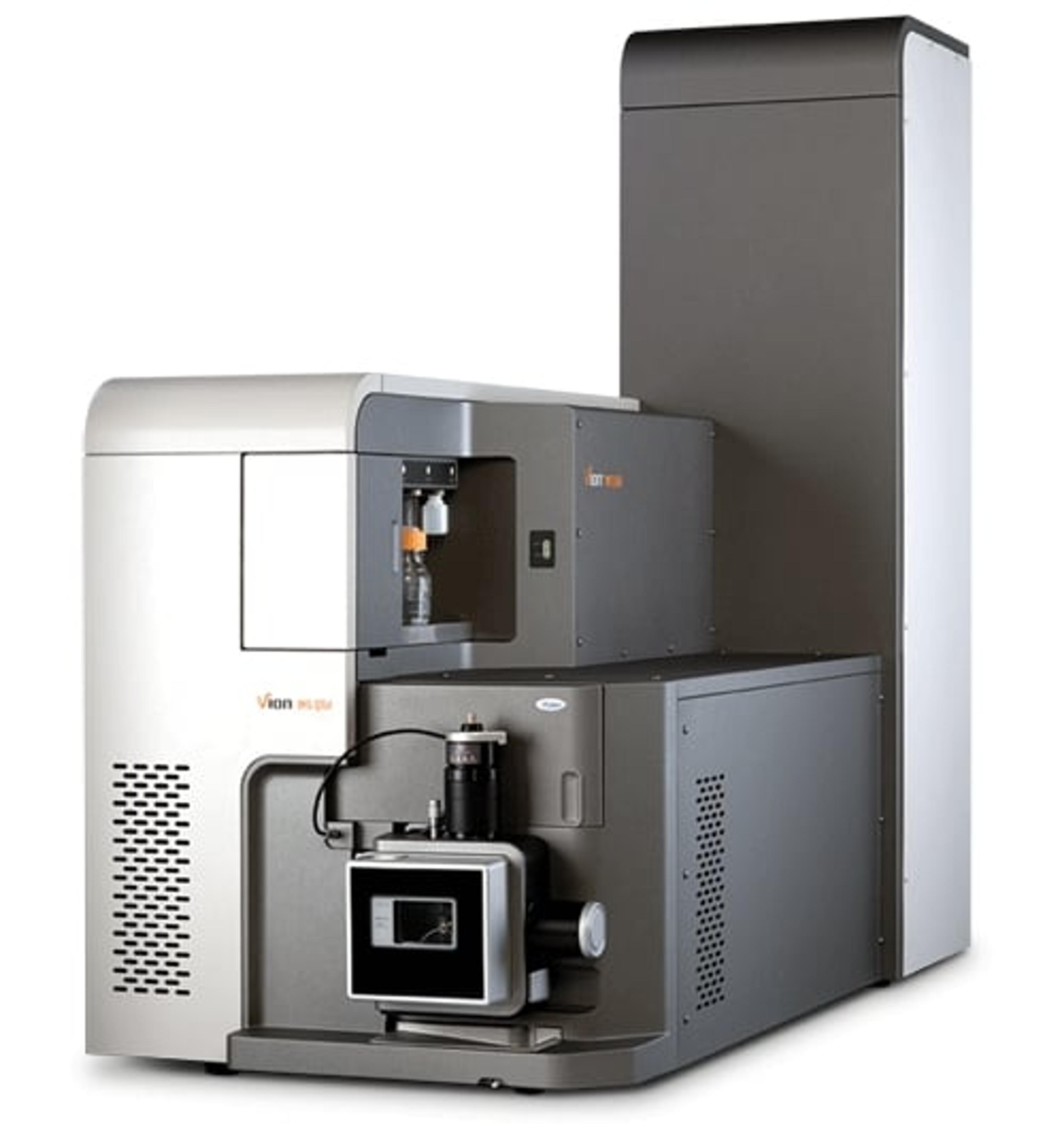
Vion IMS QTof
WatersVion IMS QTof is a high resolution QTof mass spectrometer that delivers the selectivity of ion mobility to every scientist, for every analysis. Does high resolution, accurate mass data always lead to the correct answer first time? Avoid additional confirmatory experiments by utilizing the selectivity of ion mobility. Featuring new geometry and including XS Ion Optics and the QuanTof2 detection system, the Vion IMS QTof has the sensitivity and dynamic range to make ion mobility quantitative and routinely usable, enabling: Easier data interpretation as ion mobility cleans up and simplifies every spectrum Confident identification and quantification of analytes Faster method development and higher sample throughput Greater selectivity than conventional MS/MS with HDMSE With Vion IMS QTof you can use the selectivity of ion mobility to quickly refine spectra and discount chromatographically co-eluting compounds and background interferences. Enabling you to characterize your compounds with confidence. The ability to gather and process CCS data for every ion gives you more confidence in your data than ever before. Vion IMS QTof is driven by UNIFI scientific information system to deliver the most comprehensive analytical workflow, enabling you to target, identify, and review results in a single software platform. Make more informed decisions, faster. CCS provides chromatographic retention time independent data points, enabling confident identification of your analytes and reducing the risk of false positives and false negatives. Even during initial sample analysis, without any retention time knowledge, you can use theoretical exact mass and CCS library values to identify unknown and unexpected components. Applications: Screening - Meeting legislative and regulatory demands requires the utmost confidence in your data. UNIFI informatics workflows integrate the value of CCS, reducing false positives and false negatives driving laboratory efficiency. Pharma - The combination of UNIFI and Vion IMS QTof brings ion mobility to your drug discovery experiments while maintaing ease and efficiency you need for your routine Met ID processes. Omics - A recurring challenge for omics studies is the identification and structural elucidation of metabolites, lipids, and peptides of interest. Incorporating Vion IMS QTof into your workflow gives you not only CSS data from every component, but also increase analytical space and resolution.