
Informative ChIP Applications Compendium Helps to Improve ChIP-Seq Library Preparation
25 Oct 2016
Chromatrap® has published a comprehensive Applications Compendium that includes hints and tips to improve your Chromatin Immunoprecipitation (ChIP) experiments, increase the effectiveness of your ChIP-seq library preparation and brings together its latest application notes in one informative document.
Chromatrap®solid-state ChIP technology has been adopted and shown by leading research groups worldwide to be more efficient than conventional bead-based methodologies. This is because the solid phase porous polymer, functionalized with either protein A or G, provides a greater surface area for chromatin antibody binding with very low non-specific binding. In addition, it uses a spin column approach, offering significant speed, process and carry-over advantages over sepharose or magnetic beads. DNA pull down with Chromatrap®is up to 25 times more than conventional methods, whilst the signal to noise ratio for DNA enrichment is 2 to 3 times better, even with low chromatin samples.
Chromatrap® ChIP assays are now available for classical qPCR, sequencing and ChIP from formaldehyde fixed paraffin embedded (FFPE) samples using either spin columns or 96-well filter plates.
To download a copy of the Applications Compendium please visit the Chromatrap website.
Related products
Request Quote for All Products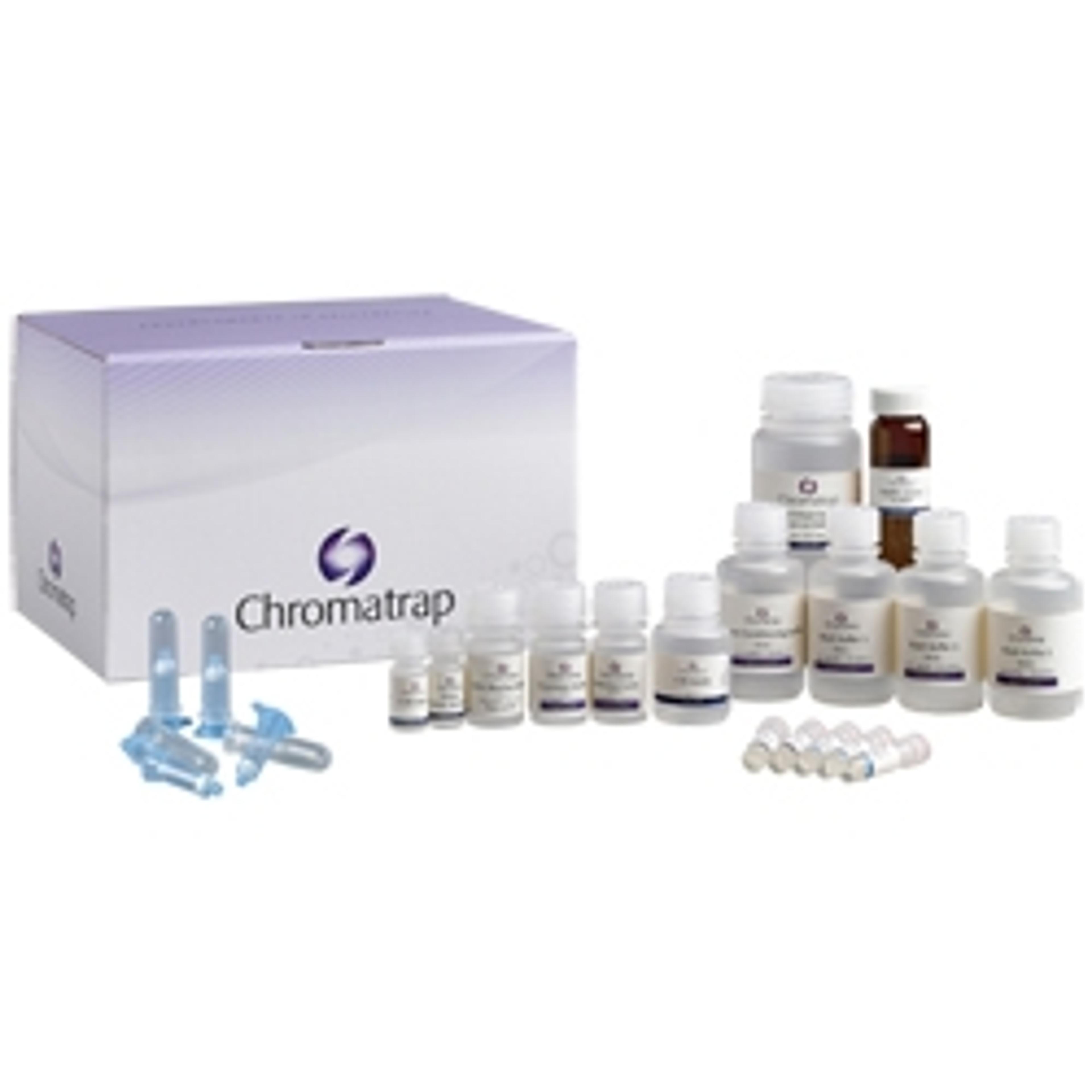
Chromatrap® FFPE ChIP Kit
ChromatrapEpigenetic identification and targeting in clinical FFPE tissues is a crucial step for potential epigenetic therapeutics and personalized medicine therapies. FFPE is a standard method to archive and preserve medical tissue biopsy samples. These archives, kept in many hospitals world-wide, are a huge, rich and untapped sample resource for genetic research. Due to the cross-linking of proteins by formaldehyde, FFPE tissues present a particular challenge for ChIP analysis. In addition, the small size and delicate nature of the tissue, and the difficulty in extracting samples from paraffin, used to provide tissue support after preservation, can damage complex cellular complexes such as chromatin. ChIP assays from these samples have therefore proved time consuming and difficult. Chromatrap® FFPE ChIP kit overcomes these issues and provides the following benefits: Provides greater flexibility and more IPs per sample Works across a range of FFPE samples, human and animal Available in 96-well plate or spin column format Works equally well with high and low abundant marks Provides sufficient DNA to perform library preps for ChIP-seq assays