
Gentronix Collaborates with Abcellute to Improve Genotoxicity Screening
24 Jul 2008Gentronix (Manchester, UK) is collaborating with cellular matrix specialist Abcellute (Cardiff, UK) to enhance in vitro genotoxicity testing with its GreenScreen HC metabolic activation assay in drug discovery programmes.
Abcellute’s patented cell-stabilising technology allows the non-frozen preservation and transport of hepatocytes (liver-derived cells) without loss of viability or function. Gentronix has successfully co-cultured Green Fluorescent Protein (GFP) genotoxicity reporter cells with fresh hepatocytes, preserved in Abcellute’s matrix, in the presence of test compounds.
Gentronix founder and Chief Scientific Officer Professor Richard Walmsley explains: “We are extremely encouraged by our initial work which shows that the GreenScreen HC assay can be used to assess the genotoxicity of metabolites generated by either S9 liver extracts or non-frozen preserved primary hepatocytes provided by Abcellute. The predictable differences in metabolism provided by S9 extracts and hepatocytes are readily apparent from the results, and represent a refinement in the use of animal material. It is now conceivable that preserved human hepatocytes could be routinely used in pre-clinical safety assessment in drug discovery.”
Dr Nathan Griffiths, Abcellute’s Chief Scientific Officer, adds: “The results indicate the potential for our matrix in this exciting area. They match similar evaluations in our core preclinical market conducted by leading pharmaceutical companies, contract research organisations and academic institutes in Europe, the USA and Japan”.
Related products
Request Quote for All Products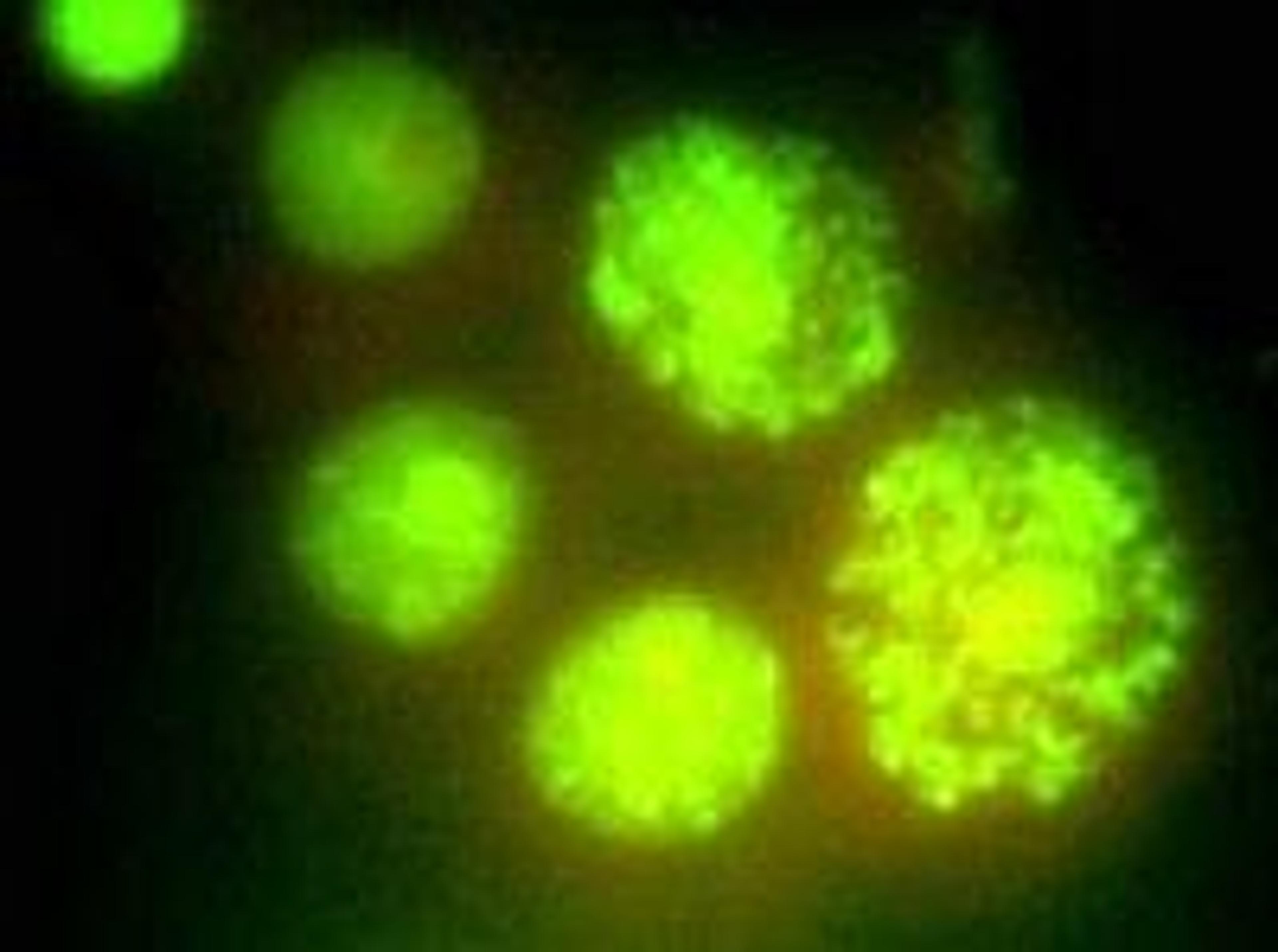
GreenScreen HC
Gentronix Ltd.Gentronix has launched a new, accurate and fast in vitro mammalian cell genotoxicity assay - GreenScreen HC. The TK6 host cells are p53 competent and familiar to most genetic toxicology laboratories. A patented GFP reporter system exploits the proper regulation of the GADD45a gene. The assay delivers both high specificity and high sensitivity and detects all common mechanistic classes of genotoxin. The 96-well microplate format takes about 20 minutes to prepare and delivers results after a 48 hour incubation. A single microplate is sufficient for the simultaneous testing of 4 compounds over 9 serial dilutions. The protocol is also readily automated using standard laboratory liquid-handling equipment. The Biology GADD45a mediates the adaptive response to genotoxic stress. The patented GFP fluorescence reporter includes complex regulatory elements. The assay gives positive results for direct acting agents, as well as aneugens, and topoisomerase and polymerase inhibitors. Importantly the assay gives correct negative results for non-carcinogens, including many which give misleading positive results in other in vitro tests. The Assay Protocol Nine, 2-fold dilutions of each compound together with positive controls are set out in the microplate and growing cells are added to each well. After incubation and measurement in a microplate reader, simple software gives automated decisions and a clear graphical output. Validation A unique combination of both high-specificity and high-sensitivity genotoxicity assessment in a human cell line has been demonstrated. See: High-specificity and high-sensitivity genotoxicity assessment in a human cell line: Validation of the GreenScreen HC GADD45a-GFP genotoxicity assay. Hastwell P.W. et al (2006) Mutation Research 607: 160-175.