
Exploring the gut brain axis and the future of nutritional health with Dr Amisha Modasia
Discover how Quadram Institute researcher Dr Amisha Modasia is bridging the gap between dietary fiber and whole body wellness to celebrate Medical Laboratory Professionals Week 2026
19 Apr 2026
Medical Laboratory Professionals Week shines a spotlight on the often invisible experts powering healthcare and scientific discovery. This year, we sit down with Dr. Amisha Modasia, a Post-doctoral Research Scientist at the Quadram Institute. Her journey into the lab was sparked by a personal connection to gastrointestinal health, leading her to the forefront of the Norwich Research Park’s investigation into the human gut.
From analyzing how dietary fibers influence the complex bidirectional communication of the gut-brain axis to mentorning the next generation of scientists, Amisha shares her perspective on the human impact behind every dataset. She discusses the importance of curiosity in the face of failed experiments and offers a powerful alternative to imposter syndrome for those building a career at the bench.
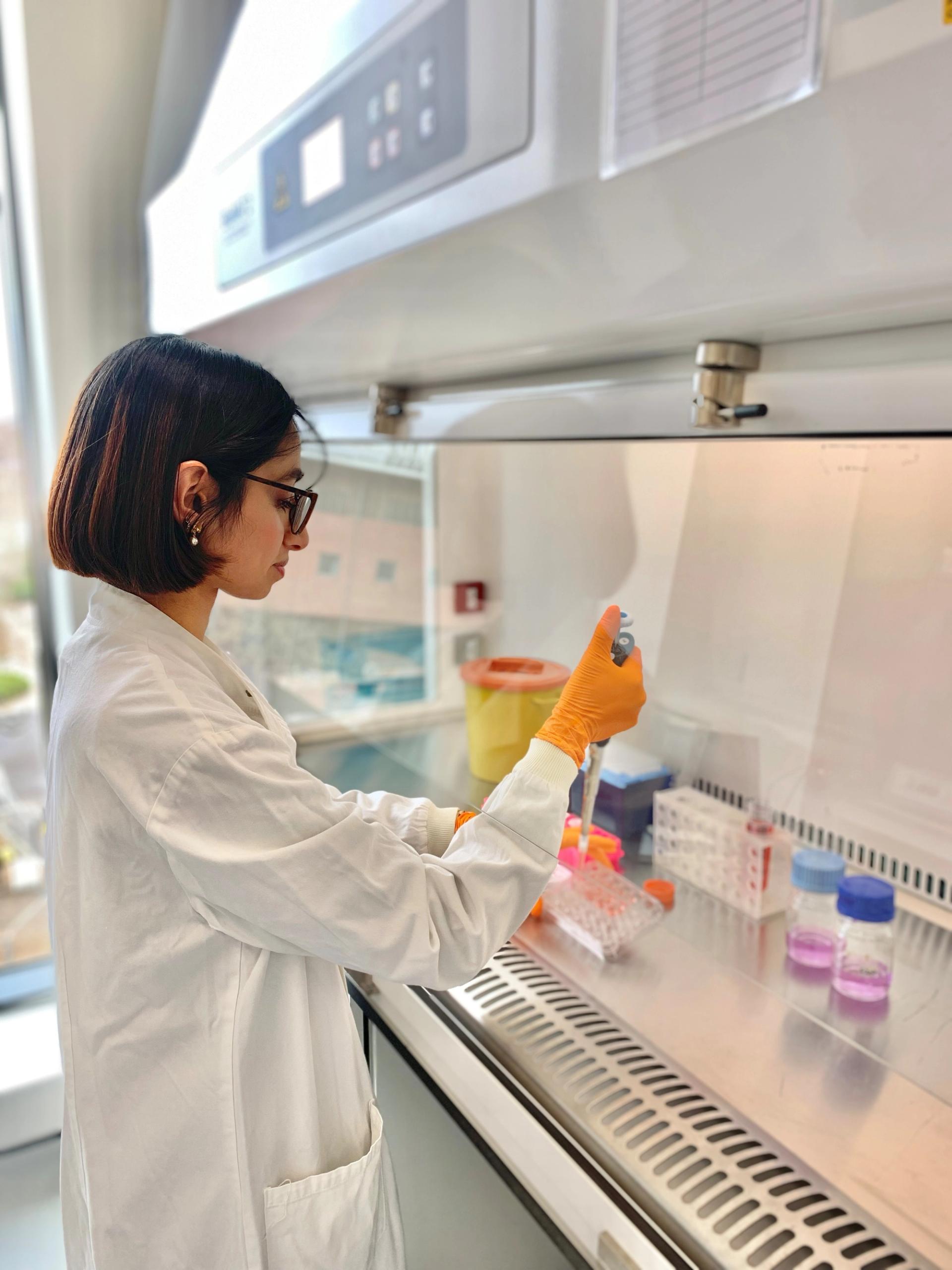
Dr. Amisha Modasia, a Post-doctoral Research Scientist at the Quadram Institute.
Lucy Lawrence (LL): Could you tell us about your background and what first drew you to the lab?
Dr. Amisha Modasia (AM): I’ve always been drawn to science, first astronomy in primary school—I wanted to be an astrophysicist—and later biology. A key turning point was seeing my father experience illness, which sparked my curiosity about the human gastrointestinal tract, how it functions, and how it goes wrong in disease. That personal connection still drives me today. I’m proud that my work remains closely tied to something so meaningful to me, even as my research has evolved into broader questions around gut health and its impact on overall wellbeing.
LL: What is the one thing about your work that still makes you proud to put on your lab coat every day?
AM: Even though much of my work is done using laboratory models rather than directly with patients, I’m always mindful that the questions we’re trying to answer ultimately relate to real people. For me, it’s the small, routine moments—carefully preparing samples or analyzing data—where that connection is strongest. It’s a reminder that behind every dataset is a bigger purpose: improving the understanding of health and disease. That perspective helps maintain a high standard of care and attention to detail in everything I do.
LL: What is a project or an area you are currently working on that you’re particularly excited about?
AM: I’m particularly fascinated by the growing field of the gut–brain axis, a complex and dynamic bidirectional communication pathway between the gut and the brain. It’s an area that continues to reveal just how interconnected our systems are. My current work focuses on how dietary fibers influence gut health and, in turn, impact whole-body health. Understanding these mechanisms has huge potential for developing targeted nutritional strategies, which makes it an especially exciting area to be working in.
LL: We focus a lot on technical expertise, but what soft skill is actually the secret to being a truly great scientist?
AM: Curiosity is fundamental. Experiments don’t always work, and results don’t always make sense, so it’s essential to approach challenges with openness, asking what went wrong and how to improve. Alongside that, being supportive and collaborative is just as important. Science rarely happens in isolation, and being willing to help others and learn from them is what ultimately drives both individual and collective progress.
LL: How can the industry better support the next generation of scientists?
AM: The industry can better support early-career scientists by fostering environments that encourage curiosity, mentorship, and realistic expectations about career progression. It also makes a real difference to have a strong support system. In my case, my husband encourages me to pursue my ambitions, along with a very demanding cat keeping me on my toes!
LL: What is your advice for a student considering a career at the bench?
AM: Follow your genuine interests. It may sound simple, but research often requires years of focused effort, so it’s important to work on something that truly motivates you. Passion makes perseverance much easier.
It’s also easy to feel overwhelmed by the experience of others, but everyone starts from the same place. Imposter syndrome is very real, but recognizing it can help you manage it. Rather than "fake it until you make it," I prefer to think of it as "be it until you are it." Confidence comes from building competence, so focus on developing the skills you need and trusting the process.
Dr. Amisha Modasia was speaking with Lucy Lawrence, Science Editor for SelectScience.
Explore the full feature.