
Exploratory biomarker discovery driven by ultra-sensitive assays
Yao Chen of Sanofi shares how her team achieves sensitivity, specificity, precision, and robustness in protein biomarker detection
22 Jan 2026
Biomarkers are vital in detecting disease as early as possible. This allows physicians to start treatment quickly, even before symptoms appear, which is key in slowing or stopping disease progression and improving outcomes for patients. Biomarkers are also used to find the right candidates for clinical trials, which helps make drug development more efficient and gets drugs to patients faster and more cost-effectively.

Yao Chen, Sanofi
Both of these applications rely on finding the right biomarker, which requires sensitive, specific, and precise measurements that can monitor patients longitudinally for subtle changes. The findings help researchers to understand which biomarkers will be the most useful to identify disease early, predict rates of progression, or select the patients that are most likely to respond to a specific treatment.
Yao Chen, Principal Scientist, Lab Lead, Sanofi, is one researcher striving to understand disease mechanisms and discover related biomarkers. She works in exploratory biomarker proteomics, as part of the Translational Medicine Unit at Sanofi. “We focus on retrospective studies, where we measure candidate biomarkers in archived sample collections to understand if they might be useful to employ in future studies, and are also involved in assessing target engagement, mechanism of action and pharmacodynamics,” shares Chen. “The members of the team have innovative mindsets, and we access and evaluate emerging cutting-edge proteomic technologies to ensure that we maintain a broad capability across proteomic analysis and exploratory biomarker discovery.”
Ultra-sensitive assays address low detectability and matrix interference
Researchers working in biomarker discovery face a number of analytical challenges, and Chen and her team report low detectability and matrix interference as their two biggest issues. Low detectability requires assays with the highest possible levels of sensitivity and precision. Matrix interference results from extraneous materials in clinical samples, for example proteins and lipids, and these can affect the sensitivity, variability and accuracy of the results.
“Biomarker research needs validated assays that can be trusted to bring high levels of sensitivity and precision,” says Chen. In response to this industry need, Spear Bio has created SPEAR UltraDetect™ Assay kits that provide ultra-sensitive and automatable solutions for disease research, drug development and clinical sample analysis. These deliver high sensitivity and specificity from very low sample volume with their homogeneous format and low background signal.
“Other ultra-sensitive assays are heterogeneous, in that they require binding the immunocomplex to a surface so that background signal can be washed away,” explains Dr. Laurel Provencher, VP, Application Support at Spear Bio. “Spear’s homogenous assay does not require any surface binding or washing. We reduce background signal by requiring two successive molecular reactions between probes bound to different epitopes on the same target molecule. The probability of completing both reactions in the absence of target binding is very low, so the signal we generate is very specific.”
Spear Bio’s portfolio for neurological disease
Spear Bio’s initial offering is a portfolio of assays that measure targets associated with axonal damage, astrocyte activation and tau pathology, for research into neurological disease including Alzheimer’s disease, traumatic brain injury, multiple sclerosis and amyotrophic lateral sclerosis.
“We have used the SPEAR UltraDetect™ Nf-L and pTau 217 biomarker assay kits in small sample sets. The assays were quick and easy to set up, and required no expensive equipment,” says Chen. “The sensitivity and sample correlation compared well with the other kits we use. We plan to carry out further evaluation of the platform with more clinical samples.”
Neurofilament light chain (NfL) is a blood-based biomarker for axonal damage and neuronal injury across various neurological conditions. pTau 217 (phosphorylated tau at threonine 217) is a highly specific blood-based biomarker of brain amyloid β pathology that is highly specific for differentiating Alzheimer’s disease and non-Alzheimer’s disease patient samples.
Other SPEAR UltraDetect™ biomarker assay kits include: glial fibrillary acidic protein (GFAP) for CNS and neurotrauma research and pTau 231 for early disease detection, risk stratification, and studying amyloid and tau pathology. The SPEAR Research Accelerator supports academic researchers seeking rapid, higher-volume biomarker testing.
Supporting biomarker researchers on the lab benches

Dr. Laurel Provencher, Spear Bio
Switching to a new assay platform can be a steep learning curve, but the Spear Bio team works hard to make it as simple and seamless as possible. “When customers adopt our platform, our team visits the customer site to assess and optimize instrument performance,” says Dr. Provencher. “We make sure that customers understand our assays, can access technical resources, and have the training that they need to run assays correctly and get the most out of them. We also demonstrate the assays using customer samples in order to show them the results that they can expect.”
Chen shares that the Spear Bio applications support team is very impressive: “They provided clear explanations and demonstrations for their technology, and we found their guidance easy to follow.”
Dr. Provencher and her team have the experience and expertise that allows them to provide appropriate and targeted technical information and advice. They can also translate customers’ processes into robust workflows. “We develop a relationship with our customers, learning about their research objectives and needs and partnering with them to develop project strategies and execution plans, review assay results, and address any issues they may encounter,” says Dr. Provencher.
Future trends in the biomarker and immunoassay space
Using biomarkers to screen healthy people for the first signs of disease, including neurological diseases, has great potential to find the people who will benefit from early treatment. Frequent monitoring of biomarkers is only practical, however, if testing is minimally invasive and cost-effective.
“Our assays are highly sensitive, specific and precise, use samples that can be collected minimally- or non-invasively, and we can offer cost-effective quantitative analysis for studies with large longitudinal sample collections,” says Dr. Provencher. “This allows researchers to understand the subtle trends and changes in biomarkers that we believe may be critical to developing effective treatments. These same benefits can make our platform suitable for development of diagnostics for frequent monitoring of healthy individuals for signs of disease onset.”
Many diseases are affected by multiple physiological processes and require precision medicine to identify the right treatment for any given individual. As researchers continue to link biomarkers to different forms of disease, it will be important to monitor multiple biomarkers to understand what is happening with a particular patient.
“Spear will be expanding our assay menu to offer a wider range of biomarkers and will introduce flexible multiplexing strategies to quantify panels of biomarkers from the same small volume patient sample. We aim to provide the most robust and precise platform for detection of changes over time for critical sets of biomarkers,” says Dr. Provencher.
Related products
Request Quote for All Products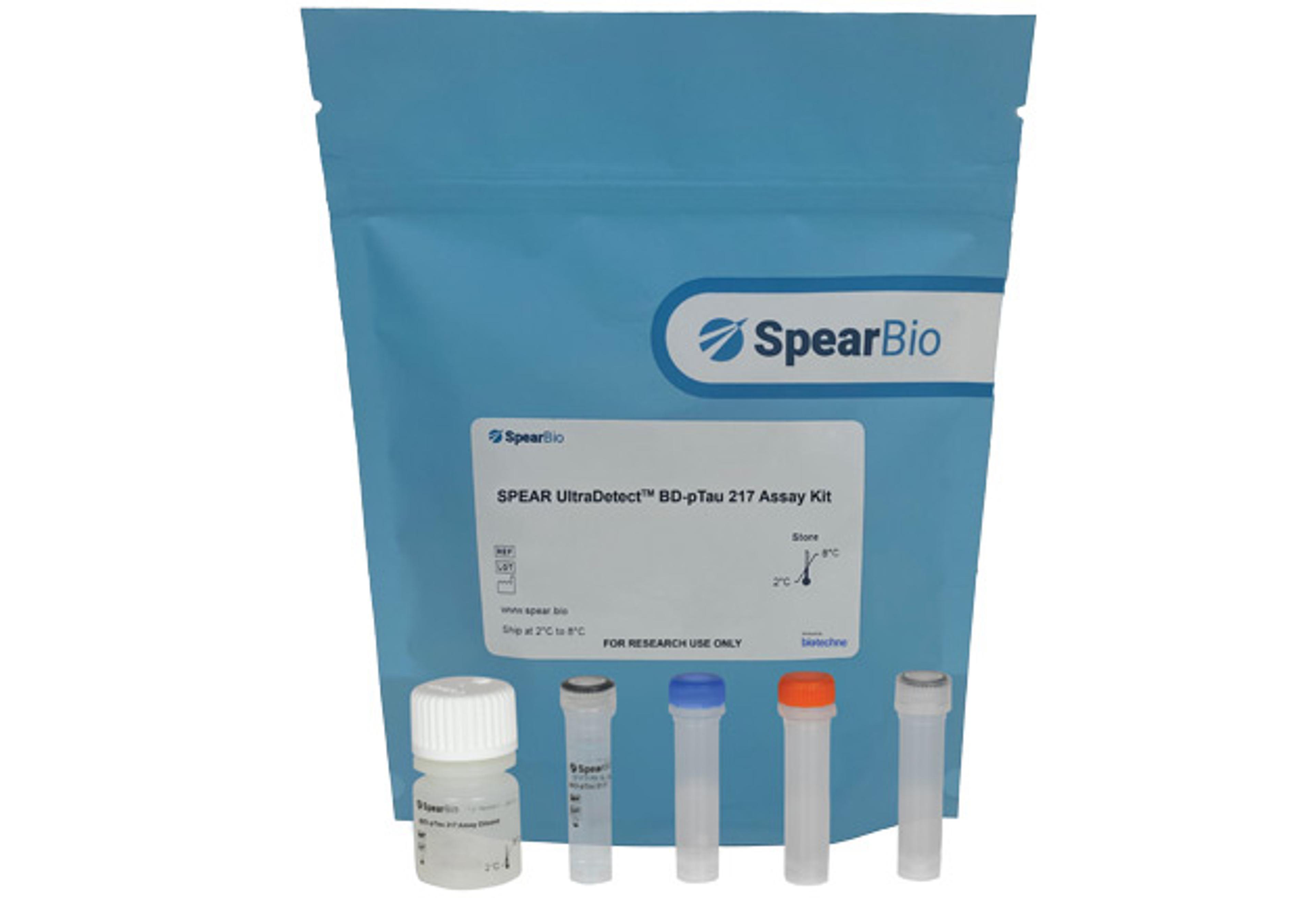
SPEAR UltraDetect™ BD-pTau 217 Assay Kit
Spear BioThe SPEAR UltraDetect™ BD-pTau 217 Assay enables highly sensitive and precise quantification of brain-derived pTau 217 in plasma. The only BD-pTau 217 assay delivering 100% quantifiability across healthy and diseased samples using just 1 µL of diluted plasma in a homogenous, wash-free format — enabling robust early detection, stratification, and longitudinal analysis of this ultra-low abundance biomarker. Verified for plasma samples. For research use only.
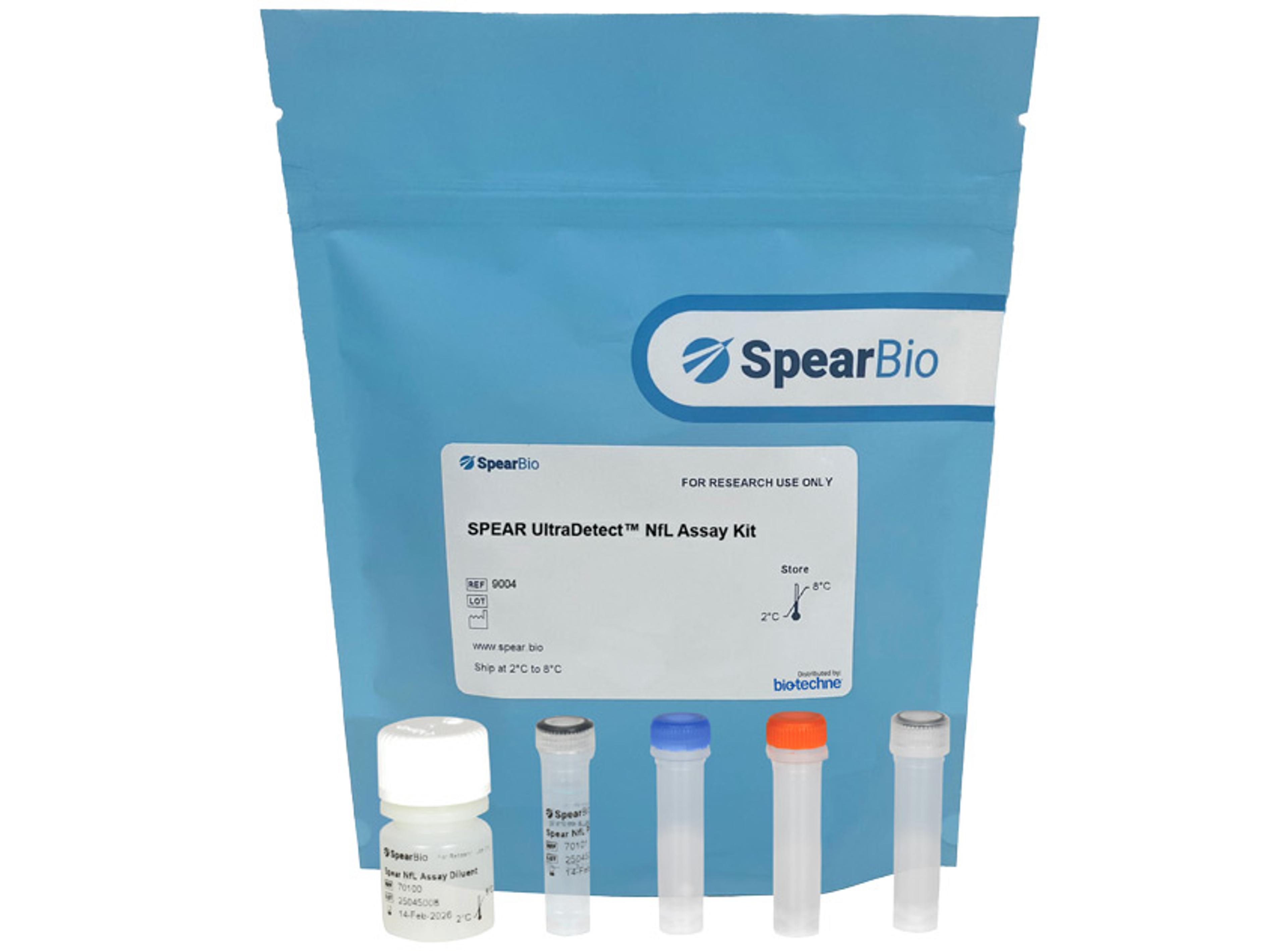
SPEAR UltraDetect™ NF-L Biomarker Assay Kit
Spear BioThe SPEAR UltraDetect™ NF-L Biomarker Assay Kit lets you quantify neurofilament light with ultra-high precision, low sample volume, and a simple, wash-free workflow. Requires SPEAR UltraDetect™ Reaction Kit. For research use only.
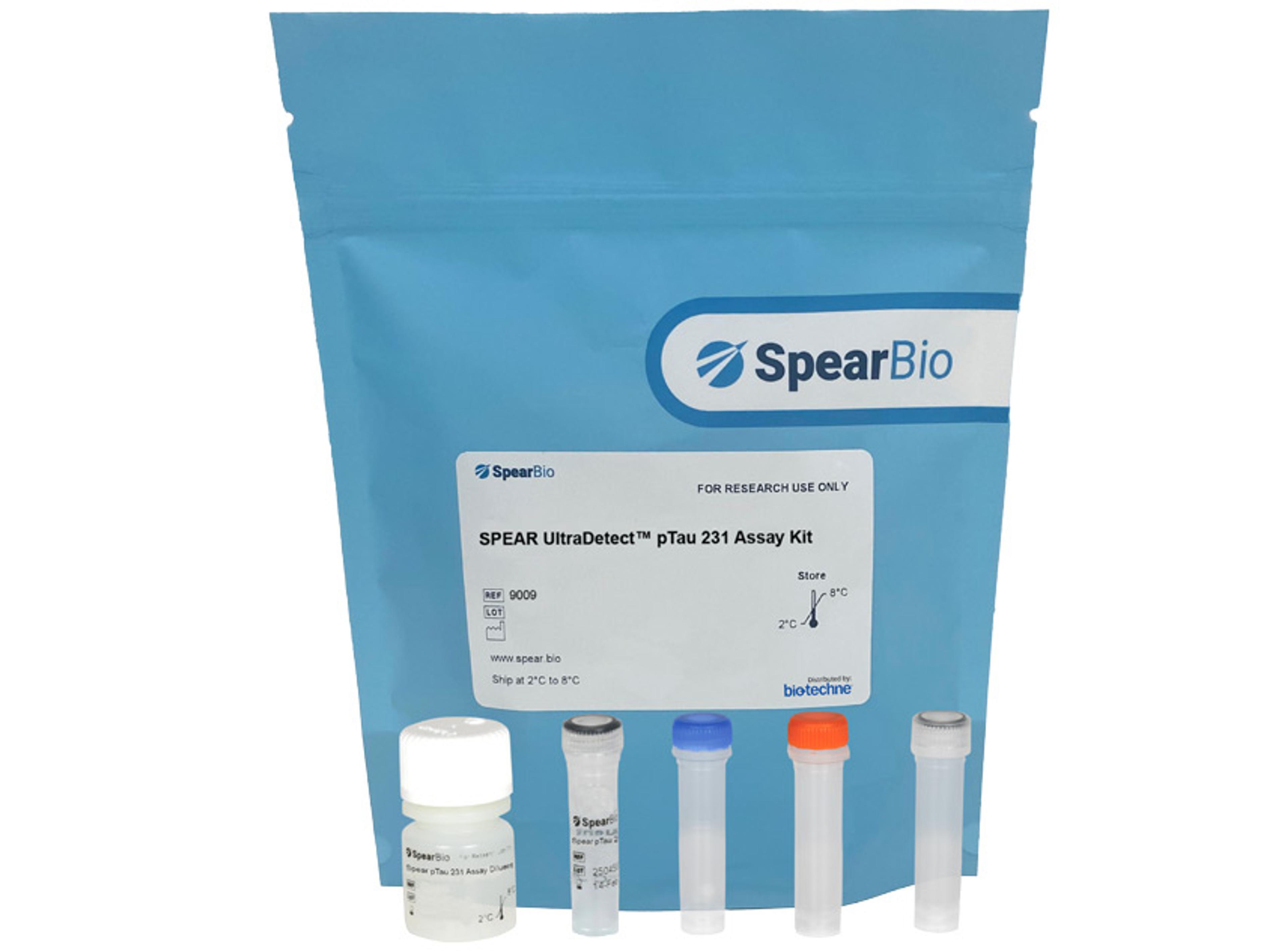
SPEAR UltraDetect™ pTau 231 Biomarker Assay Kit
Spear BioThe SPEAR UltraDetect™ pTau 231 biomarker assay kit is highly sensitive and ideal for Alzheimer’s research using plasma samples. Requires SPEAR UltraDetect™ Reaction Kit. For research use only.
Links
Tags
Frequently asked questions
Show frequently asked questions
How do ultra-sensitive SPEAR UltraDetect™ biomarker assays support early detection and monitoring of neurological diseases like Alzheimer’s disease and multiple sclerosis?
Ultra-sensitive SPEAR UltraDetect™ biomarker assays enable early detection and longitudinal monitoring of neurological diseases by providing highly sensitive, specific, and precise measurements from very low sample volumes. These homogeneous assays minimize background signal by requiring two successive molecular reactions on the same target molecule, which improves specificity without the need for surface binding or wash steps. Spear Bio’s portfolio includes assays for neurofilament light chain (NfL), pTau 217, pTau 231, and glial fibrillary acidic protein (GFAP), which are associated with axonal damage, astrocyte activation, and tau pathology in conditions such as Alzheimer’s disease, traumatic brain injury, multiple sclerosis, and amyotrophic lateral sclerosis. Their performance makes frequent, minimally invasive, and cost-effective biomarker testing feasible for large longitudinal studies and potential future diagnostic applications.
What roles do biomarkers like NfL, pTau 217, pTau 231, and GFAP play in exploratory biomarker discovery and precision medicine research at Sanofi and Spear Bio?
Neurofilament light chain (NfL) is a blood-based biomarker of axonal damage and neuronal injury across a range of neurological conditions, while pTau 217 (phosphorylated tau at threonine 217) is a highly specific blood-based biomarker of brain amyloid β pathology that differentiates Alzheimer’s disease from non-Alzheimer’s disease samples. pTau 231 is used for early disease detection, risk stratification, and studying amyloid and tau pathology, and glial fibrillary acidic protein (GFAP) is applied in CNS and neurotrauma research as a marker of astrocyte activation. At Sanofi, Yao Chen’s exploratory biomarker proteomics team uses retrospective studies and candidate biomarker measurements to understand disease mechanisms, assess target engagement, mechanism of action, and pharmacodynamics, and identify biomarkers that predict progression or treatment response. Spear Bio’s UltraDetect™ assay kits for these biomarkers support precision medicine by enabling sensitive, specific quantification needed to select appropriate patients, monitor multiple physiological processes, and build robust biomarker panels for individualized treatment strategies.
How does Spear Bio’s homogeneous UltraDetect™ immunoassay platform address analytical challenges such as low detectability and matrix interference in clinical biomarker research?
Spear Bio’s homogeneous UltraDetect™ immunoassay platform is designed to overcome two major analytical challenges in biomarker research: low detectability and matrix interference. Low detectability is addressed through ultra-sensitive assay chemistry that delivers high sensitivity and precision from very low sample volumes. Matrix interference, caused by extraneous materials like proteins and lipids in clinical samples, is mitigated by the assay’s homogeneous format and low background signal. Instead of binding immunocomplexes to a surface and washing away background, the platform reduces nonspecific signal by requiring two successive molecular reactions between probes bound to different epitopes on the same target molecule, making the probability of signal generation without true target binding very low. Combined with on-site instrument optimization, training, and workflow development provided by Spear Bio’s applications support team, this approach yields validated, reliable assays that researchers can trust for disease research, drug development, and large-scale clinical sample analysis.