
Don’t Risk the Quality and Reproducibility of Your Results: Webinar Highlights

Missed our fascinating webinar? Catch up on demand and read the Q&A highlights below

26 Jul 2018
Aidan Barry
Administrator / Office Personnel

Expert insights

In a recent SelectScience webinar, third of a five-part webinar series delivered in partnership with Thermo Fisher Scientific, we were joined by Dr. Detlev Lennartz to discuss methods to help optimize your mass spectrometry and small molecule workflows, as well as tools to improve reproducibility and reliability of results.

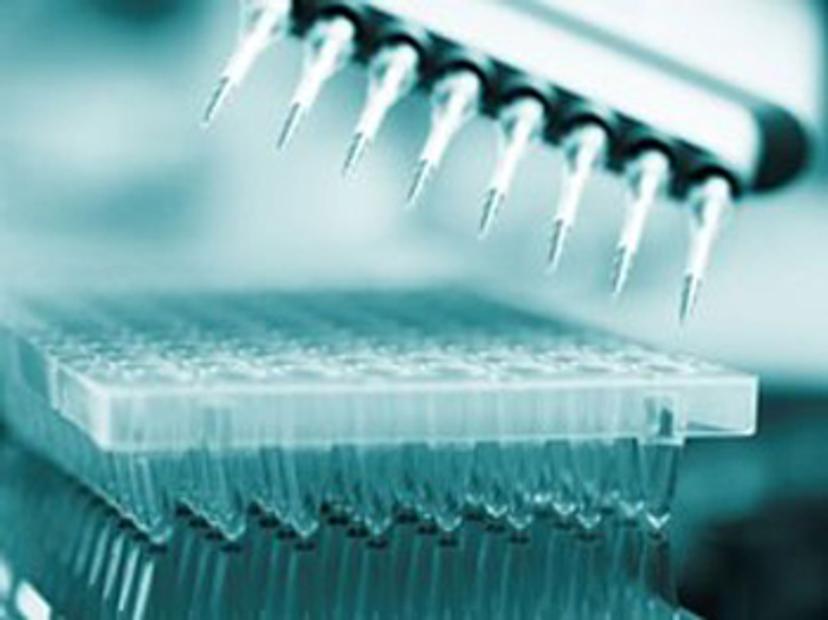
Reproducibility is the cornerstone of the scientific method, and painstaking research is often time-consuming. The pressures of modern science require not only precision, but efficient and accelerated workflows. This new webinar explores the benefits of well plate platforms, which include multi-pipette usage, less space consumption compared to racks with vials, easy sample transfer from bio-robots, and automated sample preparation. Learn about tools and ideas for a successful and easy transfer from your current sample handling container (e.g. 2mL autosampler glass vials) to well plates, ensuring reproducibility in your results. Discover the range of 96- and 384- well plates offered by Thermo Fisher Scientific for complex and routine analyses (UHPLC, LC and GC) in high-throughput screening laboratories, with software support to help you choose the equipment for your needs.

You can catch the webinar on demand here, or read on to discover the Q&A highlights from the live event.

Watch Webinar Now

Q: What if the result varies significantly after using plastic instead of glass?

A: Yes, this is a key question. The transfer of your analytical challenge and all your analysis and your workflows from glass vial to plastic container always brings with it the risk that something that could go wrong, because the glass surface is a polar surface and the plastic surface is a non-polar surface. So, if the molecule that you are analyzing reacts significantly differently with either one of these surfaces, you might face significant loss of sample due to wall adsorption effects. Let's take this as an example: during an experiment, you switch from a glass vial to a plastic container and you see a reduction of your product by 25-30% — you know there has been an unwanted interaction and you're not happy to lose sample just by changing the sample handling container.
In this situation, I can only make a recommendation: switch to a glass-coated plastic plate in order to retain a polar surface, even on a plastic well plate — this should include all plates, plus the sample handling bottle. Or, you switch to a glass insert in the well plate. That way you can enjoy the benefits of this 96-well plate platform and the handling advantage, but by using a glass vial or glass insert in the well plate, you have exactly the same environment surface and polarity-wise as you would have in a glass vial.


Find out more on this topic from Dr. Lennartz by watching the full webinar on demand>>

SelectScience runs 3-4 webinars a month across various scientific topics, discover more of our upcoming webinars>>

Links

Tags

MicroplatesMicroplates are multi-well plates used to increase the throughput of biological investigations. The number of wells microplates contain can range from 6 to 3243 wells, with the 96-well format being the most commonly used. Microplates can come tailored for a range of applications including cell culture, PCR, filtration, storage, non-binding surface, protein crystallization, as well as pre-coated, deep well and normal Standard microplates. Additionally, options for microplate colors include clear , black, white or black with clear bottom and white with clear bottom for absorbance microplate reader applications. Find the best microplates for your lab in our peer-reviewed product directory: compare products, check customer reviews and receive pricing direct from manufacturers.Pipettes and DispensersPipettes and dispensers are essential lab equipment used to dispense measured volumes of liquid accurately. Explore a range of manual and electronic pipettes, including single and multichannel, serological and volumetric pipettes, as well as a range of pipette tips. Bottle-top dispensers are also available for simple and fast solvent dispensing. Find the best pipettes & dispensers in our peer-reviewed product directory: compare products, check customer reviews and receive pricing direct from manufacturers.Labware and Lab SuppliesLabware and lab supplies include various forms of glassware, plasticware, reagents and personal protective equipment (PPE) and are used across all scientific laboratories, enabling daily tasks to be performed. Explore a range of flasks and beakers, petri dishes, carboys and storage bottles. Labware such as condensers, desiccators and burettes are also available for more specific tasks. Find the best labware and lab supplies in our peer-reviewed product directory: compare products, check customer reviews and receive pricing direct from manufacturers.Microplate Readers / DetectorsMicroplate readers are used to automate the detection and analysis of labeled or label-free components in microplates during assays or live-cell monitoring. Microplate readers are generally distinguished by their mode of detection. Types include absorbance, luminescence, fluorescence intensity, fluorescence polarization, TRF / FRET and multimode microplate readers. Microplate readers deliver a high throughput of samples by reading multiple wells simultaneously, with the 96-well format the most commonly used. As a result, microplate readers are often used in the drug discovery, bioassays, research and pharmaceutical industries for screening applications. Microplate loading can also be automated, with robotic microplate stackers to increase throughput. Find the best microplate readers in our peer-reviewed product directory: compare products, check customer reviews and receive pricing direct from manufacturers.High ThroughputHigh throughput experiments allow the simultaneous processing of several samples. This parallelization reduces the cost per experiment and increases reproducibility and output volume of data.GlassGlass is an amorphous solid (non-crystalline) typically made up of silica and silicon dioxide. This transparent solid has many applications, from window panes to optical lenses for microscopes.Pipette TipsPipette tips are essential accessories used in laboratory settings for transferring precise volumes of liquids. They come in various sizes and materials to accommodate different types of samples, ensuring accuracy and contamination prevention. Browse our peer-reviewed product directory to find the best pipette tips for your laboratory needs, compare products, check reviews, and get pricing directly from manufacturers.Drug Discovery & Development Screening