
Centrifugal field flow fractionation to improve characterization of drug delivery systems

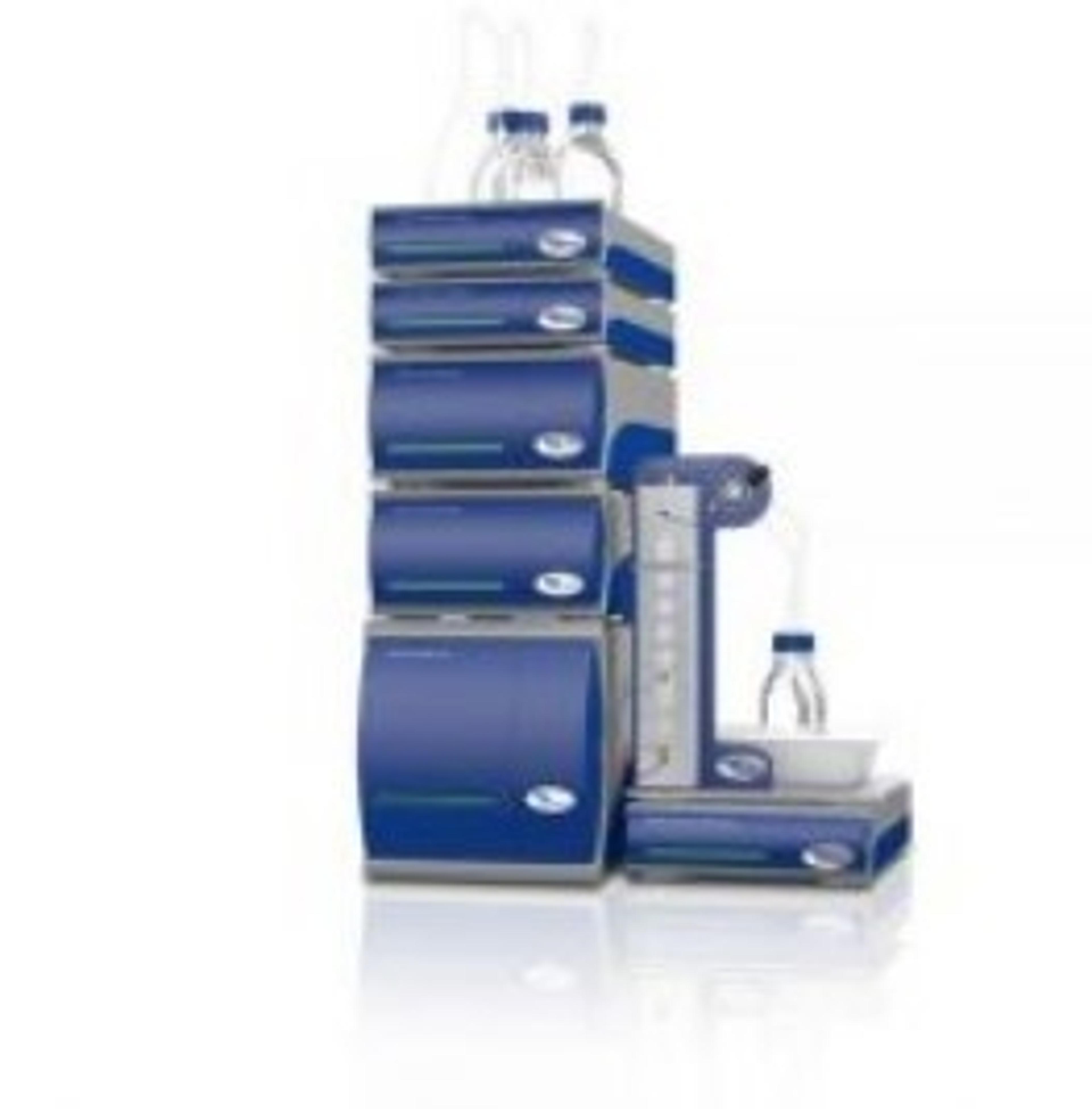
The CF2000 Centrifugal Field Flow Fractionation system from Postnova Analytics aims to deliver exciting new data

16 Mar 2020

Diane Li
Assistant Editor

Industry news

Soheyl Tadjiki, Managing Director of Postnova Analytics Inc. commented "One of the grand challenges of characterization of any drug delivery system is the determination of cargo mass per delivery vesicle. Size characterization techniques are inherently inadequate to provide such information. By comparison we have found that our CF2000 Centrifugal Field-Flow Fractionation (CF3) system, a mass-based, high resolution separation instrument, is capable of measuring the cargo mass per vesicle to a limit of quantification of 12 attogram."

In Centrifugal Field-Flow Fractionation, the separation force is established by a centrifugal field, which is generated by spinning the complete circular channel at a high rate. The bigger and denser particles are forced more in the direction of the outer wall than the smaller particles. As a consequence, bigger particles are eluted later from the CF3 channel as they are located in slower streamlines in the channel than the smaller particles which are located in faster stream lines.

Based on the CF3 principle, the Postnova CF2000 employs a centrifugal field as the driving force for separations. Particles affected by this field are separated by dynamic diffusion on the basis of both particle size and density. This unique feature of the CF2000 allows the separation of different particulate materials having the same particle size. Separations on the CF2000 can be further optimized by using different eluents and temperature programs. As a consequence, the CF2000 system is proving an ideal tool for the separation and characterization of complex particulate samples in areas including agriculture, cosmetics, nanomaterials and pharmaceutical drug delivery systems.

In contrast to traditional particle sizing techniques which work in the batch mode, the CF3 technique physically separates each particle fraction prior to sizing. This avoids numerous disadvantages of these batch techniques such as, low size resolution, discrimination and under estimation of smaller compared to larger particles. Using Postnova CF3 technology no special sample preparation is necessary as they can be injected directly without filtration, allowing the characterization of even complex particulate materials without alteration and damage.

Do you use Postnova products in your lab? Write a review today for your chance to win a $400 Amazon gift card>>
Links

Tags

Combinatorial ChemistryCombinatorial chemistry, also known as combichem, is a technique used in drug discovery to create libraries of structurally related compounds. A library is generated by synthesis with a chemical reactor system or by computer-based modeling of compound combinations. When undertaking combinatorial chemistry consider reagents, buffers, resins and standards.Lab-on-a-ChipLab-on-a-chip (LOC) technology uses microfluidic chips, such as microarrays, to perform biochemical assays on a small scale. Benefits of lab-on-a-chip include the small volume of sample required as well as the speed of analysis. In selecting lab-on-a-chip devices consider the assay, cost, reliability, sensitivity and signal to noise ratio.Compound LibrariesCompound libraries, or chemical libraries, are used in drug discovery for the identification of potential therapeutics compounds. Used in conjunction with high-throughput screening, the libraries of stored compounds are often generated for specific purposes as a drug target or disease model. Cheminformatics are commonly used when designing a compound library and software can be used to analyze the screening process.  Process ChemistryProcess chemistry is an important stage of drug development for scaling-up drug production or chemical synthesis reactions. It is useful for optimizing economical and efficient drug production. Process chemistry uses reactors and pump systems as well as reagents, standards and buffers.Biopharmaceutical AdvancesBiopharmaceutical advances follow the development of pharmaceuticals derived from biotechnology, also known as biotechnology medicines. Biopharmaceuticals may be produced from cell lines, plants, or microbial cells. Important considerations of biopharmaceutical use include application, cost, production process and purification.Plate ProcessingAutomated plate processing is used in microplate technologies for high-throughput, speed and efficiency. Plate processing systems include microplate handlers for moving plates, heat sealers, stackers and carousels for storage, retrieval and delivery, microplate washers and piercers. Useful features of plate processors include walk-away automation, compatibility and easy integration with microplate systems.GC-MS GC-MS (gas chromatography-mass spectrometry) instruments and equipment are used to separate, quantify and identify mixtures of small and volatile compounds, such as polycyclic aromatics, fatty acids and alcohols. Often used in drug detection, forensic investigation and environmental analysis for pesticides and contaminants, GC-MS is a powerful addition to your lab’s analytical capabilities. GC-MS/MS instruments equipped with a qTOF or triple quadrupole analyzers can give greater sensitivity and resolution to your analysis. Find the best GC-MS instruments and equipment in our peer-reviewed product directory: compare products, check customer reviews and receive pricing direct from manufacturers.Drug DeliveryDrug Delivery refers to dosage form, route of administration, formulations, technologies, and systems for transporting a pharmaceutical compound in the body as needed to safely achieve its desired therapeutic effect. Drug delivery is often approached via the biopharmaceutical or small molecule drug's formulation, but it may also involve medical devices or drug-device combination products. Considerations include instrumentation, software and services. CentrifugesCentrifuges are used to separate particulates suspended in a liquid via the application of a centrifugal force including cells, macromolecules, nanoparticles and precipitates. Centrifuges come in three sizes: microcentrifuges, benchtop and floor-standing centrifuges, depending on the volume and number of samples that require separation. When choosing a centrifuge, consider its maximum separation power indicated by its relative centrifugal force (RCF) value. Low force centrifuges reach a maximum RCF of 8,000 g, high-force centrifuges can reach maximum RCF values of 80,000 g. For extremely high forces, consider ultracentrifuges (up to 800,000 g). Refrigerated and vacuum centrifuges also known as concentrators are available for more specialized applications. A range of volumes are available for centrifuge tubes and microfuge tubes, depending on sample sizes. Find the best centrifuges in our peer-reviewed product directory: compare products, check customer reviews and receive pricing direct from manufacturers.Drug DosageDosage is the size or frequency of the administration of a drug. Determination of the dosage of a drug is critical in pharmaceutical development to ensure the optimum balance between efficacy and toxicity.Field Flow Fractionation