
How can scientists unlock deeper insights from antibody discovery data?
Join experts from OmniAb and Genedata to discover how integrated data workflows, high-throughput screening, and advanced analytics are helping researchers accelerate antibody discovery and identify promising therapeutic candidates with greater confidence
7 Sept 2026
Modern antibody discovery campaigns can generate vast amounts of functional and sequencing data. While these datasets hold valuable insights, managing, integrating, and interpreting them efficiently remains a major challenge for many biologics research teams.
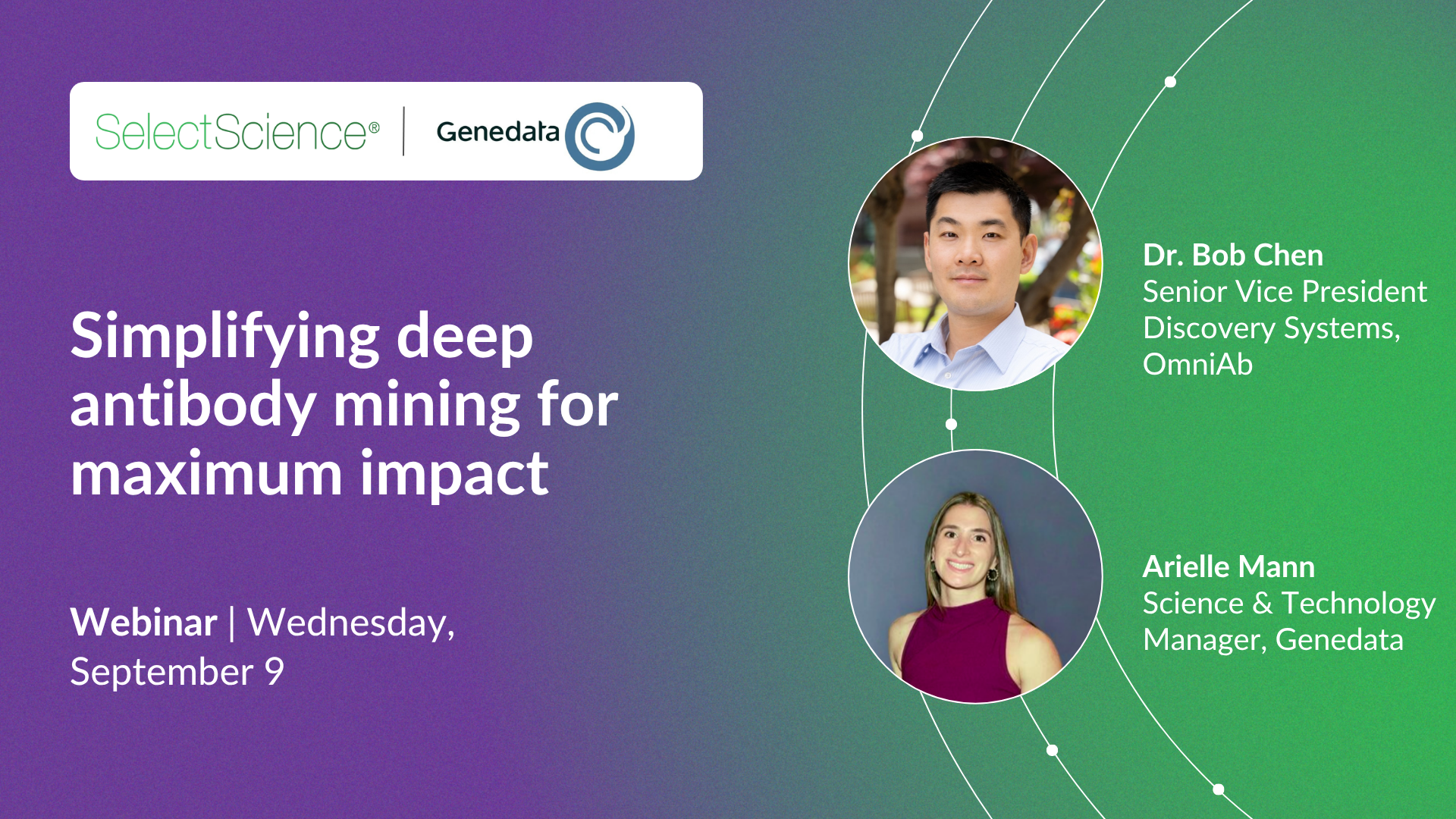
To help scientists overcome these challenges, SelectScience will host a live webinar, Simplifying deep antibody mining for maximum impact, sponsored by Genedata.
The webinar will feature Bob Chen, Ph.D., Senior Vice President, Discovery Systems at OmniAb, who will share how the company is transforming antibody discovery through its proprietary xPloration® platform. Designed to rapidly evaluate millions of antibody candidates, the platform enables scientists to identify thousands of promising hits within minutes, helping to accelerate the journey from discovery to development.
As antibody discovery workflows become increasingly data-intensive, connecting experimental results with sequence information is critical for making informed decisions. During the webinar, attendees will learn how OmniAb integrates its high-throughput screening capabilities with Genedata Biologics, creating a centralized bioregistration and data management environment that links functional assay data, including ELISA, flow cytometry, and surface plasmon resonance (SPR), with corresponding sequence information.
The session will explore how centralized, connected data frameworks can improve traceability, support data consistency, and provide actionable insights throughout the discovery process. Attendees will also discover how combining high-throughput screening with next-generation sequencing (NGS) and AI-driven analysis can support deep repertoire mining and help identify high-potential antibody candidates more efficiently.
Attendees will gain insights into:
- How to centralize and structure complex biological data for faster, more informed decision-making
- Approaches to streamlining antibody discovery workflows through integrated data management
- Strategies for improving transparency and traceability during candidate selection
- The role of NGS and AI-driven analysis in supporting deep repertoire mining
- Methods for visualizing antibody activity through sequence similarity analysis
- Best practices for creating scalable, reproducible discovery workflows
As pressure grows to accelerate biologics development while maintaining data quality and scientific rigor, integrated digital platforms are becoming increasingly important. This webinar will provide practical insights for scientists looking to improve efficiency, strengthen decision-making, and maximize the value of their antibody discovery data.
Webinar details
Date: Wednesday, September 9, 2026
Time: 16:00 BST | 17:00 CEST | 11:00 EDT | 08:00 PDT
Sponsor: Genedata
Speaker: Bob Chen, Ph.D., Senior Vice President, Discovery Systems, OmniAb
Moderators: Arielle Mann, Science & Technology Manager, Genedata; Todd Beanlands, Science Editor, SelectScience
Register now to learn how integrated data management, high-throughput screening, and advanced analytics are helping researchers accelerate antibody discovery and unlock deeper insights from complex biological datasets.
Register nowRelated products
Request Quote for All Products
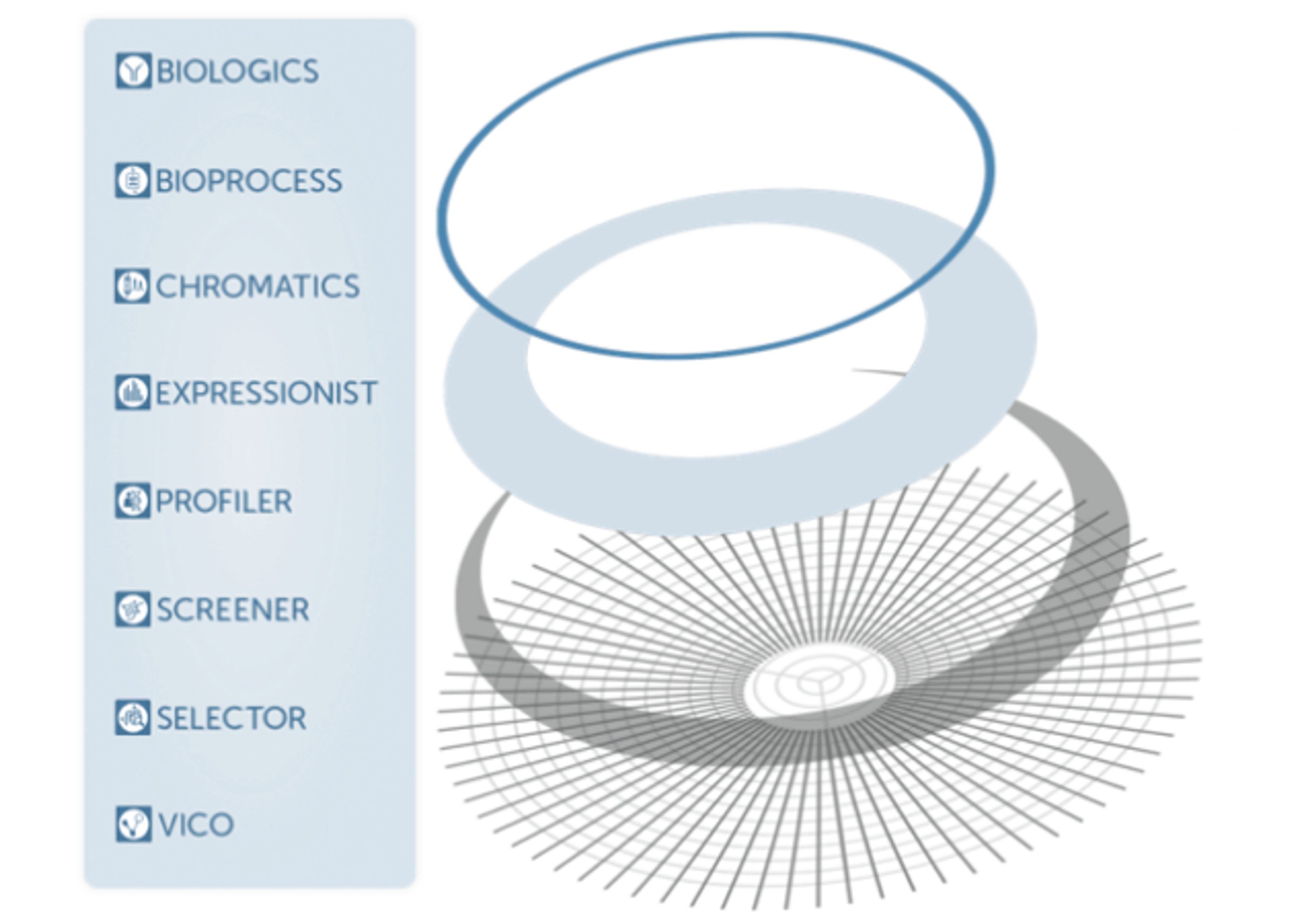
Genedata Biopharma Platform
GenedataThe Genedata Biopharma Platform is first-in-class enterprise software that automates R&D workflows and drives scientific innovation. It delivers analytics- and AI-driven insights that help bring better life-saving therapies to patients faster and more cost-effectively.