
Cell Research Advances Promised with PALM MicroBeam System Enhancements
9 Sept 2007Carl Zeiss is introducing a range of new accessories for its PALM MicroBeam laser microdissection system to advance research into living cells. The PALM DuplexDish 35 culture dishes, PALM DishHolder 35 with CapCheck and PALM DishHolder 6/35 are specially tailored to the needs of laser microdissection and pressure catapulting technology (LMPC) and open up new experimental possibilities for the isolation and micromanipulation of cellular and sub-cellular systems. The enhanced system will be especially useful to life scientists working with PALM MicroBeam instruments in research institutes, universities and in the pharmaceutical industry.
DuplexDish 35 is a 35 mm diameter culture dish optimised for cell growth and micro-dissection. Cells can be isolated, collected and cultivated in the dish without an additional trypsinisation step. The small dish diameter cuts down on reagent volumes to reduce costs. Despite an additional membrane, the base offers optimal gas exchange and exhibits low autofluorescence. The main fields of application are living and stem cell applications with an emphasis on downstream applications such as transfection assays.
Zeiss also released two dish holders in which the DuplexDish is inserted before being placed on the microscope stage for observation. The DishHolder 35 incorporates an aperture that allows the user to check for successful specimen isolation. The aperture also allows microdissected specimens to be ejected into the cap of a microtube where they may be examined without requiring the dish to be removed from the holder.
The DishHolder 6/35 will accommodate up to six of the 35mm culture dishes at a time. It can also be inserted in the stage for microscopic examination but also allows for convenient preparation under laminar airflow. The holder has a cover for all six dishes or each dish may be individually closed.
Related products
Request Quote for All Products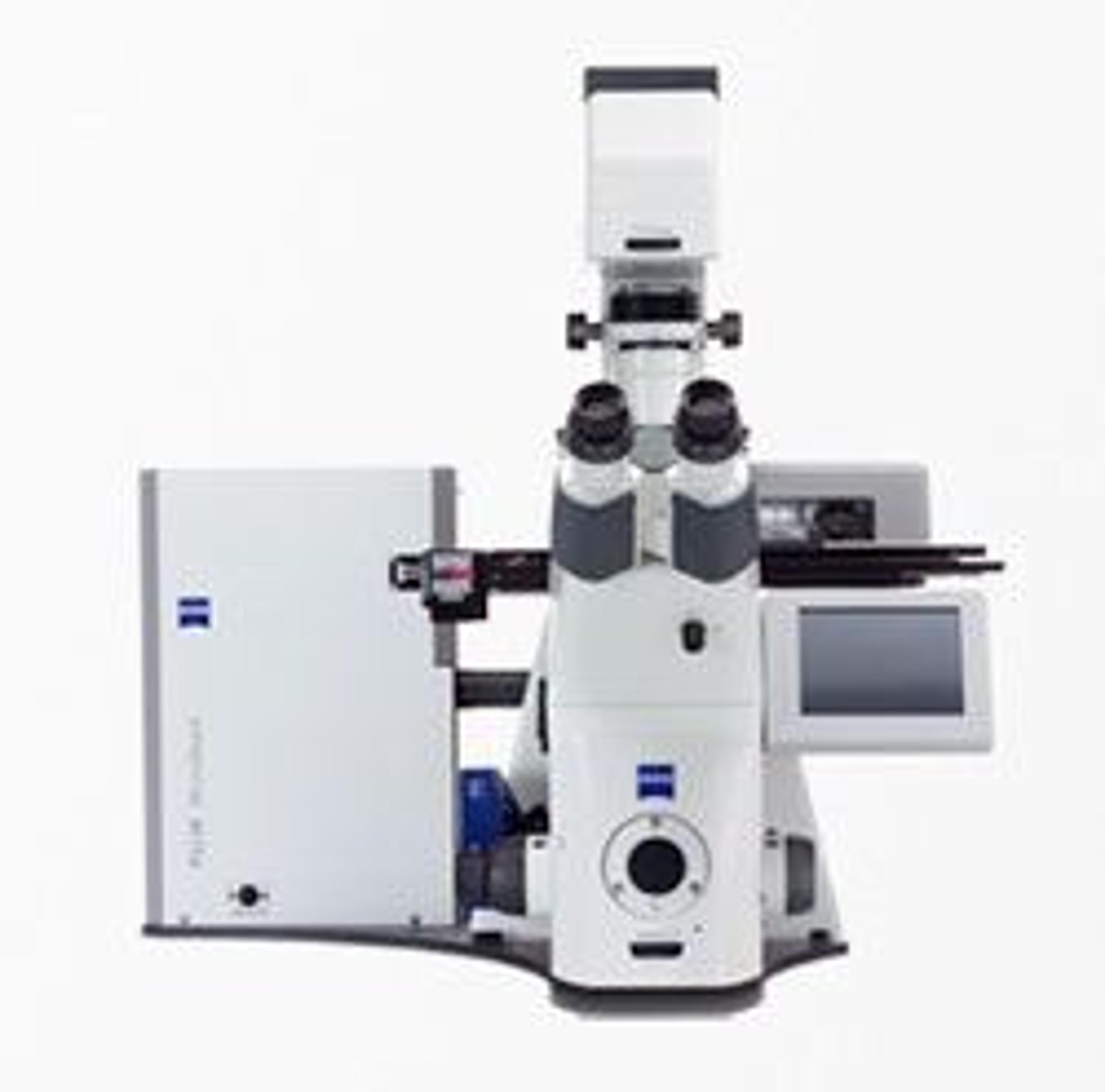
ZEISS PALM MicroBeam
ZEISS Research Microscopy SolutionsPALM MicroBeam uses a patented process to capture even the most demanding specimens – from cryosections, FFPE materials, native tissue like fresh plants, live cells and chromosomes – without contamination. The complete workflow for your laser microdissection research PALM MicroBeam makes isolating uncontaminated source material simple. Precise detection, laser microdissection and patented laser transport allow you to obtain the homogenous analysis material necessary for meaningful scientific results. Because analyses of gene expression patterns rely on exactly-separated analytical material, unwanted cells may alter your results and conceal the signals of the relevant cells. PALM MicroBeam prevents this by allowing you to define cells and tissue regions precisely, ensuring your results are exact and reproducible. Highlights of this technology • Suitability for laser microdissection and analysis for DNA, RNA and protein isolation – from archive material or live cells • A system that completes the step from laser-microdissection to integrated imaging workstation • Applicable to cryosections and FFPE tissue • Performing LCM even from standard glass slides • Extendibility – add digital cameras from the AxioCam camera range • Ability to integrate additional components into MicroBeam and create simple workflows, for individual experiments or automation with flexible collectors • Calibration routines that allow you to easily adjust MicroBeam for laser parameters appropriate to your chosen specimen