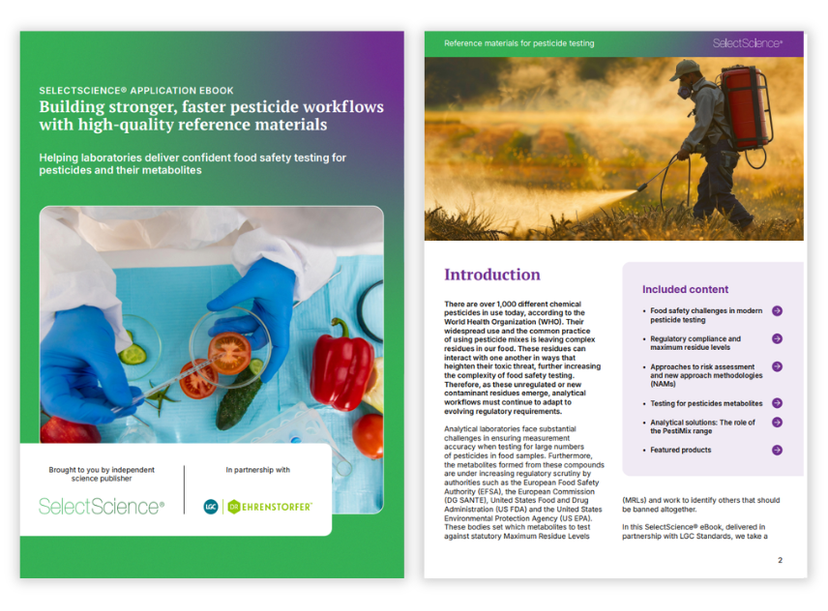
Building stronger, faster pesticide workflows with high-quality reference materials

14 Sept 2026

Olivia Long
Editorial Team
Reference materials for pesticide testing eBook

Food safety laboratories are being asked to monitor more compounds than ever before, making accuracy, efficiency, and regulatory confidence essential. Meeting evolving pesticide testing requirements requires more than sensitive analytical methods; it depends on having trusted reference materials that support reliable results from start to finish.

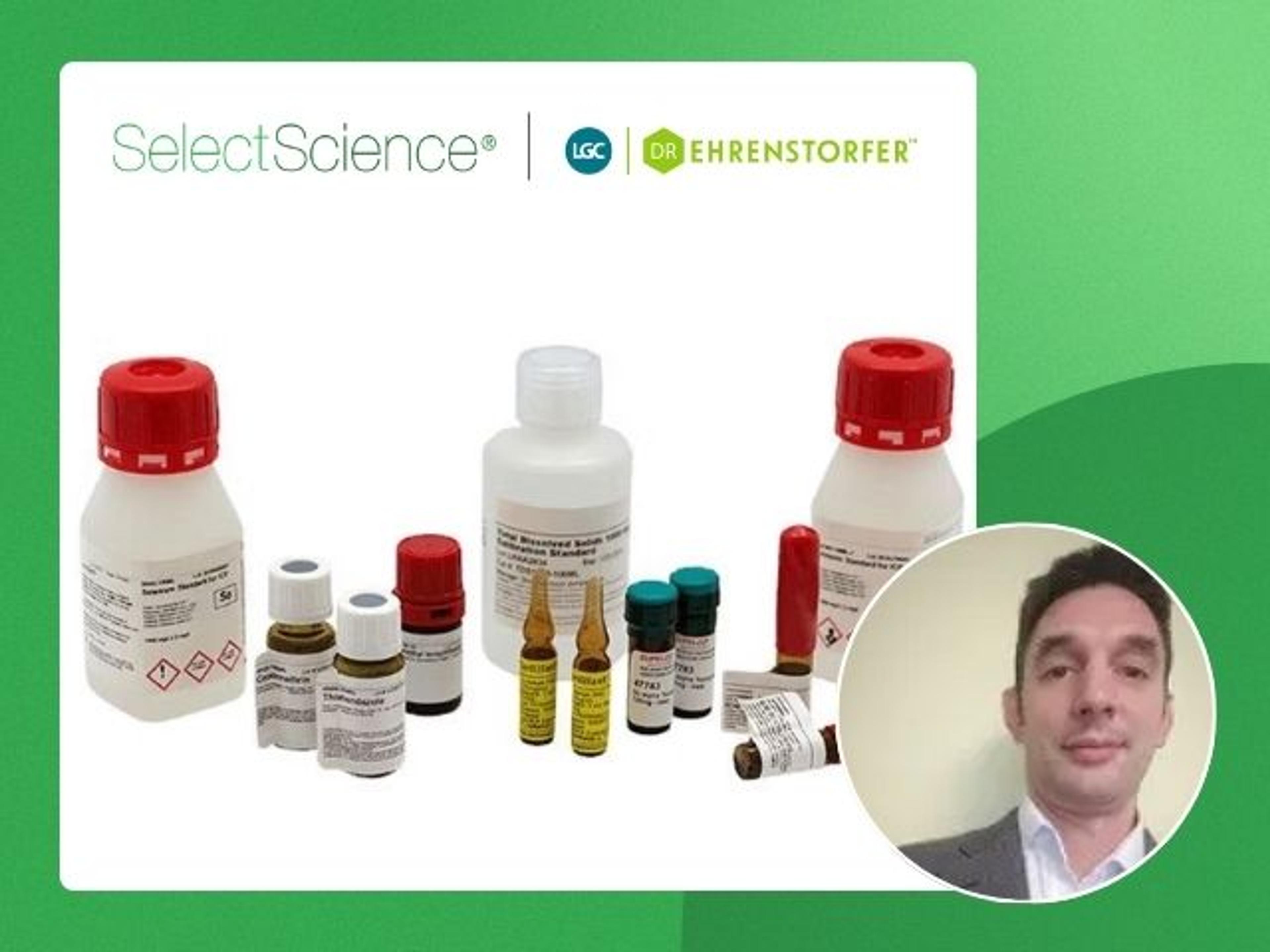
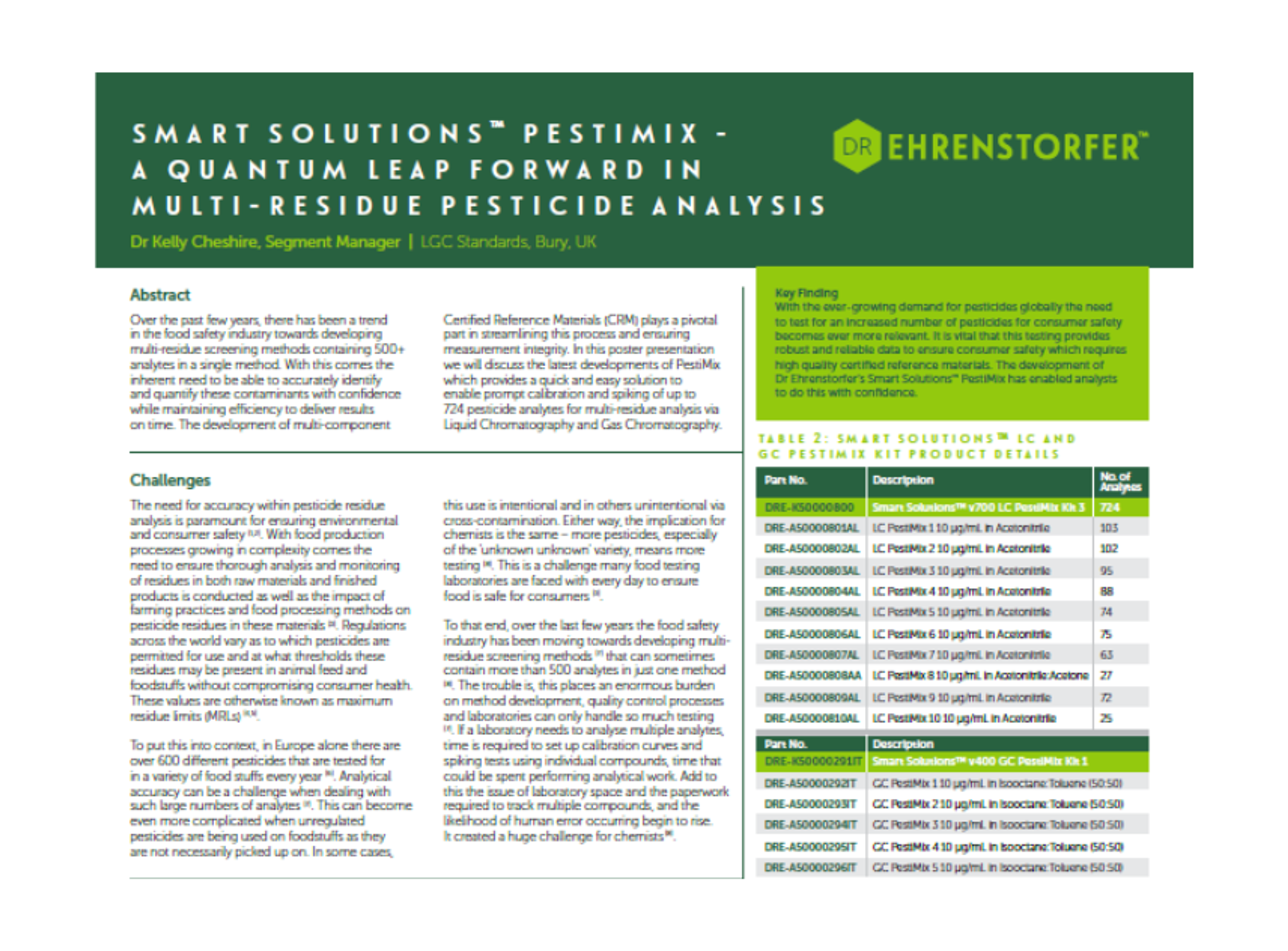
This SelectScience® application eBook explores how LGC Standards’ reference materials and PestiMix solutions help simplify pesticide and metabolite analysis. Discover how the right standards can strengthen laboratory workflows, support compliance with maximum residue levels (MRLs), and give analysts the confidence to tackle an increasingly complex testing landscape.

Download this eBook and learn:

  • How to navigate evolving pesticide regulations and maximum residue level (MRL) requirements
  • How to assess the risks associated with pesticide mixtures and emerging contaminants
  • The importance of pesticide metabolites in residue analysis
  • How to streamline multi-residue testing using high-quality reference materials and PestiMix solutions
  • How to strengthen analytical accuracy across food safety workflows

Resource details:

  • Document type: SelectScience application eBook
  • Page count: 33
  • Read time: 50 mins
  • Edition: 1st

Links

Related content

Tags

Gas ChromatographyGas chromatography (GC) is an analytical technique used to separate and quantitate mixtures of small and volatile compounds. Gas chromatographs or GC systems include components such as GC columns, detectors, pumps and autosamplers. Choose from packed or capillary GC columns, flame ionization (FID), photoionization (PID) electron capture detectors and selective or non-selective detectors. Find the best gas chromatographs in our peer-reviewed product directory: compare products, check customer reviews and receive pricing direct from manufacturers.Environmental Monitoring and TestingEnvironmental monitoring and testing uses handheld portable analyzers, kits, spectrometers or chromatography systems for air, water, soil, food and other sample testing. Useful features of analyzers such as BOD and COD include portability, easy calibration, automation and sensitivity.  Environmental test kits for pH, water, moisture, etc, should be accurate, sensitive, reliable, fast and easy to use.Residual PesticidesPesticidesPesticides are used to protect crops from diseases, pests and unwanted plants. They are classed as persistent organic pollutants (POPs) and can be harmful to humans. The Environmental Protection Agency (EPA) currently regulates the use of pesticides in the USA. Liquid ChromatographyMetabolitesMetabolites are the intermediate and end products of metabolism. Analyzing metabolites offers insight into cellular processes and disease mechanisms and is critical in fields like pharmacology, toxicology, and diagnostics. Explore our peer-reviewed product directory to find the best tools for metabolite analysis, compare products, check reviews, and get pricing directly from manufacturers.Food TestingFood testing refers to a variety experiments including PCR, mass spectrometry, processing, QuEChERS, analyzing and Kjeldahl.Food ContaminationFood contamination refers to the presence of harmful substances or pathogens in food, posing risks to human health. Contaminants can be biological, chemical, or physical, and their detection is crucial for ensuring food safety. Advanced testing methods like PCR, chromatography, and spectroscopy are used to identify contaminants in food products. Browse our peer-reviewed product directory to find the best solutions for food contamination detection, compare products, check reviews, and get pricing directly from manufacturers.Reference Materials