

TechTalk: Building large-panel workflows for modern pesticide surveillance
Friday, July 10 at 14:00 BST | 15:00 CEST | 09:00 EDT | 06:00 PDT
Food testing laboratories are under increasing pressure to monitor larger numbers of contaminants while maintaining throughput, analytical performance and regulatory compliance.
This SelectScience® TechTalk explores how modern large-panel workflows are making this possible, using case studies from Nestlé, ANSES and SCIEX. We'll examine how laboratories are expanding analytical scope to more than 700 analytes across diverse food matrices while maintaining analytical confidence, sensitivity and throughput.
The session will cover practical considerations in sample preparation, reference standards, method development and workflow optimization, alongside the role of LC-HRMS and advanced LC-MS/MS technologies in supporting modern surveillance programs.
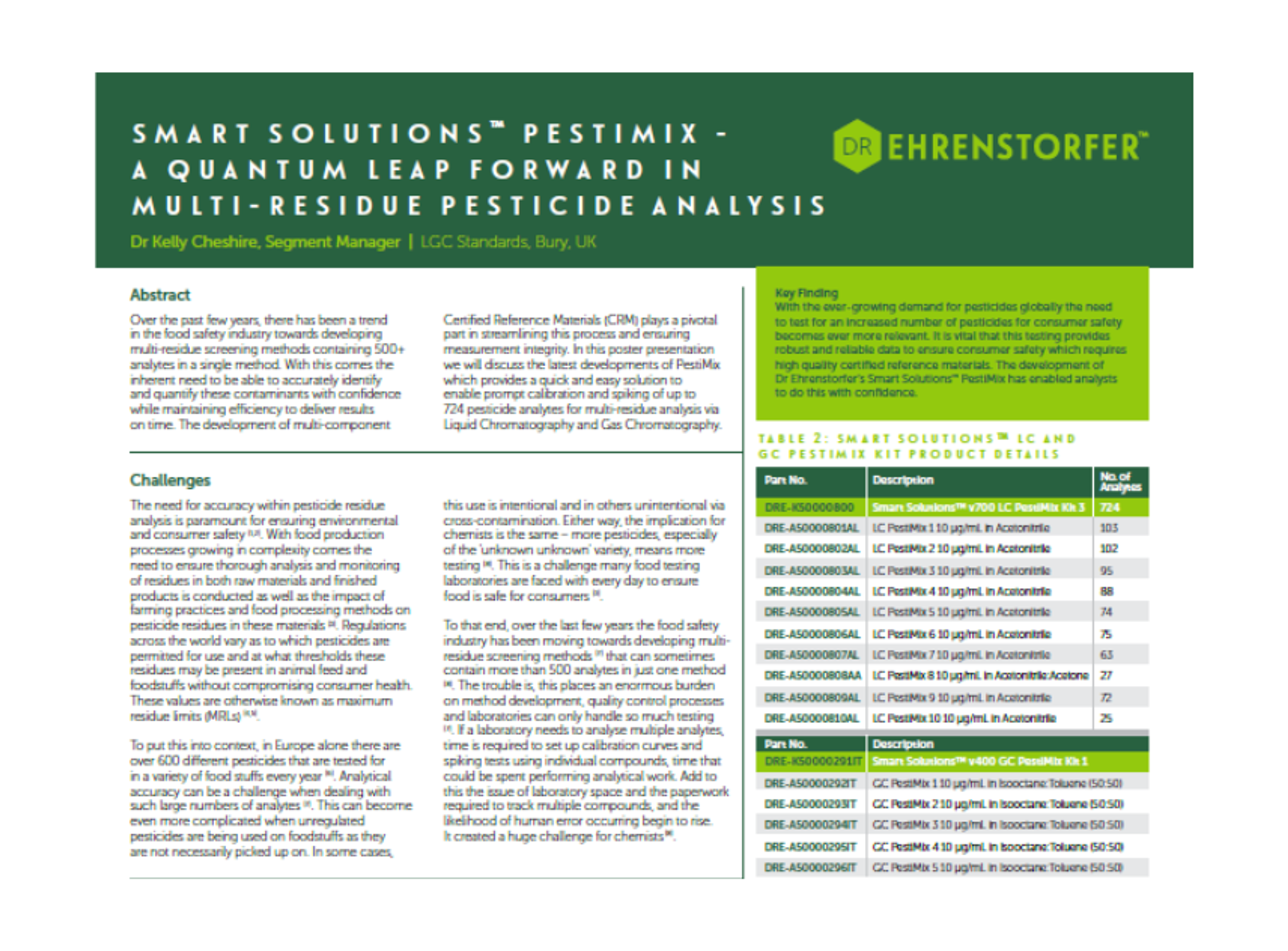
It will also discuss how PestiMix, a multi-class reference standard mixture, can help simplify standard preparation and support implementation of large-panel methods.
Certificate of attendance
If you attend the live TechTalk, you will automatically receive a certificate of attendance, including a learning outcomes summary, for continuing education purposes. If you view the on-demand TechTalk, you can request a certificate of attendance by emailing editor@selectscience.net.
TechTalk details
- Cost: Free to attend
- Location: Online
- Duration: 20 minutes
Registration is required to secure your place. If you register but can’t attend live, you will receive a link to the on‑demand recording once it becomes available.
Speakers

Who should attend?
- Food safety and pesticide residue scientists
- Laboratory managers and technical leads
- Method development and analytical scientists
- Food quality and regulatory compliance professionals
- Researchers interested in large-panel multi-residue analysis
Featured products
Request Quote for All Products
Smart Solutions™ PestiMix Kits
LGC - Dr. EhrenstorferA quantum leap in pesticide analysis. Up to 724 analytes. 30 Minutes. Maximum Results.
Pesticide Standards
LGC StandardsThe testing of pesticides and their metabolites is necessary to safeguard the environment and food supply in an increasingly globalised world. With over 40 years of experience in pesticide reference materials, LGC Standards has consistently adapted and expanded its portfolio to meet changing regulations, technology, and quality requirements, ensuring it can offer you the most up-to-date products to meet your needs.
What will this webinar cover?
Key learning objectives:
- Understand the drivers behind large-panel pesticide residue analysis.
- Explore technologies enabling workflows involving 1000+ analytes.
- Recognize key challenges in sample preparation, calibration and method development.
- Assess approaches for streamlining large-panel workflow implementation.
Links
Related content

Advanced reference materials streamline multi-residue pesticide testing
LGC Standards' PestiMix enables 700+ analyte screening in just 30 minutes