
Advanced reference materials streamline multi-residue pesticide testing
LGC Standards' PestiMix enables 700+ analyte screening in just 30 minutes
7 Jan 2026

Dr. Kelly Cheshire, Segment Manager, LGC Standards
Global food supply chains are integral to food security around the globe, however they are fraught with challenges ranging from complex production processes to tightening regulations. As such, analytical laboratories have faced mounting pressure to screen foods for pesticide residues in a manner which is fast, accurate and cost effective.
Pesticides play a critical role in global food production, protecting crop yields and enabling multiple harvests from the same land. With over 1,000 different pesticides used worldwide, many of which can persist in soil and water for years, ensuring food safety has become increasingly complex. To protect consumers, the WHO has established internationally accepted maximum residue limits (MRLs) that require strict compliance and rigorous testing.
As such, analytical laboratories have faced challenges to keep up with demand and changing regulations. Traditional multi-residue testing relied on days of painstaking preparation, creating operational bottlenecks that struggled to keep pace with regulatory demands. However, recent breakthroughs in reference materials have transformed this landscape, taking a process that once took days to just thirty minutes. For laboratories navigating intensifying regulations and growing compound libraries, advanced reference materials are the key to workflow efficiency.
Regulatory complexity meets operational reality
Pesticide residue analysis is currently one of the most demanding areas of analytical testing, as Dr. Kelly Cheshire, Segment Manager at LGC Standards comments, "MRLs vary significantly across regions and commodities, forcing laboratories to screen hundreds of analytes across multiple matrices to remain compliant. Unfortunately, you can’t have the same target analyzed to the same requirements globally."
This operational burden extends far beyond regulatory diversity, with Dr. Cheshire noting, "preparing individual standards for multi-residue methods is very labor intensive. It's prone to human error, and can consume days of analyst time.” A challenge which only grows as laboratory size increases.
Modern instrumentation has introduced another dimension to this challenge. "Advanced instrumentation now detects not only parent pesticides, but also degrading products, metabolites, and even packaging related leachables, which therefore expand the scope of analysis beyond traditional compounds," says Dr. Cheshire.
Decades of innovation
LGC Standards has been addressing these challenges for 50 years, building what is now the most comprehensive pesticide reference materials portfolio. They currently offer 6,000 pesticide reference materials available globally, with over 200 new reference materials added in the last year alone.
This extensive portfolio reflects decades of R&D investment and close collaboration with customers. "The LGC Standards mission is rooted in science for a safer world," Dr. Cheshire explains. "We innovate and apply science to ensure that the safety and integrity of products and services are globally respected and maintained. Our team of analytical chemists work continuously with our customers to improve and innovate these solutions in-line with changing regulation and testing requirements.”
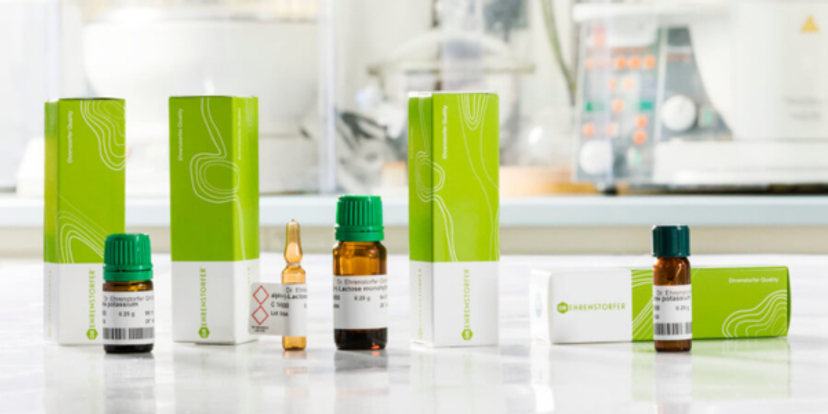
Smart Solutions™ v700 LC PestiMix Kit 3
The game-changer PestiMix Kit 3
At the heart of LGC's offering is PestiMix, a solution that has fundamentally transformed multi-residue pesticide testing. "The GC and the LC kits from the LGC Standards group are the largest pesticides kits in the market and ideal for laboratories who need a very rapid test," Dr. Cheshire reveals.
Their Smart Solutions™ v700 LC PestiMix Kit 3 is a reference material optimized to enable calibration and rapid screening of over 700 analytes. Dr. Cheshire explains what this advancement means for chemists, "We managed to combine 724 analytes in just 10 ampules. So, what used to take several days in the labs, can now be completed in around 30 minutes."
The competitive advantage is clear. "This is the largest PestiMix kit on the market," Dr. Cheshire confirms. "While there are other reference material suppliers that also offer large pesticide mixtures, the total number of pesticides offered is not as high."
The latest version introduced breakthrough improvements in stability and performance. "The shelf life is now a minimum of three years, which is the longest shelf life we've ever achieved for such a large pesticide mixture so far," she notes. Additionally, "we doubled up the concentration compared to the previous version 2 of the PestiMix to have easy spiking and give customers more flexibility in their application."
The development also included a strategic refresh of analytes to make it more focused on current regulatory needs, adding 97 completely new analytes compared to the previous version 2 PestiMix, and removing some less relevant ones. Critically, like the versions before it, this version continues to meet rigorous quality standards, as it is produced under ISO 17034 accreditation and backed by a comprehensive certificate of analysis.
The shelf life is now a minimum of three years, which is the longest shelf life we've ever achieved for such a large pesticide mixture so far
Dr Kelly Cheshire Segment Manager, LGC Standards', Dr. Ehrenstorfer
Looking ahead to emerging contaminants
The pesticide testing landscape continues to evolve, with it, bringing new challenges. "One of the clear and most resonant examples of emerging contaminant compounds are PFAS and microplastics. At LGC Standards, we have recently massively increased our portfolio in both categories," says Dr. Cheshire.
Looking further ahead, she envisions even broader solutions, with attention possibly shifting away from pesticides to other contaminants. "What I can see developing is maybe combining a variety of emerging contaminants, perhaps combining pharmaceutical and veterinary residues together alongside pesticides."
With comprehensive and reliable reference materials, laboratories will continue to thrive in a world with ever evolving analytical needs. "By combining technical innovation with this comprehensive support, at LGC, we enable laboratories to overcome the hurdles they face and deliver faster, more reliable pesticide residue analysis," Dr. Cheshire concludes.
Related products
Request Quote for All Products
Smart Solutions™ PestiMix Kits
LGC - Dr. EhrenstorferA quantum leap in pesticide analysis. Up to 724 analytes. 30 Minutes. Maximum Results.