
Bridging the gap between pathology and patient care
Discover how Hannah Hill, biomedical scientist at Bedfordshire Hospitals NHS Foundation Trust, is raising public awareness and driving diagnostic excellence for Medical Lab Professionals Week
19 Apr 2026
Medical Laboratory Professionals Week highlights the essential backbone of the healthcare system. This year, we sit down with Hannah Hill, a HCPC Registered Biomedical Scientist at Bedfordshire Hospitals NHS Foundation Trust. Driven by a fascination with disease pathology and a desire to help others, Hannah plays a critical role in the high-pressure environment of clinical diagnostics.
From interpreting critical results before they reach healthcare providers to launching a personal project to communicate biomedical science to the public, Hannah shares her perspective on the human impact of data. As part of our specialized coverage, she discusses the vital importance of teamwork and why expanding apprenticeship pathways is the key to supporting the next generation of scientists.
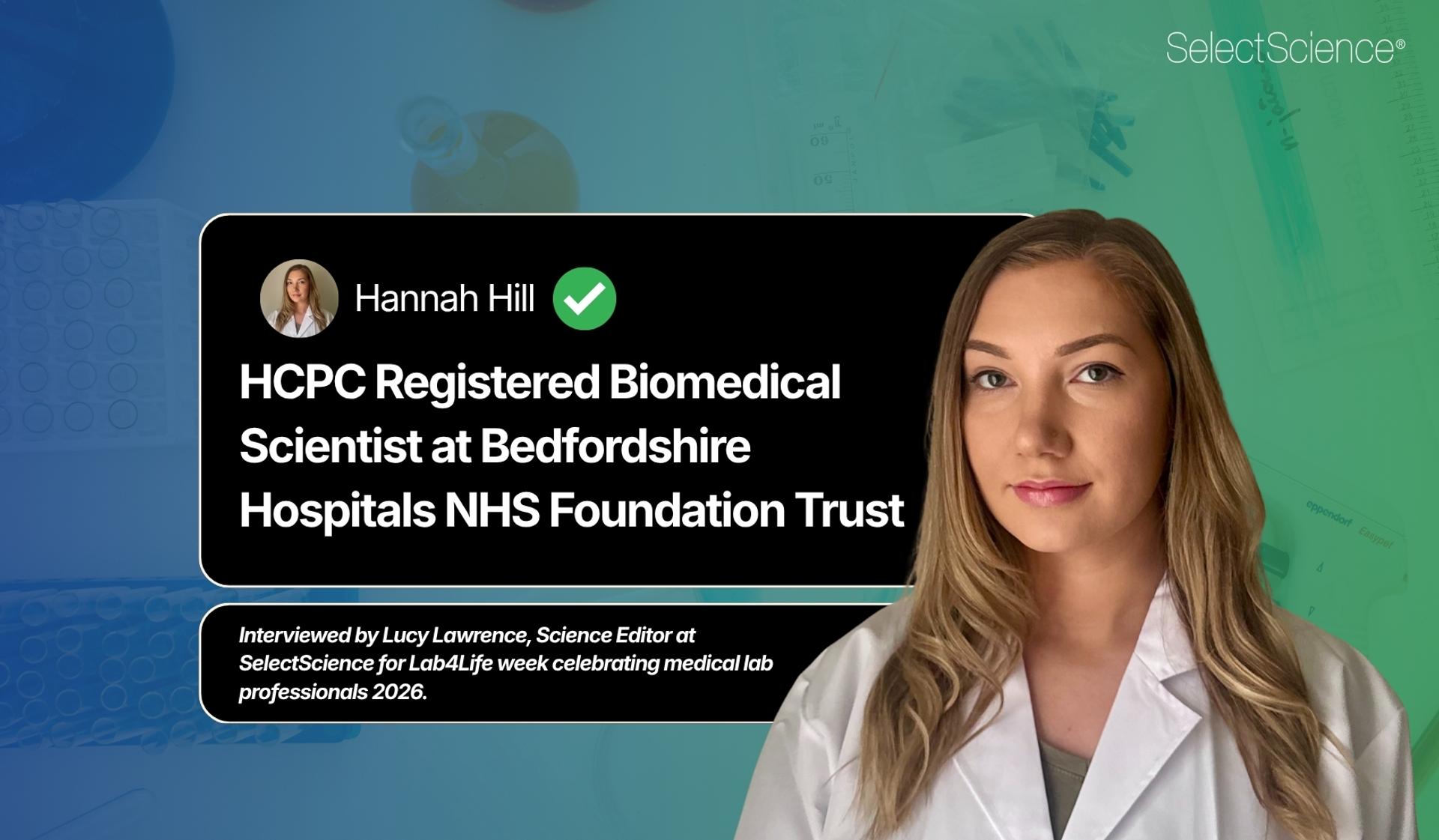
Hannah Hill, HCPC Registered Biomedical Scientist at Bedford Hospitals NHS Foundation Trust.
Lucy Lawrence (LL): Could you tell us about your background and what first drew you to the lab?
Hannal Hill (HH): I was drawn to laboratory work because I enjoy the mix of hands-on experiments, problem solving, and data analysis. Also, disease pathology was something I found fascinating during my degree. A combination of feeling comfortable in the lab during my studies, an interest in disease manifestation, and the desire to help others led to the decision that a career as a Biomedical Scientist was the ideal fit for me.
LL: What makes you proud to put on your lab coat every day?
HH: Healthcare providers rely on laboratory results to make clinical decisions that will affect a patient’s life. Although I am not patient-facing in my role, it makes me proud to know that the decisions I make in ensuring high-quality diagnostic results have an impact on the care provided to patients.
LL: Every sample is a person waiting for an answer. What specific moment reminds you of the human impact behind the data?
HH: It can be very humbling and humanizing to be one of the first people to see critical results before they reach a healthcare provider. The decisions I make when handling a result can ripple through the healthcare system to eventually aid treatment or diagnosis for a patient. Although I don’t meet the patient or see the final outcome, it’s a reminder of the responsibility and impact on a person beyond the numbers and data.
LL: In your experience, what soft skill is actually the secret to being a truly great scientist?
HH: Honestly, I would say teamwork and communication are two of the most important soft skills to develop! Labs are high-pressure environments, and the ability to collaborate, share perspectives, and stay grounded can be as important as technical expertise. Communicating effectively is key to the wider picture of patient safety. Biomedical scientists work as part of a larger pathology network that communicates together to ensure the same outcome: the distribution of timely, accurate, and precise results for healthcare providers.
LL: How can the industry better support the next generation, and what is your advice for a student considering a career at the bench?
HH: In my opinion, expanding opportunities for apprenticeships and training pathways can help grow the workforce. The introduction of apprenticeships into biomedical science across the UK has been a great additional pathway to enter the profession.
My advice to students is to remain resilient, seek hands-on lab experience early, and stay motivated. It can be competitive when trying to enter pathology laboratories, but dedication and perseverance will go a long way. For me, it is incredibly rewarding, challenging, and meaningful to work as a Biomedical Scientist.
LL: Is there anything else you would like to include to raise awareness for the profession?
HH: I believe there needs to be greater public awareness of biomedical science and the work we do every day, as it is an essential backbone to the healthcare system. Movements such as Healthcare Science Week and Biomedical Science Day are great public engagement opportunities to bridge the gap.
In my own time, I have started a small personal project to help communicate biomedical science to students, the public, and professionals. It’s been incredibly rewarding to educate others, connect with those aspiring to be in the field, and raise awareness about the role we play.
Hannah Hill, Biomedical Scientist at Bedfordshire Hospitals NHS Foundation Trust was speaking with Lucy Lawrence, Science Editor for SelectScience.
Explore the full feature.