
BioTek Highlights Automated Workflow Solutions
6 Jan 2014
Join BioTek Instruments as they demonstrate novel ways to automate microplate-based workflows at the SLAS 2014 Conference and Exhibition to be held January 18-22 in San Diego, California. BioTek’s “Think Possible” philosophy is reflected in their microplate-based imaging, detection, liquid handling and automation solutions. As a Diamond Sponsor of SLAS 2014, the company will showcase their newest innovations at Booth #1105. BioTek’s instruments will also be featured at several partner booths throughout the exhibition.
BioTek’s award-winning and patent pending Cytation™ 3 Cell Imaging Multi-Mode Reader combines automated digital fluorescence microscopy and conventional microplate detection in a modular, upgradable platform. Quantitative and phenotypic cellular analyses are easily and efficiently performed for a variety of assays, particularly the increasingly important live cell assays.
The new MultiFlo™ FX Microplate Dispenser combines up to four independent reagent dispensers and an optional wash module in one compact unit. A color, touch screen interface offers simple, intuitive protocol creation and implementation, while Parallel Dispense™ technology combines syringe and peristaltic pump-based dispensing to eliminate reagent carryover. MultiFlo FX may also be controlled via Liquid Handling Control™ (LHC™) software for PC control.
Walk-away automation of routine microplate-based processes, even those requiring lidded or unlidded plates, is possible with BioTek’s new BioStack™ 4 Microplate Stacker. BioStack 4 is compatible with BioTek’s imaging, washing, dispensing and reading instruments, and accommodates 24- to 1536-well microplates. The unique carrier provides fast plate exchange speeds to increase throughput and productivity.
BioTek will also present ten application posters, two exhibitor tutorials, “Automated Fluorescence Microscopy in a Microplate Reader” and “The Use of 3D Cell Culture in Oncology Research” and participate in the interactive forum, Late Night with LRIG with “Cytation™ 3, Combined Plate Reader & Automated Microscope”
Complete details on BioTek’s SLAS 2014 activities are available here.
BioTek Instruments, Inc., headquartered in Winooski, VT, USA, is a worldwide leader in the design, manufacture, and sale of microplate instrumentation and software. These technologies are used to aid life science research, facilitate drug discovery, provide rapid and cost-effective analysis, and enable sensitive, accurate quantification of molecules across diverse applications. BioTek espouses a “Think Possible” approach that sets the tone for fresh ideas, unsurpassed customer service and original innovations. As such, they are often honored for local accomplishments and technological innovations, including Best Places to Work in Vermont, North American New Product Innovation Award for Workflow Solutions in Life Sciences and Drug Discovery Product of the Year – Scientists' Choice Award.
For additional information, contact:
Chere Griffin, Account Executive
Shaw & Todd Advertising and Marketing Communications
Related products
Request Quote for All Products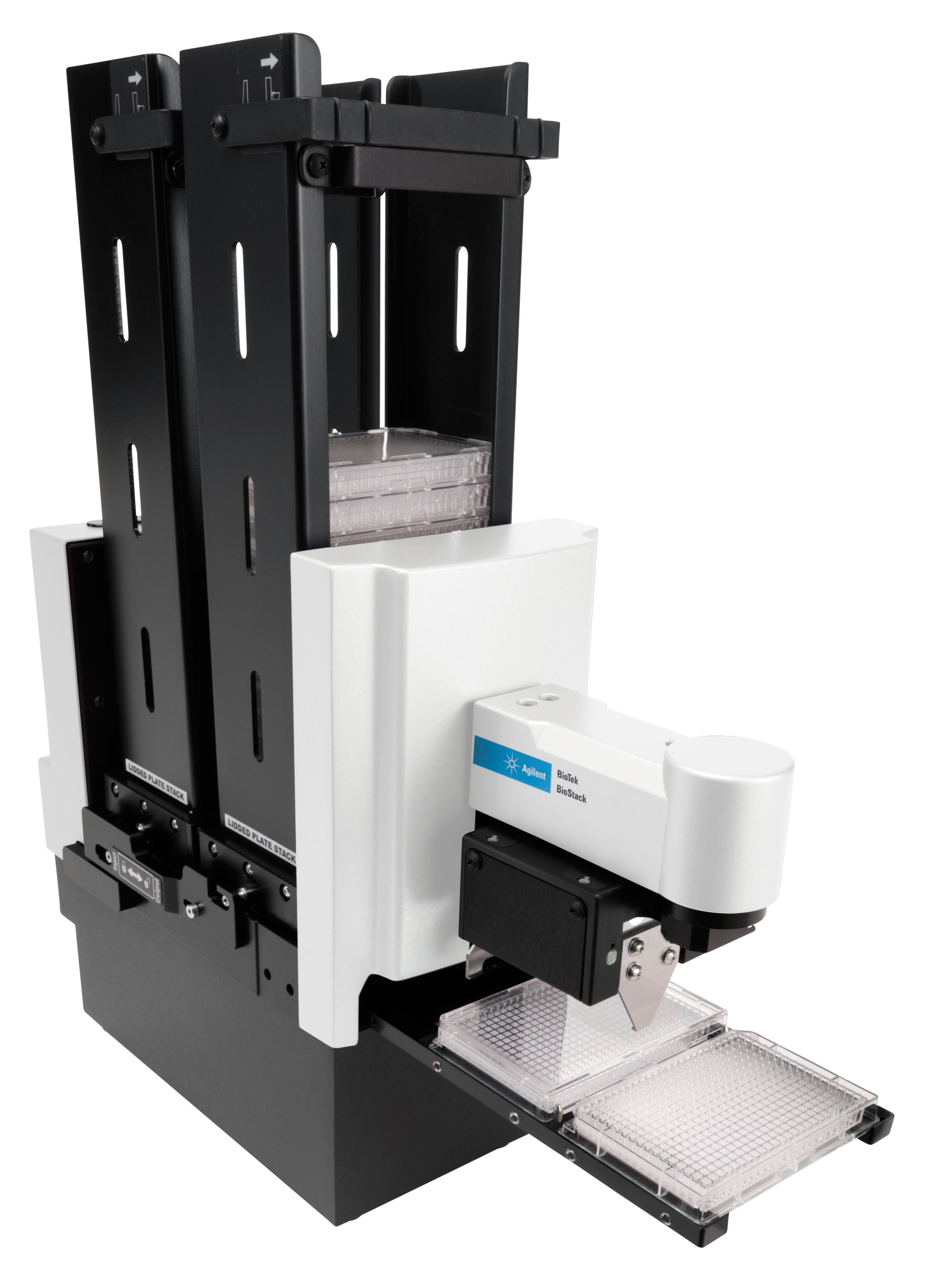
Agilent BioTek BioStack Microplate Stacker
Agilent TechnologiesThe Agilent BioTek BioStack microplate stacker is a compact and versatile microplate stacker, compatible with Agilent BioTek washers, dispensers, plate readers, and imaging systems. The rapid plate exchange speeds deliver increased throughput and enhanced efficiency and greater productivity.
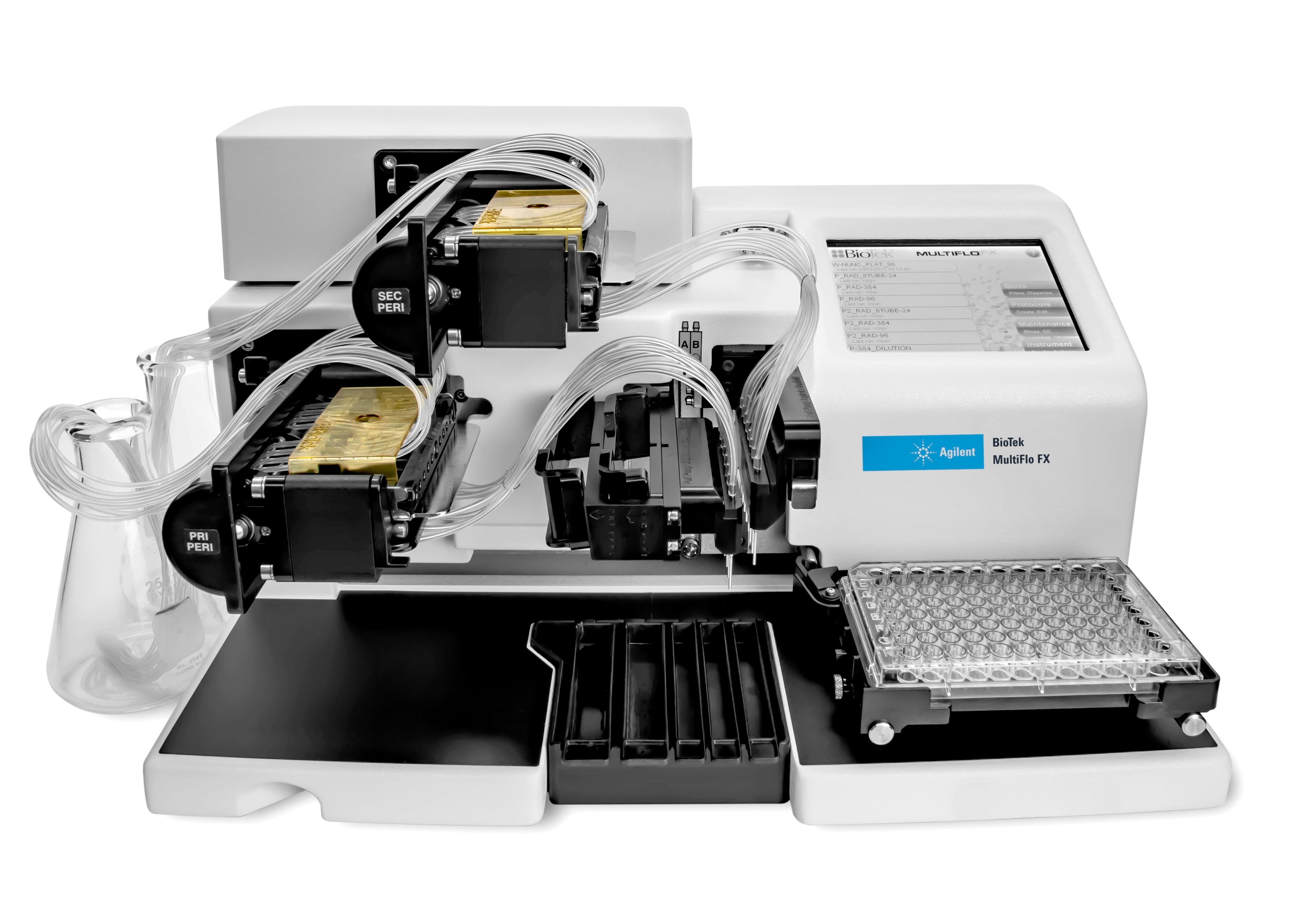
Agilent BioTek MultiFlo FX Multimode Dispenser
Agilent TechnologiesMultiFlo FX can dispense up to 4 independent reagents into 6- to 1536-well microplates.
Agilent BioTek Liquid Handling Control (LHC) Software
Agilent TechnologiesAgilent BioTek Liquid Handling Control (LHC) software is a powerful yet flexible interface for use with Agilent BioTek washers, dispensers, and combination liquid handling systems. LHC software makes it easy to program even the most complex protocols with a choice of deployment. These protocols can be run directly from the computer or downloaded to the instrument for convenient onboard recall and operation.