
Best practices for rapid detection of acute cardiovascular disease
Prof. Ishii explains how high-sensitivity troponin I assays and a 1-hour algorithm can be best used for early diagnosis and treatment of myocardial infarction
5 Jul 2020
Professor Junichi Ishii from Fujita Health University Hospital is the star of a new video published on The Scientists’ Channel. In this fascinating interview, Prof. Ishii, who works in the Clinical Laboratory Medicine department and specializes in acute heart failure, discusses the increase in emergency patients with suspected coronary disease and the importance of early diagnosis and treatment.
As the largest single medical facility in Japan, with a busy emergency and acute intensive care center, it is vital Fujita Health University Hospital has the best techniques and technologies available to care for its patients.
With traditional ECGs not proving a wholly reliable method for detection, Prof. Ishii explains how the team at Fujita Health University Hospital now uses high-sensitivity troponin I assays and a 1-hour algorithm, in combination with clinical assessments and ECGs, to rule in and rule out myocardial infarction in patients presenting to the emergency department.
Prof. Ishii presents case studies showing the value of the new assays for accurate diagnosis and discusses how they may also be used during health checks, to identify patients at high risk of having an acute cardiac event in the future
He also explains how the team’s investigations had concluded that the Siemens High-Sensitivity Troponin I assay meets the European Society of Cardiology (ESC) guidelines for this type of assay.
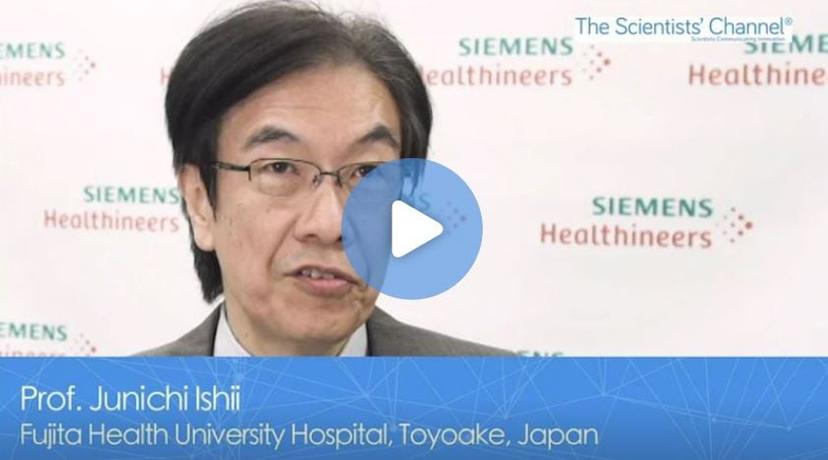
Watch Prof. Ishii's video interview on The Scientists' Channel
With 142 peer-reviewed journal publications to his name, Prof. Ishii is a respected expert in his field. He features on The Scientists’ Channel alongside other leading clinical scientists from across the world such as fellow cardiovascular experts Dr. Frank Peacock, Professor of Emergency Medicine and Research Director at Baylor College of Medicine, and Dr. Antonio Buno, Head of Laboratory Medicine, La Paz University Hospital, Madrid; liver disease experts Dr. Arun J. Sanyal, Professor of Gastroenterology at Virginia Commonwealth University School of Medicine, and Zobair M. Younossi, Professor and Chairman of the Department of Medicine at Inova Fairfax Hospital, Virginia; and Dr. S.M. Hossein Sadrzadeh, clinical professor of pathology and laboratory medicine at the University of Calgary.
Watch Prof. Ishii’s full video interview on The Scientists’ Channel>>