
Automated Sequence Capture for Next-Generation Sequencing Paves the Way for Personalized Medicine
16 Mar 2009febit today announced the official launch of its new sequence capture technology Hybselect. In several biomedical studies of early access customers over the past months, HybSelect demonstrated superb enrichment factors and deep sequencing coverage for a broad range of human genes and genomic regions. As the first sequence capture technology combining outstanding enrichment and walk-away convenience, HybSelect opens up new opportunities in biomarker discovery and the development of personalized medicine.
Declining costs and dramatically higher sequencing output has distinguished the fast-paced genomics market since 2003. Sequencing a human genome, a project that required years and billions of USD, is now feasible in weeks for thousands of USD. Nevertheless, conducting statistically relevant biomedical studies with deep sequencing of patient samples is still prohibitively expensive and inefficient. HybSelect effectively scales next generation sequencing to the needs of biomedical research and discovery by enabling large scale studies.
The accessibility and enormous capacity of the next generation sequencers have triggered a heightened demand for sequence capture technologies amongst geneticists: targeted re-sequencing of medically-relevant genome loci will greatly enhance the understanding of health and disease in crucial areas such as cancer and Alzheimer’s disease. The outcomes of such studies are significant in that they will allow improved diagnostics and targeted applications of medical agents.
“HybSelect even enables large scale targeted re-sequencing studies because of the high degree of automation combined with the power to detect genetically relevant information in the genome with high efficiency, which can not be met by PCR, or other methods on the market. The fully automated HybSelect technology will compel adoption in several ways: short hands-on time (minutes instead of hours), a high degree of reproducibility, and unmatched parallelism in hybselecting several genomic samples at a time,” said Peer Staehler, CSO of febit, summarizing the advances of febit’s latest product.
The proof of concept has been positively confirmed by early access customers. Dr. Matthew Huentelman, an investigator and lead collaborator at the Translational Genomics Research Institute (TGen) in Phoenix, AZ, was one of the first researchers to use HybSelect. His laboratory uses state-of-the-art techniques to pin-point differences in genes and pathways that contribute to the development and progression of Alzheimer’s disease. “We are really excited about the high enrichment factor and the depth of coverage of the targeted sequences that can be achieved using HybSelect from febit. The short hands-on time and ease of use reinforce our intentions to use this new technology for further studies,” said Dr. Huentelman.
HybSelect will be also employed in the newly developed Biomarker Discovery Center Heidelberg for the detection of novel tumor markers. Within the European READNA-consortium (REvolutionary Approaches and Devices for Nucleic Acid analysis) HybSelect will support the selection and enrichment of specific gene loci for Next Generation Sequencers.
The new technology is available as a protocol for febit’s Geniom RT Analyzer, or as a full service including Next-Gen sequencing from febit. HybSelect is optimized for the Illumina GAII sequencing system, and will be available for other sequencing platforms soon.
Related products
Request Quote for All Products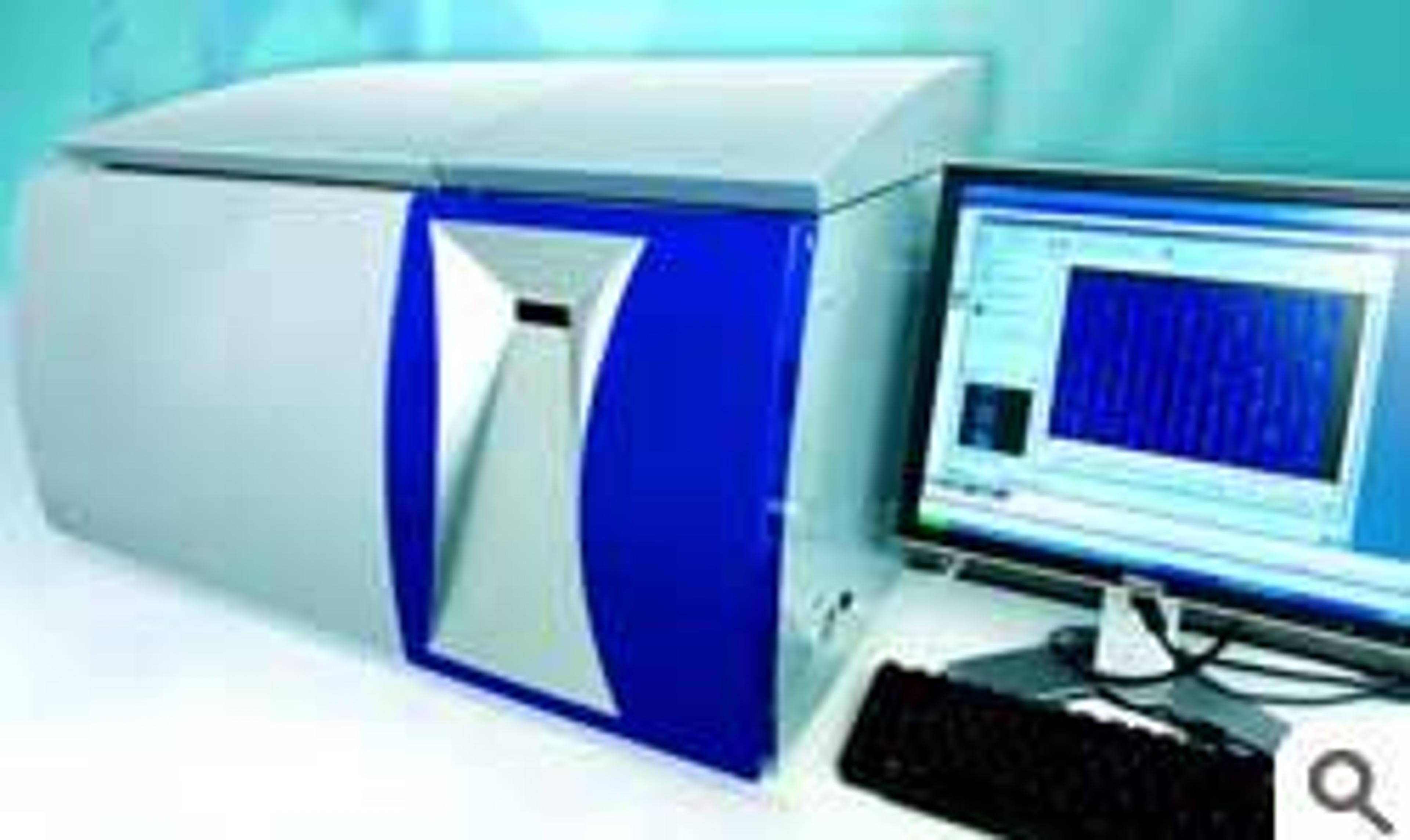
Geniom RT Analyzer
febit holding GmbHThe Geniom® RT Analyzer is designed for the automated processing of microarray experiments. It uses microfluidic Geniom Biochips for a wide range of applications. All-in-one instrumentThe Geniom RT Analyzer is a hybridization oven, a wash station, a shaker and a scanner in one instrument. Sample loading, hybridization, washing, precise temperature control, staining and detection are fully automated. There is no need for many instruments. Also the experimental workflow is much easier when you have several instruments integrated into one instrument (exact timing, exact pipetting control, minimal hands-on time). The software for the Geniom RT Analyzer is intuitive and easy to use. Users can either run experiments with pre-installed programs from febit or write new programs with ease. The Geniom RT Analyzer works with a precise temperature control for optimal hybridization. A pressurized system allows the automated sample movement through the microchannels of the biochips with accurate timing. This automated back and forth moving of the sample during the hybridization increases the sensitivity and stringency while reducing hybridization time Automation Through the fluidic control within the microfluidic biochips, automation is possible for the whole hybridization experiment. Consequently very short hands-on time is needed for you doing a hybridization experiment. Only buffer, reagent tubes and sample tubes have to be positioned in the right place. Sample loading and hybridization, washing, shaking and detection are done automatically. The Geniom RT Analyzer software has program steps for loading, hybridization, washing and shaking. For many experiments febit provides software profiles with these program steps for the Geniom RT Analyzer. The software is also intuitive and enables you to write your own experiment profiles with ease. You can drag and drop the program steps and can change the variables like time and temperature during this step. A CCD camera can be programmed to generate detection pictures. You import these pictures in a software tool for analyzing the microarray experiment. The microarray experiment with the Geniom RT Analyzer needs only short hands-on time. This increases your productivity, because you have more time for other research work. Reproducibility Because of the automation of the microarray experiment with the Geniom RT Analyzer it is very reproducible. The timing, the pipetting volumes and the incubation temperatures in each experiment are exactly the same. This is enabled by the microfluidic Geniom Biochip from febit.