
Frankfurt researcher Dr. Vasiliki E Kalodimou on the human impact of laboratory diagnostics
Discover how Dr. Vasiliki E Kalodimou uses advanced flow cytometry to bridge the gap between laboratory precision and personalized biotherapies for Lab Professionals Week 2026
19 Apr 2026
Medical Laboratory Professionals Week shines a spotlight on the often invisible experts powering the future of healthcare. This year, we sit down with Dr. Vasiliki E. Kalodimou, a leading expert in regenerative medicine and an assistant professor based in Frankfurt. Her career is dedicated to the tangible transformation of cellular biology into life-saving therapies.
From refining phenotypic profiling of stem cell populations to advocating for the rigorous quality control required in modern diagnostics, Vasiliki shares her perspective on the human impact behind every Petri dish. As part of our Lab4Life coverage, she discusses the role of perseverance in the face of research setbacks and the emerging potential of AI-supported personalized treatments for diabetes and neuronal regeneration.
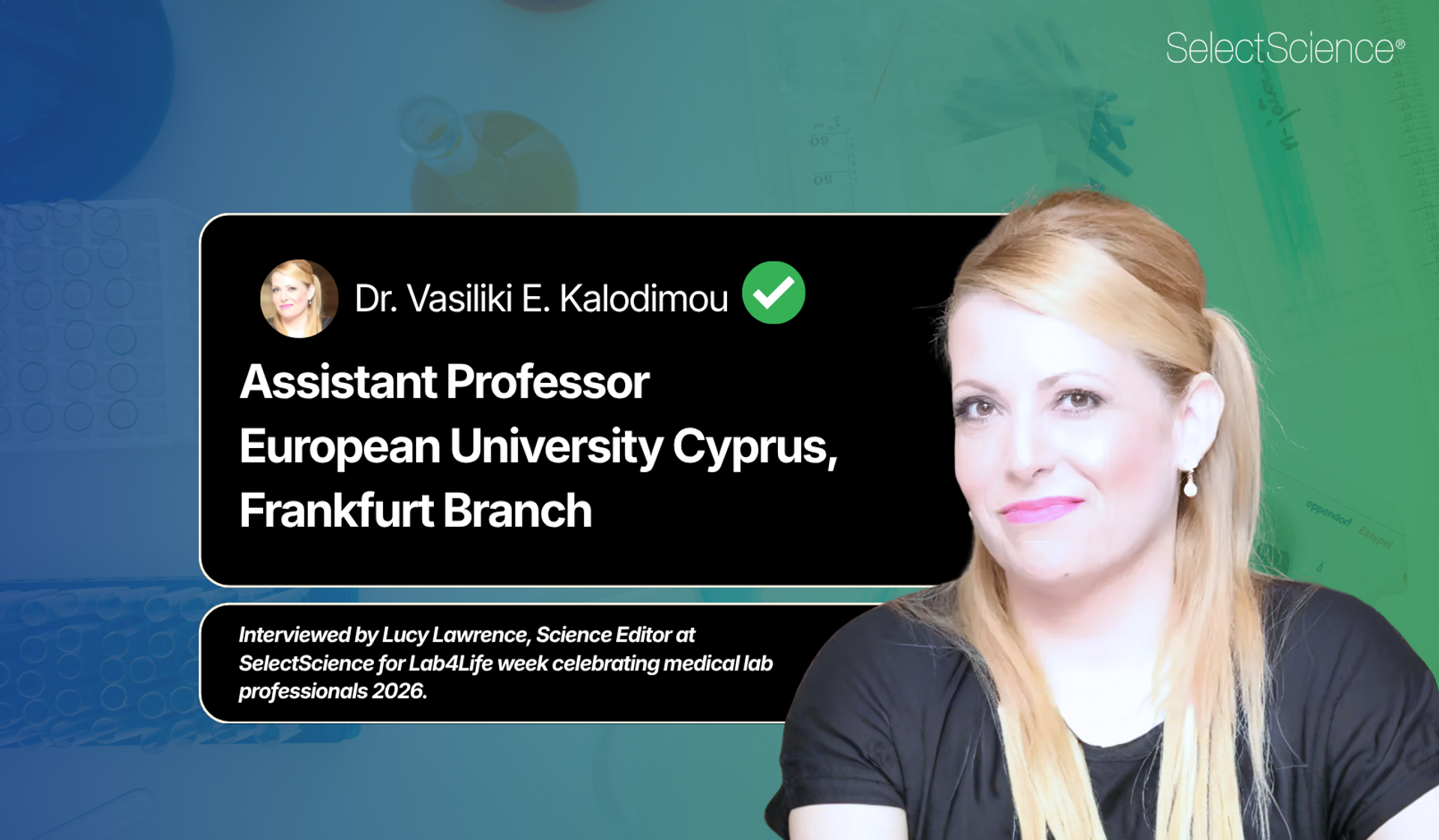
Dr. Vasiliki E. Kalodimou
Lucy Lawrence (LL): Could you tell us about your background and what first drew you to the lab?
Dr. Vasiliki E. Kalodimou (VK): From early in my education, I was fascinated by the human body—how cells communicate, change, and ultimately determine human health. The laboratory is where regenerative medicine and biotherapies transform from theory into something tangible. Seeing and analyzing cells using flow cytometry, or cultivating them in a Petri dish or flask, made me realize that every experiment brings us closer to understanding life itself and having better patient care.
LL: What makes you proud to put on your lab coat every morning?
VK: What still makes me proud each morning is knowing that our work has real impact. Whether studying stem cells or improving diagnostic techniques, the results generated in the lab can influence clinical decisions and potentially improve patients’ lives. That connection between discovery and patient care is what keeps my passion alive.
LL: If you could highlight one behind the scenes reality of clinical diagnostics that you wish the general public understood better, what would it be?
VK: One thing I wish the public understood is how much precision, validation, and quality control go into every therapy they receive, especially in regenerative medicine and the use of stem cells. Laboratory data do not appear instantly; they are the product of carefully calibrated instruments, standardized protocols, and highly trained professionals interpreting complex biological signals.
In fields like flow cytometry or stem cell analysis, even the smallest variation in sample handling or instrument settings can change results and impact the patient. Regenerative medicine professionals spend countless hours ensuring lab accuracy because behind every sample is a patient who depends on those results.
LL: What is a project or area you are currently working on that you’re particularly excited about?
VK: I am particularly excited about advances in stem cell characterization and regenerative medicine. One area of my focus involves improving the identification and quantitative profiling of stem cell populations using advanced flow cytometry-based marker panels. By refining phenotypic and functional characterization of these populations, the goal is to better define which stem cell subsets possess the greatest therapeutic potential for applications such as neuronal regeneration and diabetes treatment.
As technologies continue to advance and with the growing support of AI, we can move closer to personalized regenerative treatments in which cell therapies are tailored to individual patients—something I truly aspire to see become a reality.
LL: We focus a lot on technical expertise, but what soft skill is actually the secret to being a truly great scientist?
VK: Curiosity is essential in science, but in my experience, the real defining trait of a great scientist is perseverance. Research rarely progresses in a straight line; experiments fail, hypotheses must be revised, and unexpected results often challenge our assumptions. The ability to remain patient, analytical, and resilient in the face of these setbacks is what allows scientists to turn obstacles into new insights rather than dead ends.
Equally important is intellectual humility and open-mindedness. Finally, collaboration has become an indispensable skill. A truly great scientist not only develops deep technical expertise but also communicates effectively and values diverse viewpoints.
LL: How can the industry better support the next generation of scientists, and what is your advice for a student considering a career at the bench?
VK: The industry can play a crucial role by investing in mentorship, providing access to cutting-edge technologies, and creating opportunities for interdisciplinary training. My advice to students considering a career at the bench is simple: stay curious and do not be discouraged by failure.
Laboratory science demands patience and resilience, but it also offers the extraordinary opportunity to contribute to knowledge that can ultimately change medicine and improve patients’ lives. If you enjoy asking questions and exploring the unknown, the laboratory is one of the most exciting places you can be.
Dr. Vasiliki E. Kalodimou was speaking with Lucy Lawrence, Science Editor for SelectScience.
Explore the full feature.