
Advancing cellular pathology and MOHS surgery
Discover how Chukwuyem Usifo, specialist biomedical scientist at Northern Care Alliance NHS Foundation Trust, is driving quality in skin cancer diagnostics for Lab Professionals Week 2026
19 Apr 2026
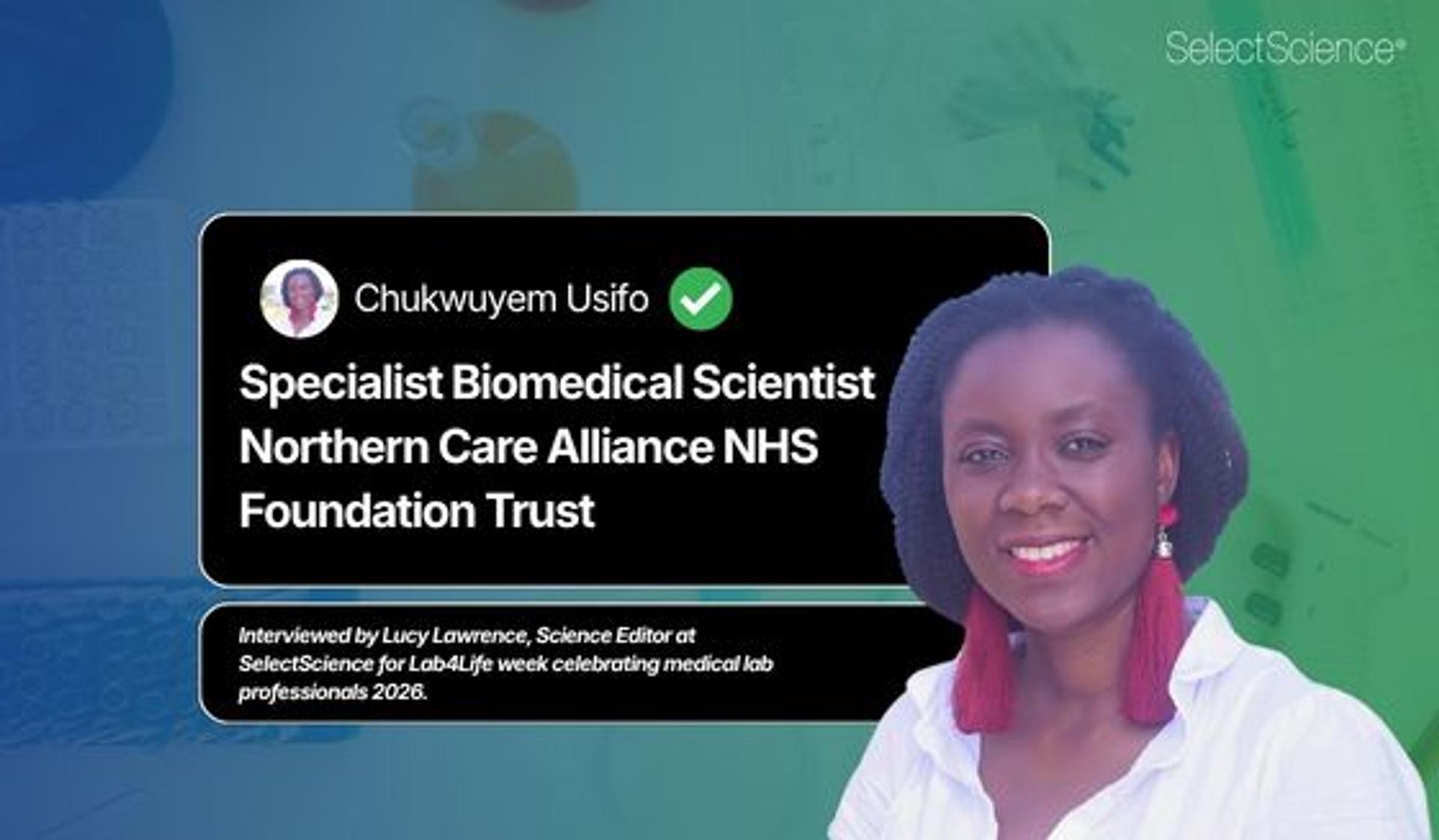
Medical Laboratory Professionals Week highlights the specialized expertise required to turn a patient sample into a life-saving diagnosis. This year, we speak with Chukwuyem Usifo, a Specialist Biomedical Scientist at the Northern Care Alliance NHS Foundation Trust. After finding her calling in cellular pathology, Chukwuyem has become a vital part of the diagnostic team supporting cancer patients across the North of England.
From the precision required in MOHS surgery clinics to her passion for educating the next generation of scientists, Chukwuyem shares how quality remains at the heart of her daily work. As part of our Lab4Life coverage, she discusses the importance of creative problem solving in the lab and why public engagement is the key to advancing clinical research.
Lucy Lawrence (LL): Could you tell us about your background and what first drew you to the lab?
Chukwuyem Usifo (CU): I was always fascinated by biology starting in secondary school. When I went to college, I knew I wanted to do something in science, so I decided to study biomedical sciences at university. After I graduated, I looked for opportunities to gain work experience in the lab and eventually chose cellular pathology. I have never looked back. One thing that makes me proud to put on my lab coat every morning is knowing I am making a difference in society and contributing my bit to someone's diagnosis and treatment.
LL: Without giving away confidential details, what is an area you are currently working on that you’re particularly excited about?
CU: I am particularly excited about teaching the next generation about biomedical sciences and the impact biomedical scientists make in research, diagnostics, and treatment. Educating the younger generation in schools, for example, exposes them to careers in science and gives them more options in the field.
LL: Every sample is a person waiting for an answer. What specific moment reminds you of the human impact behind the data?
CU: Every sample represents a person. I particularly enjoy working in MOHS surgery clinics. My team and I help in treating skin cancer, especially basal cell carcinoma and squamous cell carcinoma. Quality is at the heart of my work, and ensuring the best quality results for patients is what reminds me of that human connection every day.
LL: In your experience, what soft skill is actually the secret to being a truly great scientist?
CU: I think as a scientist you have to have good communication skills, creative skills, and be forward-thinking. Collaboration and networking are great tools to learn and grow. Sometimes as scientists we are too focused on technical expertise and we lack some of these other essential skills.
LL: How can the industry better advocate for scientists, and what is your advice for a student considering a career at the bench?
CU: I believe public engagement is key to letting the public know who we are and what we do as biomedical scientists. Sometimes patients might be hesitant about using their samples for research or quality control. Engaging them brings more light to the importance of quality and research.
My one piece of advice to students is that you can achieve whatever you set your mind to.
Chukwuyem Usifo, Specialist Biomedical Scientist at Northern Care Alliance NHS Foundation Trust was speaking with Lucy Lawrence, Science Editor for SelectScience.
This piece was submitted to SelectScience for Lab4Life week 2026.
Explore the full feature.