
2015 Insight Awards Winners Announced
Researchers continue to push imaging boundaries from particles to galaxies
5 Nov 2015
Andor Technology (Andor) and Bitplane, Oxford Instruments companies and world leaders in scientific imaging and spectroscopy solutions, have announced the three visually stunning and scientifically captivating entries to win first place in the 2015 Insight Awards Scientific Imaging Competition. The winning entry in the Physical Sciences category was submitted by Bill Snyder, the Life Sciences category by Gopi Shah of MPI-CBG Dresden and the Imaris category by Mátyás Molnár of Uppsala University.
Bill Snyder’s entry is entitled ‘The Cygnus Wall’ which is in the southern area of NGC7000 also known as the North America Nebula. Acquired using an Apogee U16 CCD camera, it is approximately 1800 light years from Earth, and is in the constellation Cygnus. The Wall is an energized shock front and contains the most concentrated star formations in the nebula.
Gopi Shah’s video entitled ‘Zebrafish Gastrulation’ captures a developing zebrafish embryo from 4 to 18 hours post fertilization where each cell nucleus is labelled with GFP. Cells are color coded for depth to visualize how dynamic cell reorganization gives rise to the body axis of zebrafish. It was captured using a home-built light sheet microscope setup with two Andor Zyla sCMOS cameras used to acquire two opposite views of the sample, which were fused, post-acquisition, to reconstruct the entire embryo in 3D.
Mátyás Molnár’s entry entitled ‘Spider Autofluorescence’ was captured with a lightsheet microscope in three channels with 405nm, 488nm and 561nm laser excitation. The 3D dataset was converted into a maximum intensity projection image using Bitplane’s Imaris 3D/4D Visualization and Analysis software.
The winners were selected from a panel of expert judges from both life and physical science that included: Jamie Kasuboski Ph.D. (Pfizer Neuroscience Unit, Massachusetts), Fernando Amat (HHMI Janelia Farm Research Campus, Virginia) and Stephen DeCamp (Brandeis University, Massachusetts).
The Insight Awards focus on recognizing the cutting edge research carried out by researchers using Andor Technology equipment and Bitplane software in the fields of both Physical and Life Sciences Imaging. This year’s entries utilized the full spectrum of Andor and Bitplane products including spectrographs, EMCCD and sCMOS cameras, Confocal Microscopy Systems and Imaris software.
"I was very impressed with both the quality and quantity of this year’s entries, which clearly highlight the cutting edge work being carried out by researchers using our products" said Dr. Andrew Dennis, Andor’s Director of Product Management. "The judge’s selection of winners provides an interesting insight into the significance and detail of the researcher’s work across multiple scientific disciplines."
Related Products
Request Quote for All Products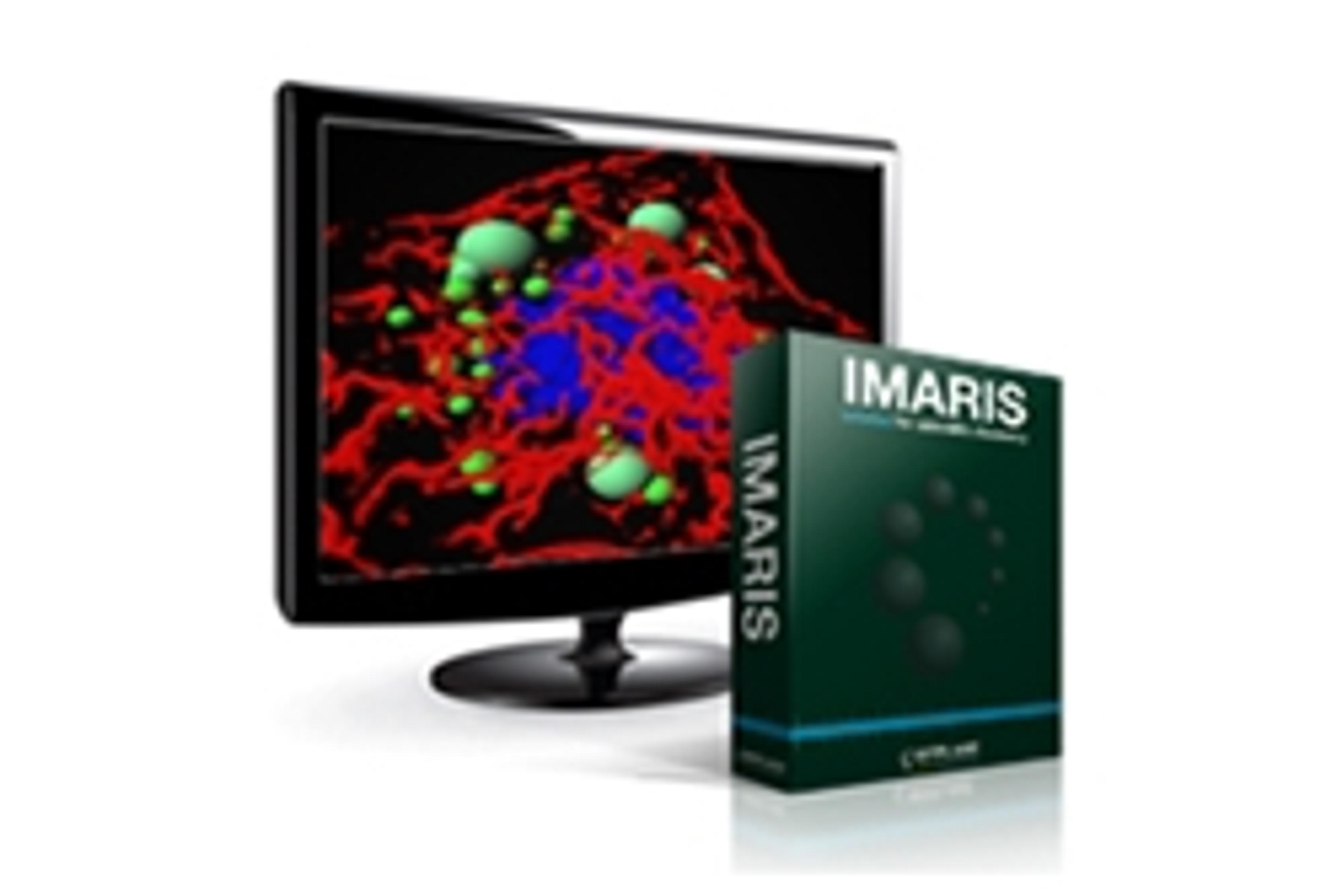
Imaris Software
Oxford Instruments AndorImaris is Bitplane’s core scientific software module that delivers all the necessary functionality for data visualization, analysis, segmentation and interpretation of 3D and 4D microscopy datasets. Combining speed, precision and ease-of-use, Imaris provides a complete set of features for working with three- and four-dimensional multi-channel images of any size, from a few megabytes to multiple gigabytes in size.Imaris allows visualization of original and derived data objects in a real time interactive manner so you can quickly make visual assessments of your experiments in 3D and 4D to discover relationships that are otherwise hidden. Its rendering quality, speed, precision and interactivity are unrivalled.With a large variety of segmentation options, Imaris provides you with the most effective tools to segment even the toughest datasets to identify, separate, and visualize individual objects and then utilize the Imaris MeasurementPro module to pull out the statistics.Imaris Software Features: Premier Volume Rendering Surfaces, Segmentation and Interaction Spots, Segmentation and Interaction Interactive, Intuitive; Navigation and Selection Smart Handling of Huge Images
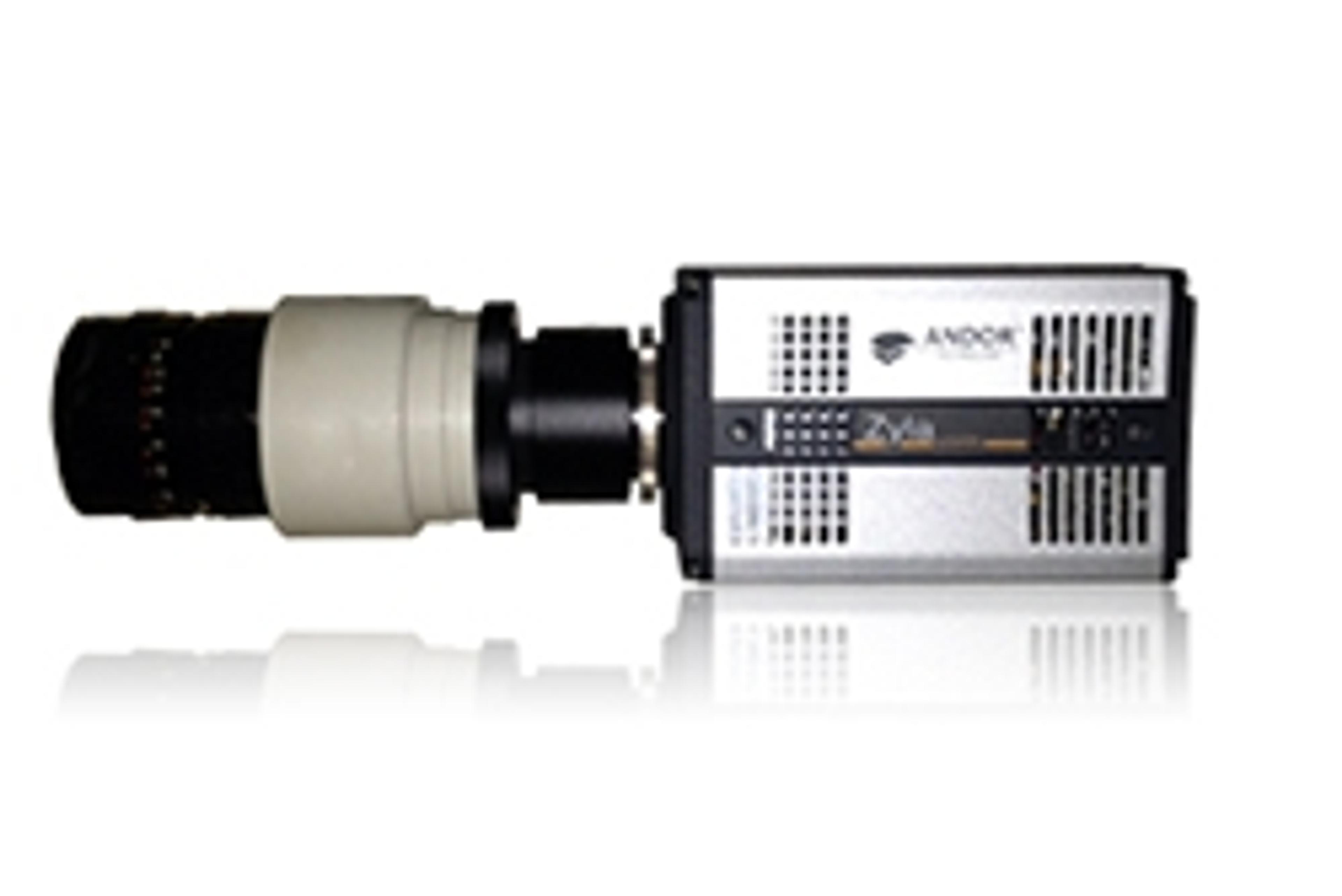
iZyla sCMOS Camera
Oxford Instruments AndorThe i-Zyla brings together the unique acquisition rates & dual-imaging (PIV mode) features of the scientific CMOS, as well as the nanosecond time-resolved capability of a C-mountbased, lens-coupled gated image intensifier unit. The iZyla brings together the unique acquisition rates & dual-imaging (PIV mode) features of the scientific CMOS, as well as the nanosecond time-resolved capability of a C-mountbased, lens-coupled gated image intensifier unit.iZyla sCMOS Camera Features: Fast gating, fast frame rate and modularity Market leading high speed, high resolution and large field-of-view scientific CMOS Nanosecond time resolution with compact, high throughput, high resolution gated image intensifier units Maximizing signal-to-noise: high QE Gen2 and Gen3 photocathodes, low read noise floor and high repetition rate photocathode Ideal for fast Plasma Imaging, Combustion studies including LIF/PLIF and Particle Image Velocimetry (PIV)