
10x Genomics debuts Atera, a new platform to redefine how biology is measured and understood at AACR 2026
Showcased at AACR 2026 with data from leading research institutions, including the June Lab at the Perelman School of Medicine, University of Pennsylvania and German Cancer Research Institute (DKFZ)
21 Apr 2026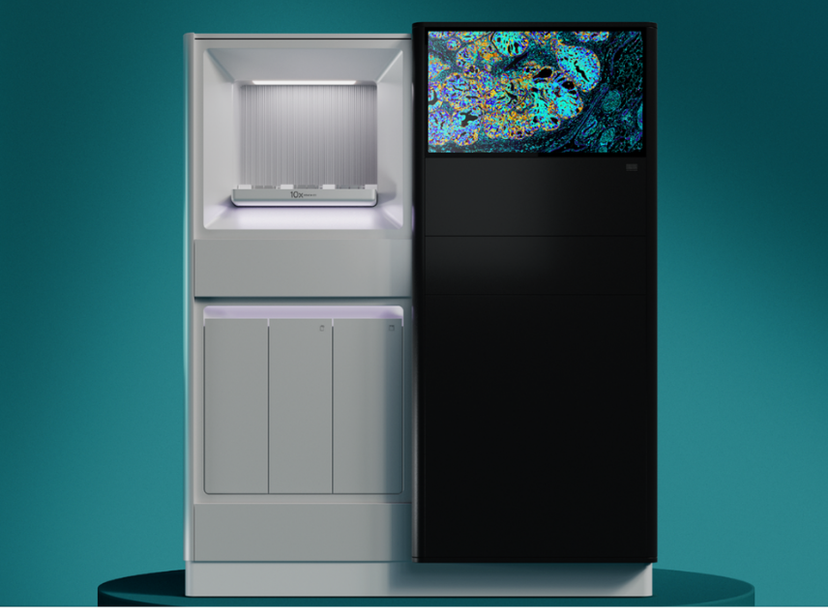
Atera, a new in situ spatial biology platform
10x Genomics, Inc. has launched Atera, a new in situ spatial biology platform engineered to deliver whole-transcriptome spatial analysis with single-cell sensitivity at unprecedented scale.
Until now, spatial technologies have been constrained by tradeoffs between scale, sensitivity and gene selection. Atera removes these limitations, enabling the complete measurement of biology, in its native context at single-cell resolution and at scale, without compromise. It marks a fundamental shift in how biology is analyzed and understood.
Atera is engineered to enable large-scale whole-transcriptome spatial studies across both fresh-frozen and FFPE tissue, supporting diverse applications in both discovery and translational research.
Atera will be introduced at the AACR Annual Meeting 2026, where 10x will host in-person and digital launch events that include early data generated on the platform; additionally, the company will host an Exhibitor Spotlight Presentation on Atera.
Carl June's opening plenary session at AACR 2026 will include data from the June Lab's early access samples analyzed on Atera.
Andrew Rech, Instructor of Pathology & Laboratory Medicine in the Carl June Lab at the Center for Cellular Immunotherapies at the University of Pennsylvania, said, "Using Atera has been extremely exciting for advancing our studies because its very high spatial resolution has allowed us to generate tumor microenvironment data from patients treated with CAR T cells, resolve rare immune cells, including T cells, in the post-treatment tumor microenvironment, and better understand tumor dynamics after treatment at a level that was not attainable in our prior lower-plex spatial work."
Data presented at AACR by the German Cancer Research Center (DKFZ) will highlight Atera's ability to challenge prevailing assumptions and uncover cancer biology not accessible with legacy approaches. Researchers distinguished multiple malignant and stem cell states, across disease stages, within a single colorectal tumor sample and mapped how these populations interact with the surrounding immune microenvironment.
Notably, tumors previously characterized as having limited or low immune infiltration were found to harbor active and diverse immune cell populations, revealing a more complex immune landscape that could inform future therapeutic strategies and drug development.
As the Human Cell Atlas (HCA) continues its mission to map every cell type in the human body, its success will require uncompromised spatial biology at scale, and Atera will enable the consortium to achieve its next set of ambitious goals.
Atera builds on the momentum and leadership in spatial biology established by Xenium, which remains the trusted solution for generating spatial data today. Bioptimus, a France-based AI biotech company, recently announced its partnership with 10x to build one of the world's largest spatial datasets, STELA, a global initiative to power their multimodal AI platform, M-Optimus.
The data will provide the cornerstone of the AI-driven biology and drug discovery engine at Bioptimus. Bioptimus begins with Xenium to generate high-quality spatial data immediately, with plans to expand to Atera in 2027 as increased throughput enables the program to scale toward its full ambition.
To harness the scale of insight generated by Atera's whole-transcriptome studies, 10x is introducing a new cloud analysis platform to securely store, analyze, visualize and collaborate on spatial datasets.
Building on the foundation of Xenium Explorer, the new platform brings intuitive visualization into the web and pairs it with GPU-accelerated analysis, empowering biologists to bridge the gap between raw data and insight in minutes instead of hours. Importantly, researchers maintain full control over their data and workflows with Atera routing results to 10x Cloud, customer-managed cloud or on-premise data storage.
To ensure researchers can access the new platform, regardless of their project size or infrastructure, 10x has launched Catalyst Research Services, enabling direct submission of samples for whole-transcriptome spatial analysis. The program offers flexible access packages, with pre-booking now available and sample processing beginning alongside Atera's commercial availability.