
Waters launches Xevo MRT P10 Mass Spectrometer at ASMS 2026
High-resolution benchtop system delivers enhanced sensitivity, faster acquisition, and improved spatial analysis capabilities
4 Jun 2026
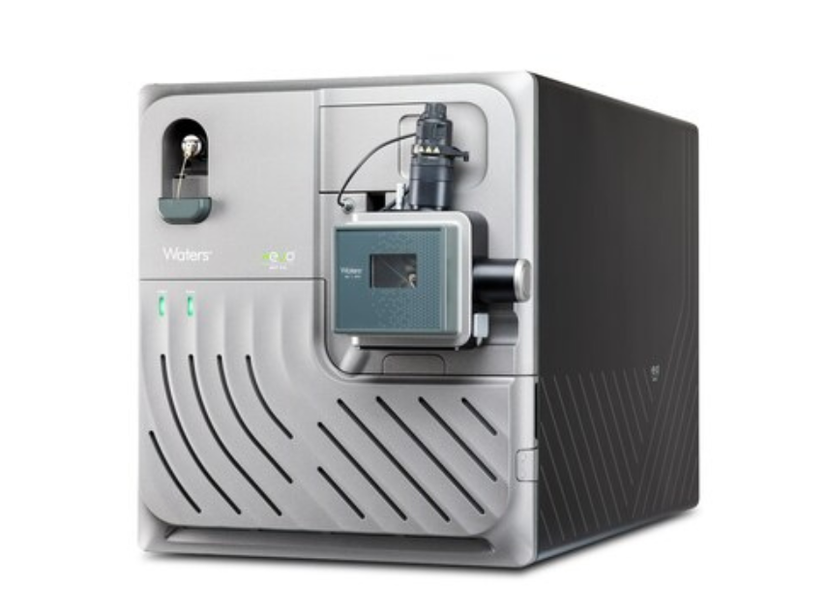
Waters Xevo™ MRT P10 Mass Spectrometer, a high-resolution Quadrupole Time-of-Flight (QTof) system
At the 74th ASMS Conference on Mass Spectrometry and Allied Topics in San Diego, USA, Waters Corporation introduced the Waters Xevo™ MRT P10 Mass Spectrometer, a high-resolution Quadrupole Time-of-Flight (QTof) system designed to deliver up to 20x higher MS/MS sensitivity and 2x faster acquisition speeds than its predecessor.
This benchtop high‑resolution mass spectrometer (HRMS) is engineered to accelerate multiomics, therapeutic, and high-throughput workflows by enabling deeper biological insight, more comprehensive biomarker discovery, and large‑cohort disease research.
High-sensitivity benchtop HRMS for multiomics and bioanalysis
The Xevo MRT P10 MS is a benchtop HRMS platform for high-throughput multiomics, bioanalysis, and biopharmaceutical laboratories. It delivers up to 20x greater MS/MS sensitivity compared to its predecessor, helping scientists detect low‑abundance compounds in complex biological samples. With acquisition speeds twice as fast as the previous system, it is positioned as the fastest benchtop HRMS system currently available.
The instrument supports both targeted and untargeted LC‑MS/MS analysis on a single platform, combining high resolution and mass accuracy with rapid throughput. These capabilities are designed to support biomarker discovery and validation, identification of disease pathways, and therapeutic target discovery across large‑scale biomedical research and epidemiology studies.
Intelligent acquisition modes and MS imaging performance
The Xevo MRT P10 MS incorporates advanced intelligent acquisition modes in LC‑MS/MS to maximize data quality and coverage at high speed. These acquisition strategies are intended to help researchers generate high‑quality MS/MS information at the pace required by modern multiomics workflows.
When combined with the DESI XS ion source, the system sets a new benchmark for throughput in high‑resolution spatial analysis. Rapid spatial analysis is enabled down to the cellular level at acquisition rates of up to 200 Hz, increasing throughput six‑fold while preserving image quality. This performance is designed to support higher‑confidence studies of disease mechanisms and treatment response using mass spectrometry imaging.
Supporting complex disease research and core facility workflows
As researchers seek deeper analytical insight into complex diseases, they often encounter a bottleneck in generating high‑quality MS/MS data quickly enough to keep pace with sample throughput. The Xevo MRT P10 MS is engineered to address this challenge by combining enhanced sensitivity, ultra‑fast acquisition, and robust mass accuracy.
Core facilities and shared research centers can use the system to respond to diverse and often unexpected analytical requests. Its high resolution enables separation of signals with similar mass at very high acquisition speeds, while maintaining sub‑ppm mass accuracy. New acquisition modes provide the versatility and data confidence required across a wide range of omics applications, including studies of complex disease biology.
Enabling multiomics, proteomics, lipidomics, and metabolomics workflows
The Xevo MRT P10 MS is positioned to support long‑term growth across multiomics disciplines, including proteomics, lipidomics, and metabolomics, as well as biopharmaceutical analysis and drug discovery. In high‑throughput, deep proteome discovery workflows, the instrument combines greater sensitivity with ultra‑fast acquisition rates and advanced acquisition modes to enable confident detection of low‑abundance peptides and comprehensive protein identification with rapid chromatographic separations at scale.
In comparative lipid profiling by LC‑MS/MS, the Xevo MRT P10 MS enabled identification of up to 40% more lipids than a leading alternative benchtop high‑resolution mass spectrometer. This increased lipid coverage supports more comprehensive biological interpretation in lipidomics and multiomics‑driven research, contributing to deeper understanding of disease mechanisms and therapeutic responses.
Advancing disease understanding and therapeutic development
By delivering higher MS/MS sensitivity, faster acquisition speeds, and advanced acquisition strategies in a single benchtop HRMS platform, the Xevo MRT P10 MS is designed to help laboratories accelerate discovery and make confident decisions. The system supports large‑cohort biomedical and epidemiology studies, enabling researchers to identify disease pathways, discover and validate biomarkers, and explore therapeutic targets with higher data quality and throughput.
Researchers can integrate the Xevo MRT P10 MS into existing LC‑MS/MS workflows to expand analytical depth across proteomics, lipidomics, metabolomics, and biopharmaceutical applications. When paired with the DESI XS ion source for high‑resolution spatial analysis, the platform supports detailed studies of tissue heterogeneity, disease progression, and treatment response at cellular‑level resolution.
Want the latest science news straight to your inbox? Become a SelectScience member for free today>>
Links
Tags
Frequently asked questions
Show frequently asked questions
What is the Waters Xevo MRT P10 Mass Spectrometer and how does it improve MS/MS sensitivity and acquisition speed for multiomics research?
The Waters Xevo™ MRT P10 Mass Spectrometer is a benchtop high‑resolution Quadrupole Time-of-Flight (QTof) HRMS system introduced by Waters Corporation at ASMS 2026. It is designed to deliver up to 20x greater MS/MS sensitivity and 2x faster acquisition speeds than its predecessor.
These performance gains help scientists detect low‑abundance compounds in complex biological samples and support high‑throughput multiomics, bioanalysis, and biopharmaceutical workflows. By combining high resolution, robust mass accuracy, and rapid throughput, the Xevo MRT P10 MS enables deeper biological insight, more comprehensive biomarker discovery, and large‑cohort disease research.
How does the Xevo MRT P10 MS support biomarker discovery, complex disease research, and large‑scale biomedical studies?
The Xevo MRT P10 MS supports both targeted and untargeted LC‑MS/MS analysis on a single platform, combining high resolution and mass accuracy with ultra‑fast acquisition. These capabilities are designed to enable biomarker discovery and validation, identification of disease pathways, and therapeutic target discovery across large‑scale biomedical research and epidemiology studies.
Its enhanced sensitivity and high acquisition speeds help overcome bottlenecks in generating high‑quality MS/MS data for complex disease research. Core facilities and shared research centers can use the system to handle diverse analytical requests, maintaining sub‑ppm mass accuracy and separating signals with similar mass at very high speeds. This performance underpins higher‑confidence studies of disease mechanisms, tissue heterogeneity, disease progression, and treatment response.
In which omics and biopharmaceutical applications does the Xevo MRT P10 MS deliver advantages, including proteomics, lipidomics, metabolomics, and mass spectrometry imaging?
The Xevo MRT P10 MS is positioned to support multiomics disciplines such as proteomics, lipidomics, and metabolomics, as well as biopharmaceutical analysis and drug discovery. In high‑throughput, deep proteome discovery workflows, it combines greater sensitivity, ultra‑fast acquisition rates, and advanced acquisition modes to enable confident detection of low‑abundance peptides and comprehensive protein identification with rapid chromatographic separations at scale.
In comparative lipid profiling by LC‑MS/MS, the Xevo MRT P10 MS enabled identification of up to 40% more lipids than a leading alternative benchtop high‑resolution mass spectrometer, providing more comprehensive lipid coverage for biological interpretation.
When paired with the DESI XS ion source, it delivers high‑resolution spatial mass spectrometry imaging down to the cellular level at acquisition rates up to 200 Hz, increasing throughput six‑fold while preserving image quality, which supports detailed studies of disease mechanisms and therapeutic responses.