
Why Illumination Uniformity Matters
Why Illumination Uniformity Matters
22 Mar 2016Reliable and accurate quantitative comparisons of fluorescence intensities across an image are impossible when the field illumination profile is not uniform. Uneven illumination of the sample will cause the intensity of a feature in one region of the field of view to register a different magnitude than the intensity of a feature of equal fluorophore concentration in another region of the field of view. When trying to determine the level of expression of a fluorescently tagged protein within a population of cells with uneven illumination, cells in the center of the image will appear to be brighter than those at the edges of the image.
This problem can lead to incorrect interpretation and analysis of the image data, especially when comparisons are made between images captured in different spectral channels (ie: FRET, calcium ratio imaging, colocalization, etc.).
Related Products
Request Quote for All Products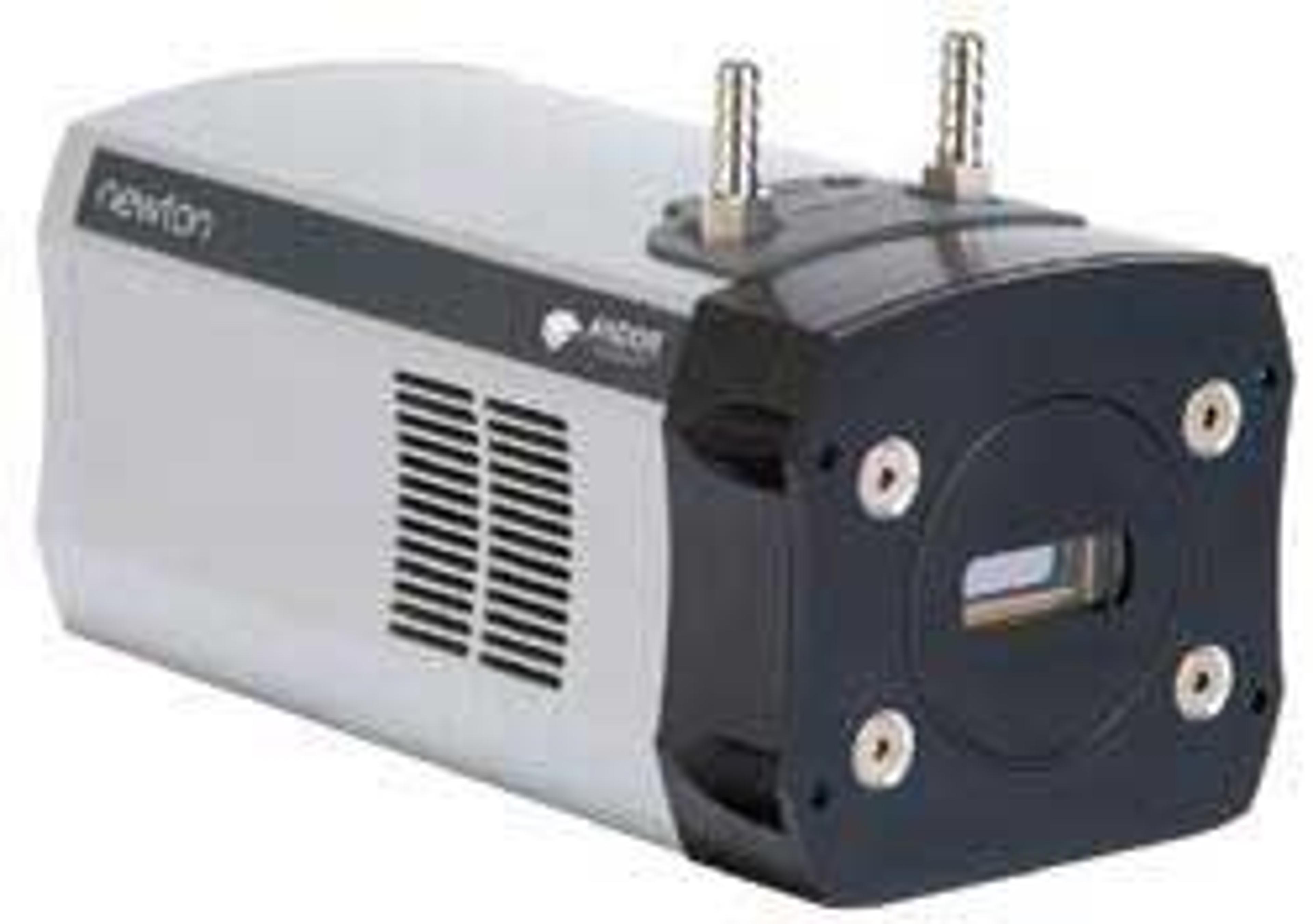
Newton EMCCD Detector
Oxford Instruments AndorBoth the Andor NewtonEM EMCCD and Newton conventional CCD detector systems have been optimized for high performance spectroscopic applications. All Newton detector systems employ low noise electronics, cooling to -100°C, up to 95% peak Quantum Efficiency (QE), multi-MHz readout, USB 2.0 connectivity and versatile readout modes. The NewtonEM employs Andor's electron multiplying CCD technology in an exclusive sensor format optimized for ultra-low light, level spectroscopy applications. The combination of the Newton's low noise electronics, high QE, fast readout, and the on-chip amplication (electron multiplication) makes this detector unbeatable for the most demanding ultra-low light level spectroscopy applications, including single photon light level spectra. Dual output amplifiers also allow the detector system to operate in both the electron-multiplication mode and the conventional low noise readout modes, making the detector even more versatile for a wider variety of applications. The Newton series of conventional CCD detectors employ industry leading low noise CCD sensors such as the 2048 x 512 and the 1024 x 256 pixel formats optimized for spectroscopy along with the standard features of ultra low noise electronics, deep cooling, high QE, multi-MHz readout, and USB 2.0 connectivity. The Newton CCD detector also provides dual output amplifiers for user selection of high sensitivity or high capacity operating modes. High performance, and extreme versatility make this the ideal CCD detector to use with Andor's line of Shamrock imaging spectrographs to form a very powerful spectroscopy measurement system for use in even the most demanding applications.