
ResourceLife Sciences
PromoCell's macrophage cell culture portfolio
6 Nov 2019In this flyer, PromoCell presents its full range macrophage cell culture range, which includes media systems for generation of macrophages from both peripheral blood mononuclear cells (PBMCs) and tumor-associated macrophages (TAM).
Related products
Request Quote for All Products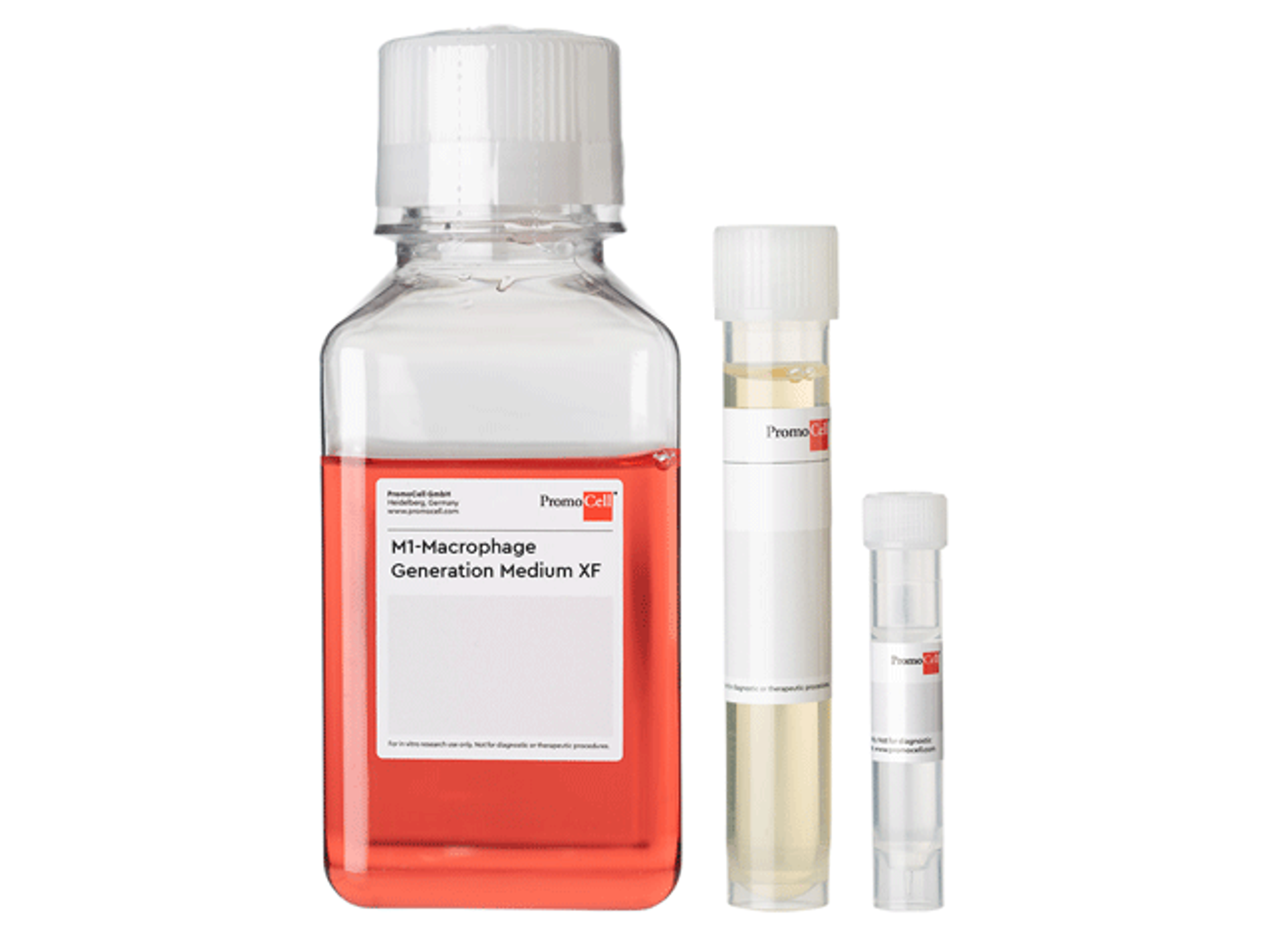
Macrophage Base Medium XF
PromoCell GmbHThe PromoCell Macrophage Generation Media were developed for easy and efficient generation of the full spectrum of M1- and M2-polarized macrophages directly from freshly isolated peripheral blood monocytes.
Links
Tags
Cell / Tissue CultureCell culture or tissue culture is used to study the biology of cells or tissues and to isolate cellular products in an environment which can be manipulated and well defined. Accurately control your culture environment with bioreactors or culture incubators, bind your cells to a surface or together with an extracellular matrix. Distinguish cell types with differential media or proliferate cells with certain characteristics using selective media. Enrich your media with supplements such as growth factors, sera and vitamins. Find the best cell and tissue culture products, kits and equipment in our peer-reviewed product directory: compare products, check customer reviews and receive pricing direct from manufacturers.Gel Doc / Image AnalysisGel documentation (gel doc) or gel imaging systems are used for the analysis of proteins, antibodies and nucleic acid immobilized in polyacrylamide or agarose gels, membranes or microarrays. Explore a range of a gel imaging systems, densitometers, scanners, transilluminators or UV lamp + CCD cameras for your image analysis solutions. Colorimetric, fluorescent and/or radioisotopic samples can be visualized and documented for further analysis. See gel doc / Image analysis software for quantitative 1D and 2D analysis of your samples. Find the best gel doc / image analysis products in our peer-reviewed product directory: compare products, check customer reviews and receive pricing direct from manufacturers.Assay AssemblyAssay Assembly is technique used in drug discovery to develop assays to test the cytotoxicity, genotoxicity, or other activities of a compound on a cell. Assay assembly requires chip assembly, a delivery system and a detection and analysis method. Beneficial features of assay kits or automated systems include high-throughput, high speed and sensitivity and low signal to noise ratio.Cell-Based AssaysCell-based assays are used to monitor the presence, quantity and activities of a desired cellular analyte including drug molecules or biomarkers. This can reveal information on cell health (apoptosis, cytotoxicity, viability and proliferation assays), cell metabolism, cell migration and cell signaling mechanisms. Find the best cell-based assay products, kits and equipment with our peer reviewed product directory: compare products, check customer reviews and receiving pricing direct from manufacturers.ImmunologyImmunological techniques measure and characterize immune responses. Immunology kits and analysis systems often use techniques such as ELISA, radioimmunoassay (RIA) and immunodiffusion assays, Immunohistochemistry, and flow cytometry. Immunologists use equipment such as flow Cytometers, plate readers, plate washers and fluorescent microscopes.ImmunoassayImmunoassays are laboratory tests that utilize antibody-antigen interactions to detect specific substances. They are widely used in diagnostics for detecting diseases, drug testing, and environmental monitoring. These assays offer rapid, sensitive, and precise detection of biomarkers, making them invaluable in clinical and research labs. Browse our peer-reviewed product directory to compare immunoassay systems, read user reviews, and get pricing directly from manufacturers.Cell AnalysisThe analysis of cells allows researchers to understand the factors which contribute to cell health and function. These influencing processes can then be predicted and altered, leading to the development of medication and disease treatments.Assay DevelopmentThe process of proving an assay to be sensitive with respect to the target is known as assay development. The assay should be able to characterize novel compounds and measure the potency of these compounds against a validated biological target.Cell Based AssaysCell-based assays use living cells to measure biological responses to various treatments or stimuli. They are essential for drug discovery, toxicology testing, and understanding cellular mechanisms. These assays are used to assess cell viability, proliferation, gene expression, and other cellular activities. Browse our peer-reviewed product directory to find the best cell-based assay tools and reagents, compare products, read customer reviews, and get pricing directly from manufacturers.Cell CultureCell culture involves growing cells under controlled conditions, typically outside of their natural environment, to study cellular behavior, drug response, and disease models. Cell culture is crucial in biotechnology and biomedical research. Explore cell culture products in our peer-reviewed product directory; compare products, check reviews, and get pricing directly from manufacturers.