
TechTalk: Why fast, reliable trace‑element analysis starts with triple‑quad ICP‑MS
Friday, September 25 at 16:30 BST | 17:30 CEST | 11:30 EDT | 08:30 PDT
Trace‑element analysis plays a critical role across industries where fast, interference‑free results are essential. Yet many laboratories still rely on single‑quadrupole ICP‑MS systems that struggle with slow batch times, complex matrices, and inconsistent data quality. As workloads grow and expectations tighten, the need for scalable, reliable, and easy‑to‑operate technology becomes impossible to ignore.
In this SelectScience® TechTalk, Mark Kelinske, ICP‑MS Product Specialist at Agilent Technologies, takes a technology‑focused look at how the Agilent ICP‑MS 9500 is engineered to overcome these challenges. Learn how moving from single‑quad to triple‑quad workflows strengthens interference control, boosts speed, and improves data reliability, giving analysts cleaner results even when working with demanding matrices.
With Advanced Helium Mode supporting confident, interference‑resistant measurements and a usability‑driven design that keeps daily operation smooth, the 9500 delivers scalable performance built for modern labs. Plus, with its next‑generation architecture designed to grow with your needs, you will learn how the 9500 helps future‑proof your workflows while delivering the kind of performance that genuinely makes you say “wow.”
Register today and discover how the ICP‑MS 9500 accelerates throughput, enhances data confidence, simplifies method setup, and equips your laboratory with MS/MS‑ready workflows built for the future of trace‑element analysis.
Certificate of attendance
If you attend the live TechTalk, you will automatically receive a certificate of attendance, including a learning outcomes summary, for continuing education purposes. If you view the on-demand TechTalk, you can request a certificate of attendance by emailing editor@selectscience.net.
TechTalk details
- Cost: Free to attend
- Location: Online
- Duration: 20 minutes
Registration is required to secure your place. If you register but can’t attend live, you will receive a link to the on‑demand recording once it becomes available
Speakers

Who should attend?
- QC lab scientists
- Quality control professionals
- Environmental lab professionals
- Pharmaceutical lab professionals
- Food lab professionals
- Energy & chemical lab professionals
- Fine Chemical professionals
- Advanced materials professionals
- Contract testing lab professionals
- Government lab professionals
Featured products
Request Quote for All Products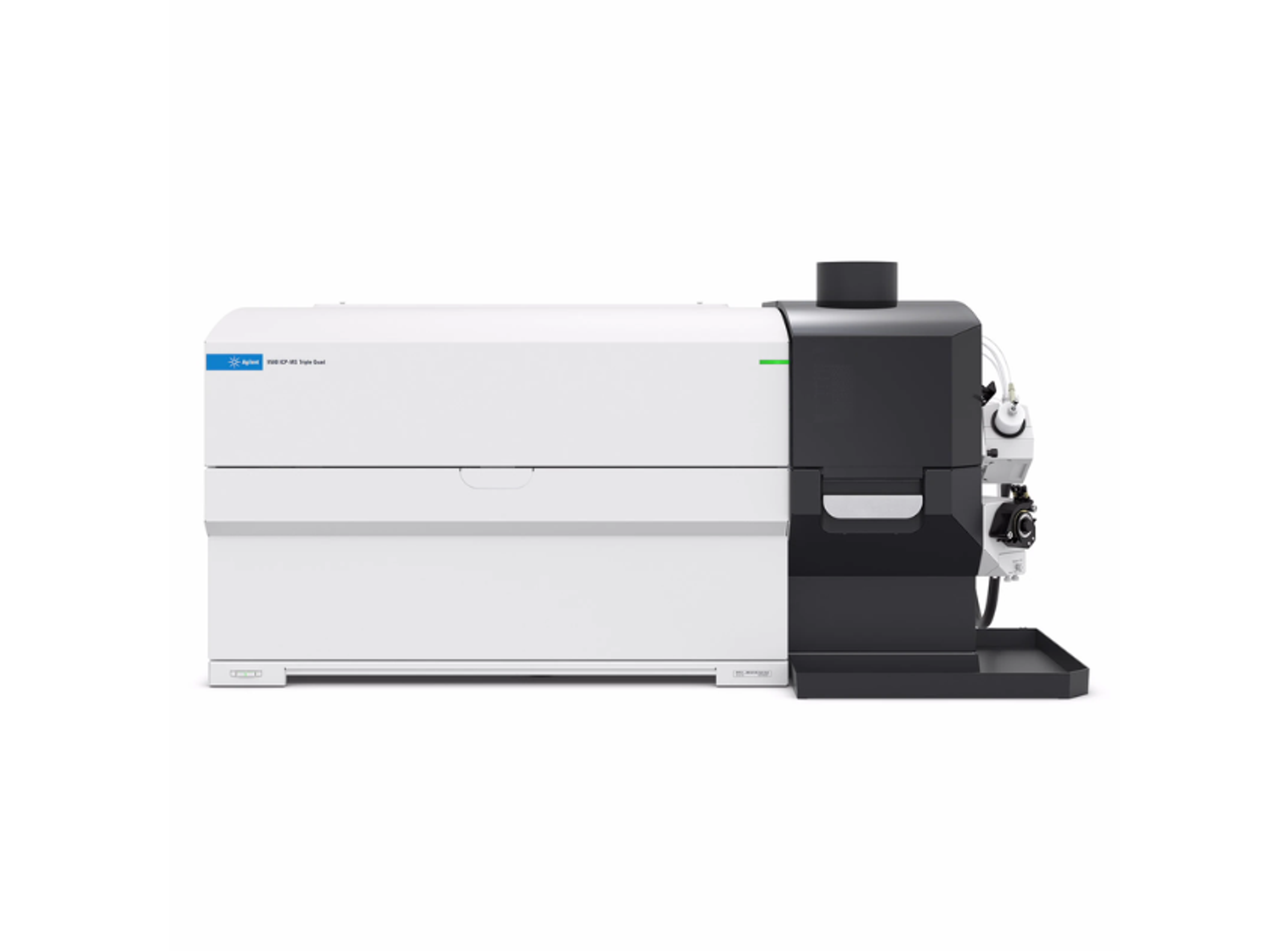
9500 Triple Quadrupole ICP-MS
Agilent TechnologiesThe Agilent 9500 Triple Quadrupole ICP-MS delivers true ICP-MS/MS performance without the complexity. Its proprietary Dual-Cell System, with Advanced Helium Mode (AHM) and Air mode, enables fast, interference-free analysis across complex matrices, delivering results you can trust.
What will this webinar cover?
- How single‑quad ICP‑MS limits speed and throughput across trace‑element industries, and why scalable triple‑quad workflows offer a stronger path forward.
- How triple‑quad interference control improves data reliability, delivering cleaner, more confident results across challenging matrices and demanding workloads.
- How Advanced Helium Mode enhances usability and consistency, supporting smooth, disruption‑free operation for analysts at any experience level.
- How the ICP‑MS 9500’s scalable architecture supports future‑proofing, enabling labs to adopt MS/MS‑ready workflows as needs evolve.
Join the TechTalk to get answers to these questions:
- What are the limitations of traditional single-quadrupole ICP-MS systems in modern laboratories?
- How can laboratories improve confidence in trace-element data when analyzing complex samples?
- What strategies can help reduce method development time and increase laboratory productivity?
- How does the Agilent ICP-MS 9500 simplify routine operation for analysts of all experience levels?
- How can laboratories adopt advanced ICP-MS capabilities without disrupting existing workflows?