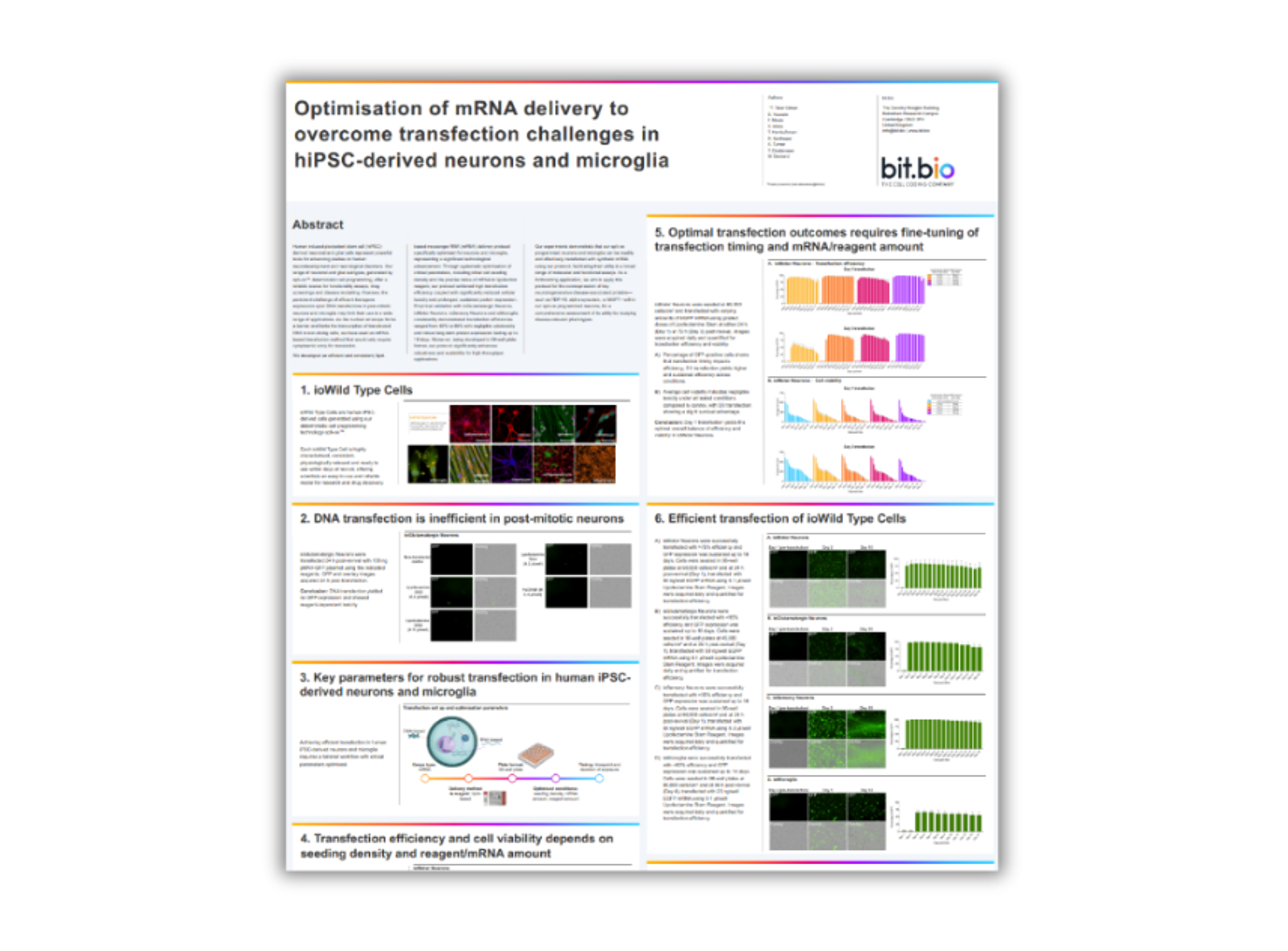
TechTalk: Top tips for transfecting human iPSC-derived cells
Friday, April 24 at 14:30 BST | 15:30 CEST | 9:30 EDT | 6:30 PDT
Transfection is widely used to explore gene function, analyze cellular pathways, and model disease mechanisms in vitro. In human iPSC-derived cells, it allows scientists to introduce genes or reporters directly into relevant cell types, without the need to generate stable lines.
However, achieving reliable transfection in post-mitotic, fully differentiated cells requires adapted strategies. Standard methods optimized for dividing cell lines often lead to poor efficiency or compromised cell health.
In this SelectScience® TechTalk, Dr. Tulin Tatar Ozkan and Sarah Hussain from bit.bio, will share a practical overview of mRNA transfection approaches tailored for human iPSC-derived cells. Using glutamatergic neurons and microglia as examples, the session will cover optimized workflows and actionable tips that deliver robust transgene expression.
Certificate of attendance
If you attend the live TechTalk, you will automatically receive a certificate of attendance, including a learning outcomes summary, for continuing education purposes.
If you view the on-demand TechTalk, you can request a certificate of attendance by emailing editor@selectscience.net.
TechTalk details
- Cost: Free to attend
- Location: Online
- Duration: 20 minutes
Registration is required to secure your place. If you register but can’t attend live, you will receive a link to the on‑demand recording once it becomes available.
Speakers


Featured products
Request Quote for All Products
ioGlutamatergic Neurons human iPSC derived glutamatergic neurons
bit.bioA highly defined, scalable, and consistent source of human central nervous system (CNS) neurons. ioGlutamatergic Neurons, part of the bit.bio ioCells portfolio, are reprogrammed from human induced pluripotent stem cells (iPSC) using bit.bio's precise reprogramming technology: opti-ox™ (optimised inducible overexpression).

ioMicroglia Human iPSC-derived microglia
bit.bioioMicroglia are human induced pluripotent stem cell (iPSC)-derived microglia, precision reprogrammed using opti-ox™ technology. Within 10 days post-revival, ioMicroglia are ready for experimentation, expressing (>90%) key markers, including TMEM119, P2RY12, and IBA1. ioMicroglia display key functional traits including phagocytosis and proinflammatory cytokine secretion and can be co-cultured with ioGlutamatergic Neurons™.
What will this webinar cover?
- Relevance of transfection in research on human iPSC-derived cells
- Key considerations when transfecting terminally differentiated cells
- Advantages of mRNA transfection for non-dividing cells compared with plasmid or viral delivery
- Step-by-step guidance through optimized protocols for ioGlutamatergic Neurons and ioMicroglia
- Recommended reagents, timing, and handling steps to maintain cell health and experimental reproducibility
- Practical approaches to evaluate transfection efficiency and expression outcomes
- Troubleshooting guidance for low efficiency or signs of cytotoxicity