
Decoding disease by applying cell sorting and epigenomics technologies to tissue macrophages
Susceptibility to many diseases is regulated by genetic variation, which occurs most often in non-coding regulatory regions of the genome, including enhancers and silencers. Functionally, enhancers and silencers fine-tune gene expression with cell type and/or context specificity. Therefore, understanding disease mechanisms may be improved by assessing dynamic changes in enhancer and silencer function using highly purified cell populations from disease-relevant tissues. Data from these approaches can nominate candidate transcription factors and upstream signaling pathways responsible for disease-induced gene expression changes.
Join this webinar to learn how sorted hepatic cells and nuclei were used with RNA-seq, ATAC-seq, and ChIP-seq to decode gene expression of Kupffer cells, the major liver resident macrophage. Kupffer cell differentiation, niche-fitness, and transcriptional reprogramming during nonalcoholic fatty liver disease will be discussed.
Key learning objectives
- Learn about cell type-specific gene regulation and the relevance to understanding disease
- Understand strategies that include cell sorting and single cell transcriptomics for developing in vivo gene regulatory atlases for disease-relevant cell types
- Hear how collaborative interactions of LXR and ATF3 control disease-associated gene expression in Kupffer cells
Who should attend
This webinar will provide insights for researchers who want to learn strategies for decoding disease through combinatorial application of cell sorting and genomics technologies. This strategy will be presented through the lens of hepatic macrophages in health and disease.
Speakers


Featured products
Request Quote for All Products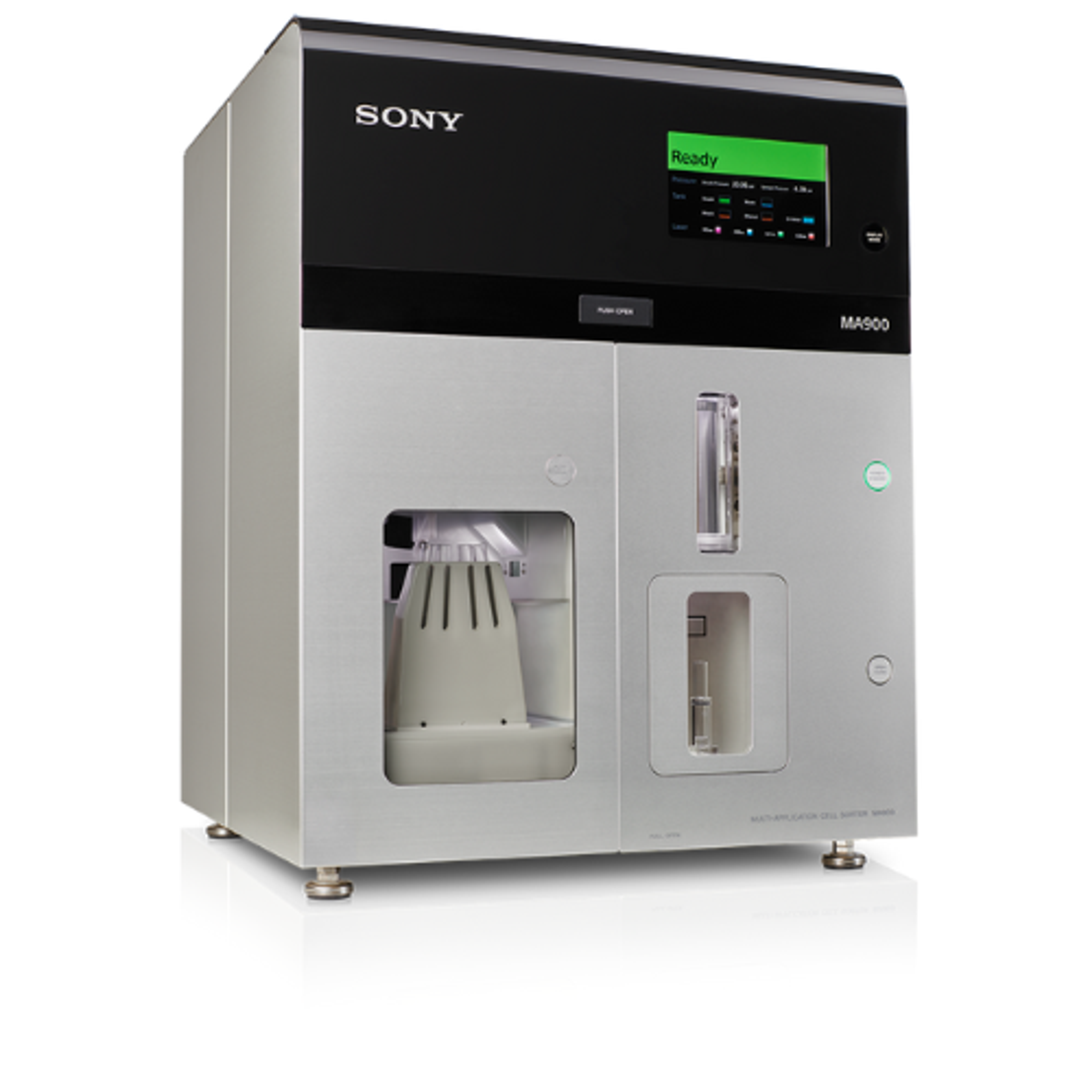
MA900 Multi-Application Cell Sorter
Sony BiotechnologyThe MA900 from Sony meets the needs of most sorting applications, supporting 12 fluorescence parameters and 4-way sorting. Powerful, modern technologies built into the MA900 system include a patented micro fluidic chip-based design, comprehensive fluidic controls, and advanced automation that dramatically simplifies operation to make sorting less subjective and improve reliability.
SH800 Cell Sorter
Sony BiotechnologyThe benchtop SH800 cell sorter permits sorting of a wide range of cell sizes for many applications using the 70-µm, 100-µm, and 130-µm microfluidic sorting chips. This novel, chip-based design is fully integrated with comprehensive fluidics controls and advanced automation for set-up, acquisition, sort and analysis to make sorting less subjective, more precise and easier to perform. System software is intuitive and supports sorting into tubes and 96- and 384-well plates.