CLINICAL24: Carbapenem resistance in 2026: From rapid detection to actionable susceptibility results
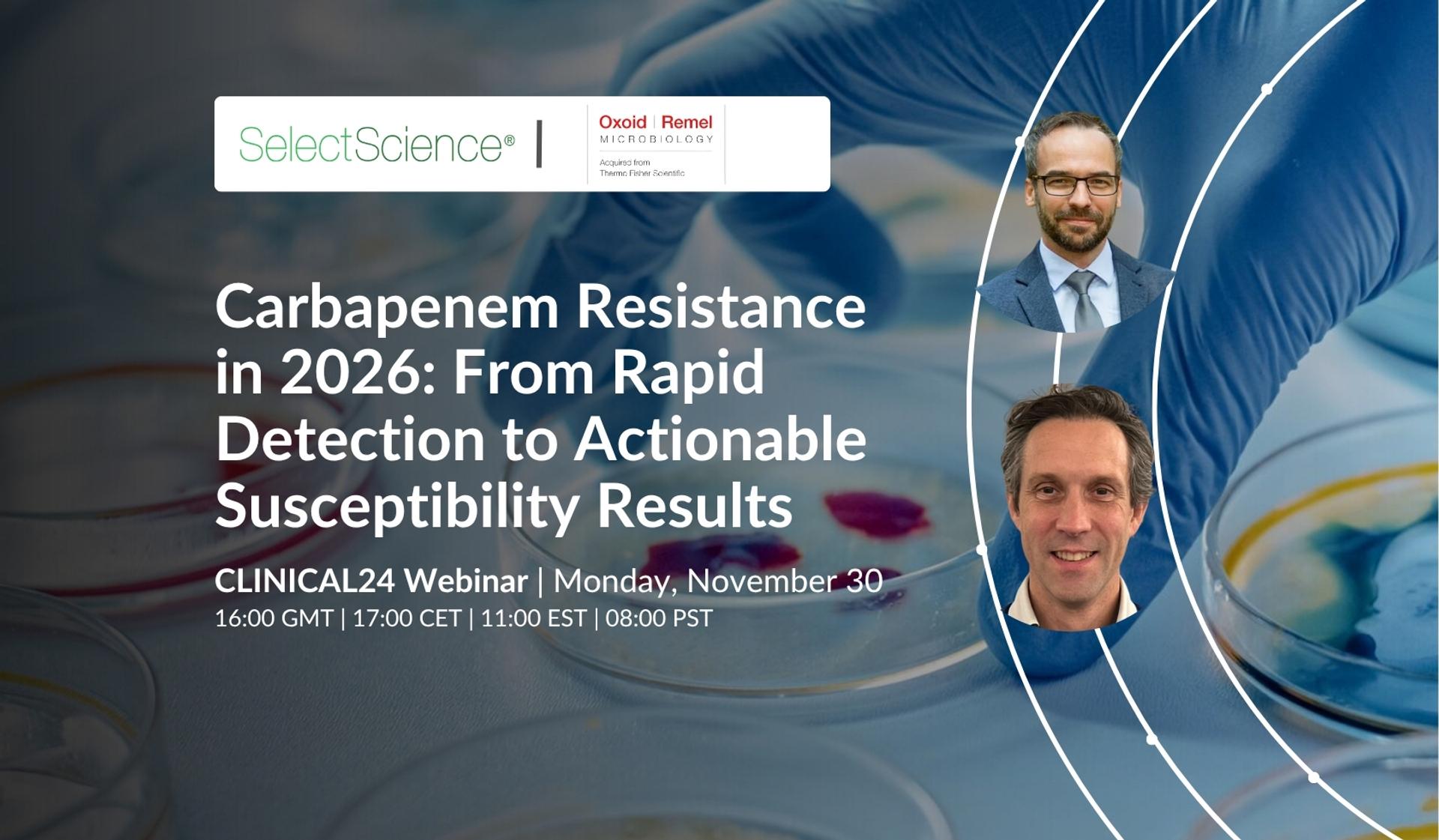
Monday, November 30 at 16:00 GMT | 17:00 CET | 11:00 EST | 08:00 PST
From resistance detection to actionable AST: Navigating the changing landscape of Gram-negative resistance.
Antimicrobial resistance among Gram-negative organisms continues to present significant challenges for clinical microbiology laboratories. As resistance mechanisms evolve and new antimicrobial therapies become available, laboratories need to consider how best to translate resistance detection into clinically relevant antimicrobial susceptibility results.
Join Professor Laurent Dortet and Professor Axel Hamprecht, internationally recognized experts in antimicrobial resistance and clinical microbiology, for a practical discussion on the evolving landscape of Gram-negative resistance and its implications for antimicrobial susceptibility testing (AST).
The speakers will explore current and emerging resistance mechanisms, including carbapenem resistance, and discuss what resistance-mechanism detection can—and cannot—tell the laboratory. They will examine the complementary role of phenotypic AST and MIC determination, particularly when managing challenging multidrug-resistant organisms and newer antimicrobial treatment options.
Through practical examples and case-based discussion, the webinar will also consider how laboratories can adapt their AST strategies as resistance patterns, antimicrobial formularies, and breakpoint requirements evolve.
The session will conclude with an expert discussion and live Q&A, providing attendees with an opportunity to put their questions directly to Professors Dortet and Hamprecht.
Register to explore how the clinical microbiology laboratory can move from identifying resistance to generating actionable susceptibility information in an increasingly complex Gram-negative landscape.
Webinar details
- Cost: Free to attend
- Location: Online
- Duration: 60 minutes
- Format: Expert presentation followed by live Q&A
Can't attend live?
Register today and you will receive access to the recording after the webinar, allowing you to revisit key insights and share learning across your team.
Accreditation statement
SelectScience® is approved as a provider of continuing education programs in the clinical laboratory sciences by the ASCLS P.A.C.E.® Program.
Certificate of attendance
All attendees who join the live webinar will automatically receive a certificate of attendance, including a summary of key learning outcomes, to support their continuing professional development.
If you watch the on-demand recording, a certificate of attendance can be requested by emailing editor@selectscience.net.
About CLINICAL24
CLINICAL24 is a global initiative dedicated to exploring the challenges facing modern clinical laboratories and highlighting the technologies, expertise, and collaborative approaches helping to improve patient care worldwide.
Speakers



Who should attend?
- Clinical microbiologists and medical microbiologists
- Laboratory directors and managers
- Biomedical and clinical laboratory scientists
- AST and microbiology laboratory specialists
- Infectious disease specialists
- Antimicrobial stewardship professionals
- Infection prevention and control professionals
- Reference laboratory and public health microbiologists
- Researchers working in antimicrobial resistance and clinical bacteriology
What will this webinar cover?
- What are the key current and emerging resistance mechanisms in clinically important Gram-negative organisms, and what do they mean for the diagnostic laboratory?
- How can laboratories differentiate between the information provided by resistance-mechanism detection and phenotypic antimicrobial susceptibility testing (AST), including the role of MIC determination?
- What factors should laboratories identify and consider when adapting their Gram-negative AST strategy to emerging resistance, newer antimicrobial agents, evolving breakpoint requirements, and local antimicrobial formularies?
- What are the strengths and limitations of resistance-mechanism detection when evaluating resistant Gram-negative isolates?
- How are laboratories adapting AST workflows to support increasingly complex resistance and treatment landscapes?