
Revealing protein function through highly sensitive single-cell proteomics
28 Aug 2026Discover how highly sensitive mass spectrometry is advancing functional proteomics by revealing what proteins are doing within individual cells. Dr. Daniel Hornburg, Vice President of Biomarkers and Precision Medicine at Bruker, explains how the timsUltra™ AIP platform can provide new insight into immune-cell activity, cancer immune evasion, and drug-target interactions, helping scientists connect protein function with health and disease.
This video was filmed at ASMS 2026.
About the company

Bruker Daltonics
Bruker Daltonics is dedicated to revolutionizing the field of molecular exploration. Our innovative solutions equip scientists with cutting-edge tools to delve deeper into the molecular realm and drive advancements in life sciences and biotechnology. Join us in our mission to push the boundaries of scientific discovery. The timsTOF series introduces the next generation of ion mobility technology. Trapped Ion Mobility Spectrometry (TIMS) adds an additional dimension of separation and delivers unprecedented specificity and sensitivity. The timsTOF Pro 2 with PASEF® technology delivers fast scanning speeds, making MS-based proteomics a reality, allowing the identification and quantification of thousands of proteins. The timsTOF SCP optimizes ion transfer with a new source geometry, expanding the horizons of single-cell proteomics and immunopeptidomics. The timsTOF fleX combines the power of MALDI technology with the added dimension of spatial resolution, enabling the groundbreaking field of SpatialOMx® on one platform. The MALDI-2 and microGRID options add unparalleled sensitivity and robustness for imaging experiments with cell-level resolution. With TIMS technology, the timsTOF series has unlocked a fourth dimension of analysis, enabling 4D-Proteomics™, 4D-Multiomics, and SpatialOMx®. From proteomics to metabolomics, lipidomics, and spatial omics, Bruker’s mass spectrometry solutions deliver breakthrough discoveries and deeper insights. With technology such as TIMS, smartbeam, scanning lasers for MALDI-MS Imaging, and eXtreme Resolution FTMS (XR) capable of revealing Isotopic Fine Structure (IFS) signatures, Bruker empowers scientists to drive innovation with precision.
Video transcript
Show transcript
I'm Daniel Hornburg. I'm the VP for Biomarkers and Precision Medicine at Bruker.
By functional proteomics 2.0, we mean that we are not only cataloging proteins, but we are actually trying to understand what they do. So every protein has a specific function, and actually, every gene can express many different protein forms that then exert different functions that connect to your health state, that connect to certain diseases.
And by cataloging and measuring the functional proteome, we understand what really happens in every single cell and what really happens when you are getting sick, and how this is changing over time.
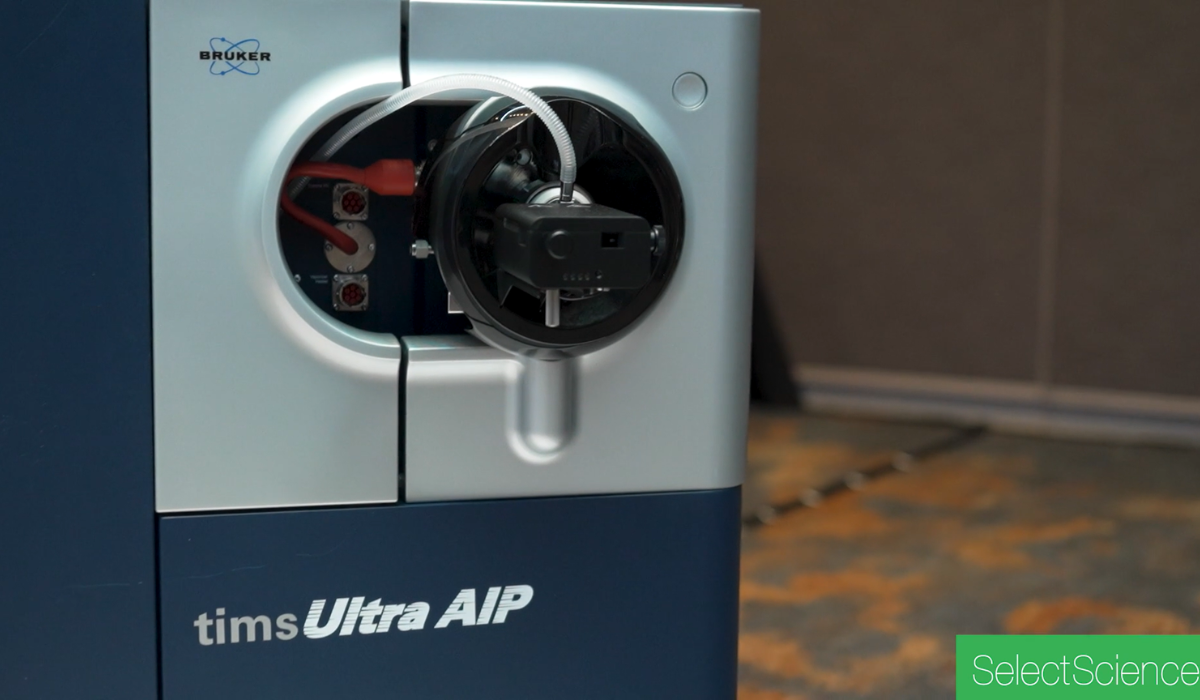
With the timsAUTO AIP, we have probably the most sensitive mass spec on the planet, which enables us to really look into every single cell, the smallest immune cells, understand whether they are activated, whether they are attenuated. And that's super relevant when, for example, we look at cancer, where the interplay between the cancer cells and the immune system is really dictating whether we can fight off the cancer or not.
Another level that the mass spec can explore, which is very unique and different from sequencing approaches, is to look at, for example, what is expressed on the outside of a cancer cell. So a cancer cell presents itself to the immune system, but it tries to hide also from the immune system. So measuring which protein fragments are on the surface of a cell, which requires a huge amount of sensitivity, allows us to understand why certain cancer cells can evade the immune system. And here, really, the sensitivity of that instrument is a differentiator.
There are many biological insights that are unlocked by mass spectrometry, especially those that are functionally linked to your phenotype, because proteins are so much closer to the phenotype. In contrast to the DNA, which always just tells us what could be, the proteome is telling us what actually is happening in every single cell, what's happening under every single physiological or pathological state.
So, for example, a cancer cell, it expresses its own proteome on the surface, and the immune system can monitor the surface of these cells and understand this is a cancer cell, or this is a normal cell, and sometimes that doesn't happen, and that's when the cancer can spread.
So deploying proteomics allows us to monitor what actually helps the cancer to evade the immune system and how we can help the immune system to find the cancer.
Another approach is to, for example, identify how proteins and drugs are interacting. Again, drugs are usually targeting protein or metabolic pathways in order to correct for something that goes wrong. With mass spectrometry, we can actually monitor how the drug is interacting, and we can design and identify new drugs that only work on the protein of interest and not doing anything else in the cell, which is the ideal setting. We are not having any side effects.
And only with mass spectrometry, we really have the transparency on all of these biological processes.
What does this video cover?
Topics covered in this video
- What does functional proteomics 2.0 reveal beyond simply cataloguing proteins?
- How can highly sensitive mass spectrometry support protein analysis at the single-cell level?
- What can cell-surface proteomics reveal about cancer immune evasion?
- Why does the proteome provide a closer view of phenotype than DNA alone?
- How can functional proteomics support the study of drug-target interactions and more selective drug discovery?
Related products
Request Quote for All Products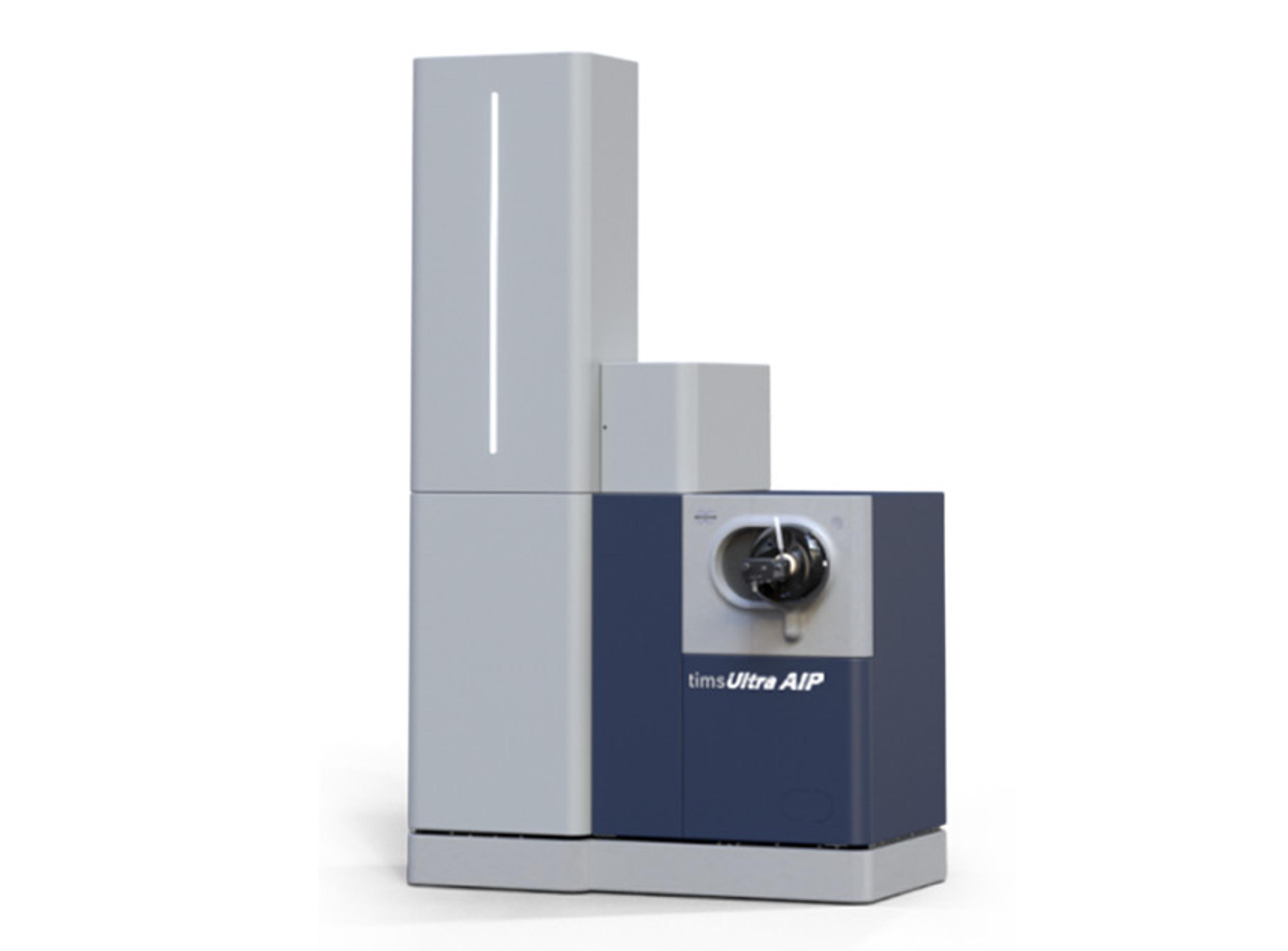
Other videos from Bruker Daltonics






Links
Related content
Tags
Frequently asked questions
Show frequently asked questions
How does highly sensitive mass spectrometry advance functional proteomics?
Highly sensitive mass spectrometry moves beyond cataloging proteins to reveal their functions, forms, and changes within individual cells. According to Bruker’s Daniel Hornburg, functional proteomics connects protein activity with health, disease, and changing physiological or pathological states.
How can the timsUltra AIP platform provide insight into cancer immune evasion?
The timsUltra™ AIP platform can analyze small immune cells and protein fragments displayed on cancer-cell surfaces. This sensitivity helps scientists determine whether immune cells are activated or attenuated and investigate how cancer cells hide from the immune system, evade detection, and spread.
How does mass spectrometry support drug-target interaction research and precision medicine?
Mass spectrometry can monitor how drugs interact with proteins, small molecules, and metabolic pathways. These functional proteomics insights help researchers identify drugs that act specifically on the protein of interest without affecting other cellular processes, supporting precision medicine and the goal of reducing side effects.