Advancing protein function discovery and unravelling molecular complexity in energy and environmental research
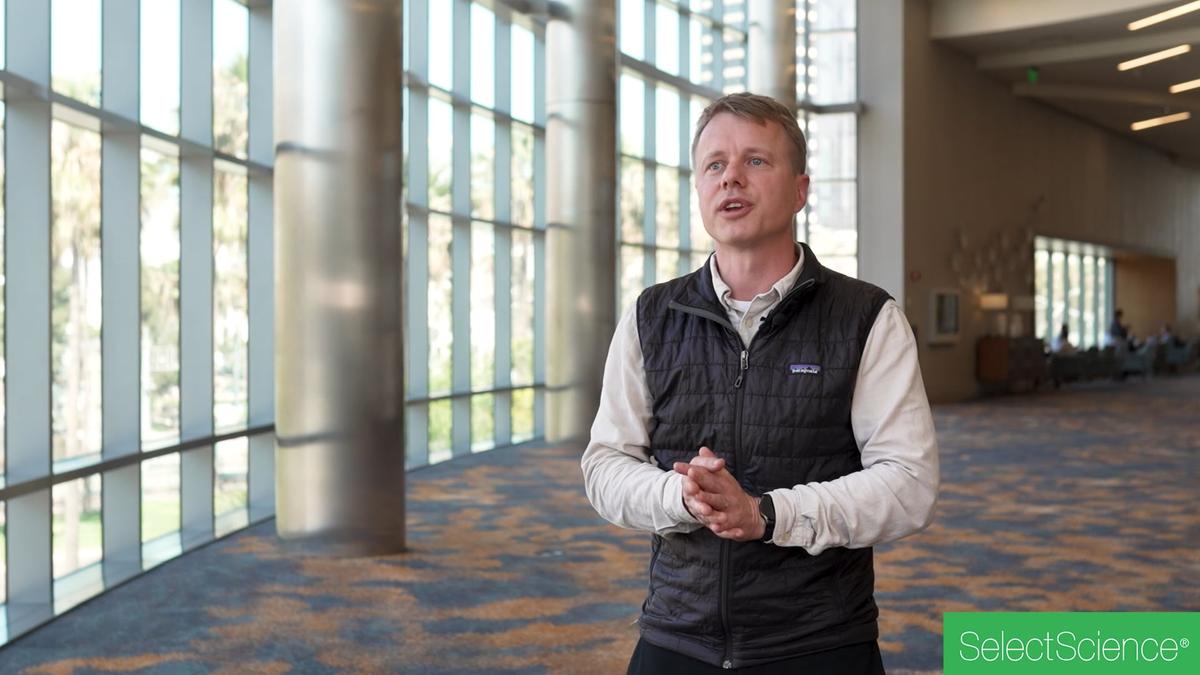
18 Jun 2026Discover how Bruker Daltonics’ latest timsMRMS™, timsOmni™, and timsUltra™ AIP platforms are supporting scientists to unravel today’s toughest chemical and biological complexities. These technologies open new possibilities in environmental analysis, biologics and glycoproteomics, as well as highly sensitive functional proteomics for precision medicine. Hear from Dr. Paul Speir, Senior Vice President of Global MRMS Business, Michael Greig, Executive Director of New Technologies, and Dr. Daniel Hornburg, Vice President of Biomarkers and Precision Medicine, as they share thoughtful insights on breakthroughs in isomer resolution, ion enrichment, and protein‑function discovery, showing what’s now possible in the lab.
This video was filmed at ASMS 2026.
About the company
Bruker Daltonics
Bruker Daltonics is dedicated to revolutionizing the field of molecular exploration. Our innovative solutions equip scientists with cutting-edge tools to delve deeper into the molecular realm and drive advancements in life sciences and biotechnology. Join us in our mission to push the boundaries of scientific discovery. The timsTOF series introduces the next generation of ion mobility technology. Trapped Ion Mobility Spectrometry (TIMS) adds an additional dimension of separation and delivers unprecedented specificity and sensitivity. The timsTOF Pro 2 with PASEF® technology delivers fast scanning speeds, making MS-based proteomics a reality, allowing the identification and quantification of thousands of proteins. The timsTOF SCP optimizes ion transfer with a new source geometry, expanding the horizons of single-cell proteomics and immunopeptidomics. The timsTOF fleX combines the power of MALDI technology with the added dimension of spatial resolution, enabling the groundbreaking field of SpatialOMx® on one platform. The MALDI-2 and microGRID options add unparalleled sensitivity and robustness for imaging experiments with cell-level resolution. With TIMS technology, the timsTOF series has unlocked a fourth dimension of analysis, enabling 4D-Proteomics™, 4D-Multiomics, and SpatialOMx®. From proteomics to metabolomics, lipidomics, and spatial omics, Bruker’s mass spectrometry solutions deliver breakthrough discoveries and deeper insights. With technology such as TIMS, smartbeam, scanning lasers for MALDI-MS Imaging, and eXtreme Resolution FTMS (XR) capable of revealing Isotopic Fine Structure (IFS) signatures, Bruker empowers scientists to drive innovation with precision.
Video transcript
Show transcript
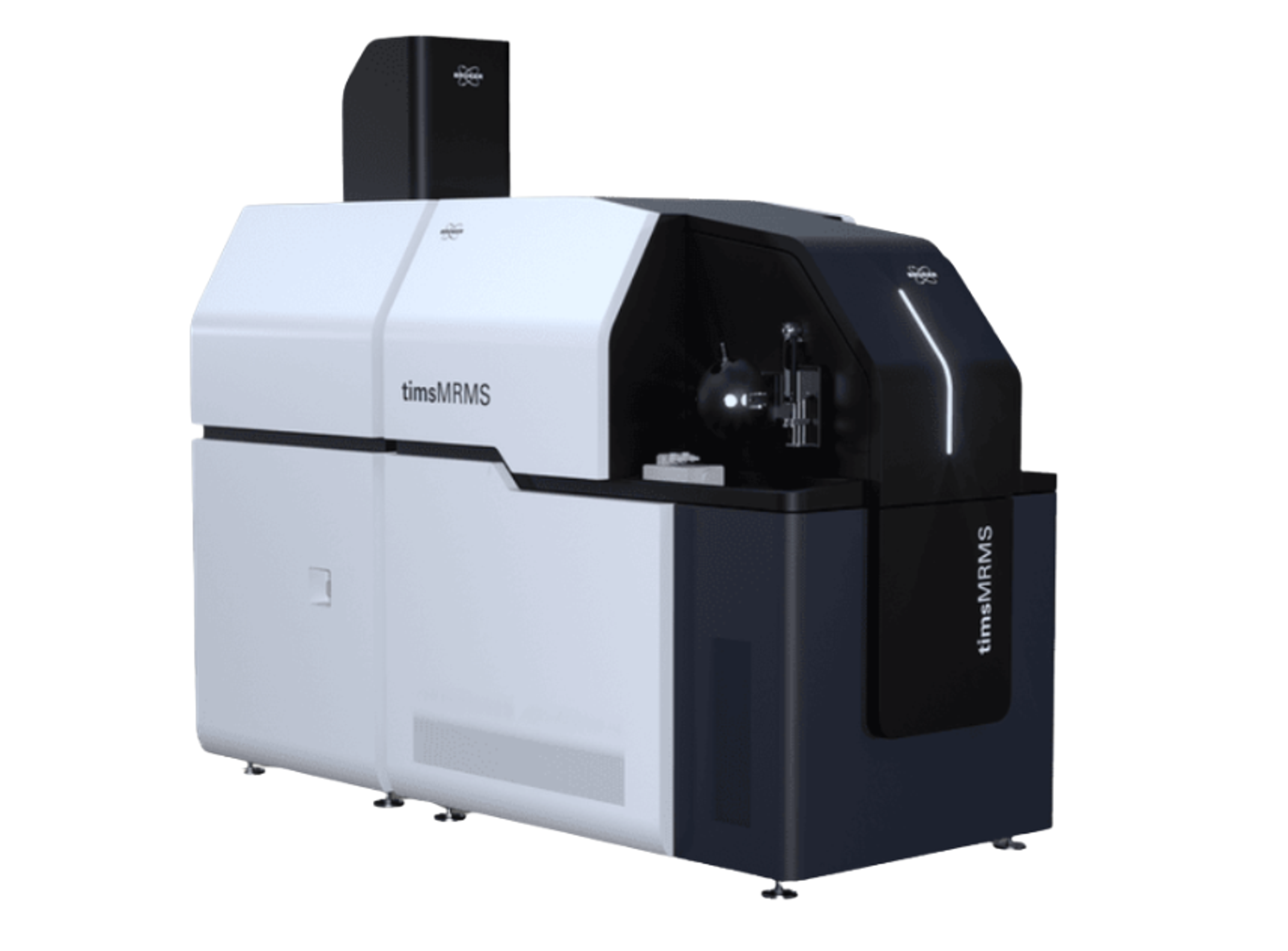
My name is Paul Speir. I’m the Senior Vice President of Global MRMS Business for Bruker Daltonics. Fundamentally, the new timsMRMS™ is the combination of trap-iron mobility with magnetic resonance mass spectrometry. The tagline of our product in the launch this year is addressing the world of extreme chemical complexity.
For us, this would be the types of samples and levels of complexity that generally can’t be tackled or addressed by other modes of simplification, upfront simplification like chromatography. These would be applications in the area of environmental, dissolved organic matter. Soil, water, environmental contaminations like PFAS, which is very complex, as we know, and very, very relevant. Alternative fuels, renewable green energies, things like alternative biofuels, energy storage, lithium ion batteries. Turns out these are very, very complex problems that need this type of analytical mass spec performance.
MRMS is associated with ultra high performance, looking at and dealing with very high levels of complexity. The combination of tims now allows us to go even deeper in that level of complexity, providing even higher levels of confidence.
One of the greatest value elements to the timsMRMS is its versatility. In addition to being the combination of tims with the world’s highest performing mass spectrometer MRMS, this system is also equipped with a MALDI and electrospray source together combined with everless switching between MALDI and electrospray.
There’s also obviously tims that gives us the benefit of added dynamic range, the ability to actually for the first time start to resolve isomeric contributions or isomeric contributions to chemical samples that give even greater depth and richness in coverage, as well as CCS values, which gives us added confidence. We can also do QCID and even EXD in the detection cell. So we can come in a research problem in a myriad of different ways with an arsenal of tools behind it.
Hi, I’m Mike Greig. I’m the executive director of new technologies at Bruker. Biologics are becoming much more complex. We have molecules like tri-specifics now, which have multiple modes of drug and drug target interactions. And so to analyze those molecules, we need new types of tools.
With the new timsOmni™, we have multimodal fragmentation. And what that means is we can take combinations of things like CID, ECD, EID, or any combination of those to help dissect these molecules to give us much more information and full coverage of the molecules to enable us to identify them better.
Glycoproteomics is a very fast expanding field, and it’s something we believe that the timsOmni is really going to contribute to making it more of a routine type of analysis. In the past, people have been able to identify sites of N-glycans, look at detached glycans and other more simple type of analysis. But when it comes to the complexities of O-glycans and the topology of these glycans, most instruments just did not have the capabilities.
With combinations of trap DXD and multimodal fragmentation, we now have the ability to not only locate where these glycans are on either a protein or a peptide, but we can also look at the topology and also more importantly, even look at isomers using tims or trap ion mobility on the front end.
Ion enrichment is one of the unique features of the timsOmni. When we are looking at trace impurities, small molecule metabolites, or even large molecule metabolites, a lot of times when you do MS-MS, The fragment ions you get don’t have a high enough abundance to do MS3 or MS4 to. You just lose all the signal.
So by accumulating these ions after a stage of CID, you can do it 10 times in a row, and you increase your signal to noise by 10 times. Now you have a fragment ion that’s large enough where you can do another stage of MS-MS, and with the resulting spectra, now we can positively ID with good signal to noise. the type of structure we need to identify.
I’m Daniel Hornburg, I’m the VP for Biomarkers and Precision Medicine at Bruker. By functional proteomics 2.0 we mean that we are not only cataloging proteins but we are actually trying to understand what they do. So every protein has a specific function and actually every gene can express many different protein forms that then exert different functions that connect to your health state, that connect to certain diseases.
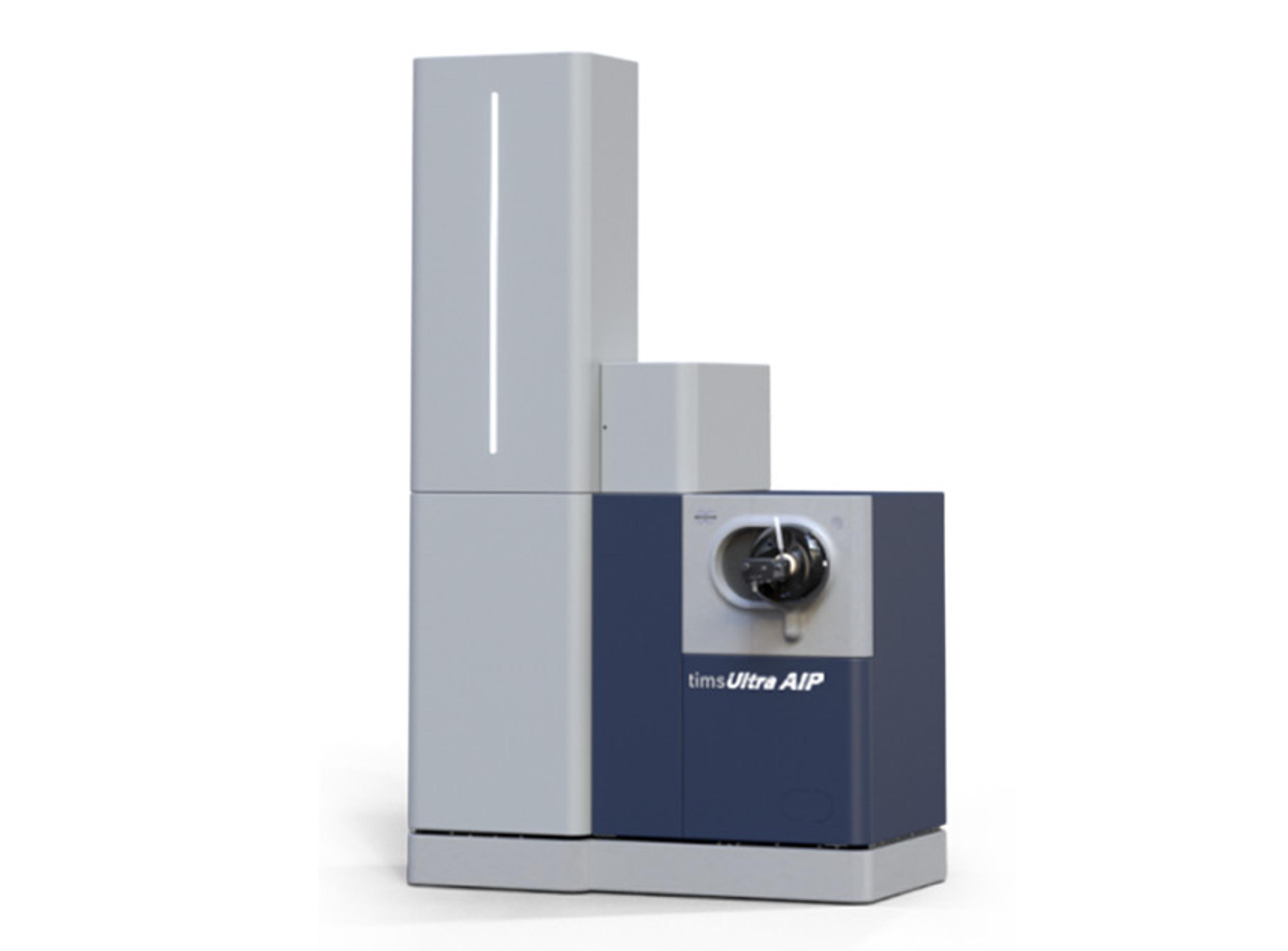
By cataloging and measuring the functional proteome we understand what really happens in every single cell, what really happens when you are getting sick, and how this is changing over time. With the timsUltra™ AIP we have probably the most sensitive mass spec on the planet, which enables us to really look into every single cell.
The smallest immune cells understand whether they are activated, whether they are attenuated. And that’s super relevant when, for example, we look at cancer, where the interplay between the cancer cells and the immune system is really dictating whether we can fight off the cancer or not.
Another level that the mass spec can explore, which is very unique and different from sequencing approaches is to look at for example what is expressed on the outside of a cancer cell. A cancer cell presents itself to the immune system but it tries to hide also from the immune system. So, measuring which protein fragments are on the surface of a cell, which requires a huge amount of sensitivity, allows us to understand why certain cancer cells can invade the immune system and here really the sensitivity of that instrument is a differentiator.
There are many biological insights that are unlocked by mass spectrometry, especially those that are functionally linked to your phenotype, because proteins are so much closer to the phenotype in contrast to the DNA, which always just tells us what could be.
The proteome is telling us what actually is happening in every single cell, what’s happening under every single physiological or pathological state. So, for example, a cancer cell it expresses its own proteome on the surface and the immune system can monitor the surface of these cells and understand this is a cancer cell or this is a normal cell and sometimes that doesn’t happen and that’s when the cancer can spread. Deploying proteomics allows us to monitor what actually helps the cancer to evade the immune system and how we can help the immune system to find the cancer.
Another approach is to identify how proteins and drugs are interacting. Drugs are usually targeting protein or metabolic pathways in order to correct for something that goes wrong. With mass spectrometry we can actually monitor how the drug is interacting and engaging with small molecules and we can design and identify new drugs that only work on the protein of interest and not doing anything else in the cell, which is the ideal setting, right? We are not having any side effects. And only with mass spectrometry we really have the transparency on all of these biological processes.
What does this video cover?
Topics covered in this video
- How does Bruker’s new timsMRMS address extreme chemical and biological complexity?
- What advantages does timsOmni offer for glycoproteomics and complex biologics analysis?
- How do tims-based MRMS systems improve PFAS and environmental contaminant characterization?
- In what ways does functional proteomics 2.0 advance precision medicine and cancer research?
- How do multimodal fragmentation and ion enrichment enhance structural elucidation in timsOmni?
FAQs
How does Bruker Daltonics’ timsMRMS™ platform address extreme chemical complexity in environmental analysis?
The timsMRMS™ combines trapped ion mobility with magnetic resonance mass spectrometry to tackle extreme chemical complexity that cannot be resolved by traditional upfront simplification like chromatography. It is applied to dissolved organic matter, soil and water analysis, PFAS contamination, alternative biofuels, and lithium-ion battery research, delivering ultra-high performance, deeper complexity coverage, isomer resolution, CCS values, and versatile MALDI/electrospray workflows.
What advantages does the timsOmni™ mass spectrometry platform offer for biologics and glycoproteomics research?
The timsOmni™ provides multimodal fragmentation (CID, ECD, EID combinations) to dissect complex biologics such as tri-specifics. In glycoproteomics, it enables routine analysis of N- and O-glycans, including glycan topology and isomer resolution using trap ion mobility. Its ion enrichment capability boosts fragment ion signal-to-noise, supporting deeper MSn experiments for confident identification of trace impurities and metabolites.
How does the timsUltra™ AIP platform advance functional proteomics and precision medicine in cancer research?
The timsUltra™ AIP is described as one of the most sensitive mass spectrometers, enabling functional proteomics 2.0 by measuring what proteins actually do in single cells. It reveals immune cell activation states and characterizes protein fragments on cancer cell surfaces, explaining immune evasion. This sensitivity supports biomarker discovery, monitoring drug–protein interactions, and designing targeted therapies with fewer side effects in precision medicine.
Related products
Request Quote for All Products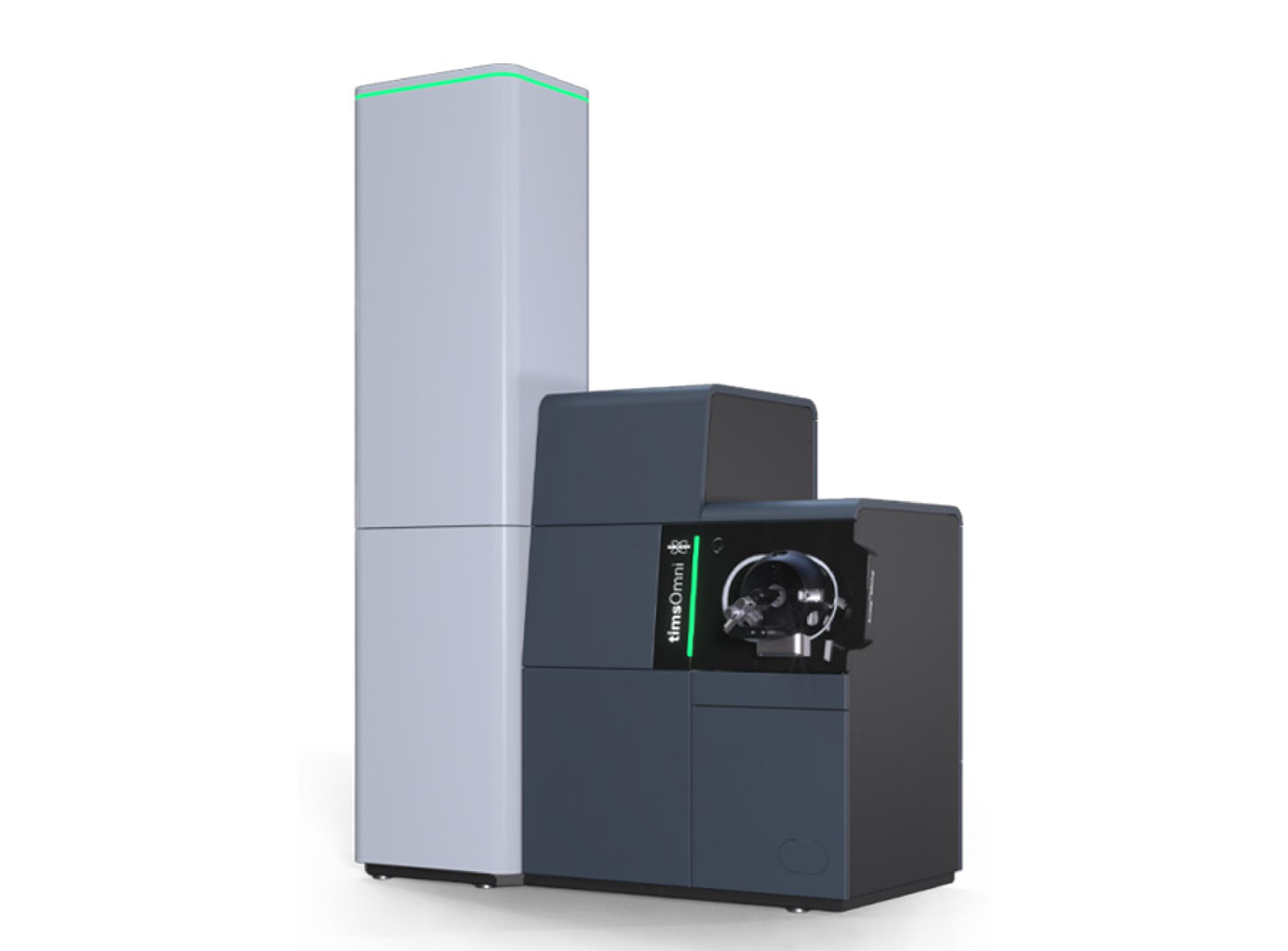
timsOmni™
Bruker DaltonicsUnlock the potential of omnidirectional MSn and trapped eXd: Elevate MS and MSn sensitivity to new heights.