
Lab automation and AI innovation at Vienna BioCenter Core Facility
8 Jun 2026
Dr. Vivian Lu Tan, Vienna BioCenter Core Facility (VBCF), describes how VBCF provides research support across omics (NGS, proteomics, metabolomics), molecular biology, and microscopy, and operates a major Drosophila resource center. She emphasizes VBCF's Innovation Unit, which one focus area on lab automation to standardize and scale workflows. More broadly, lab automation and robotics enable researchers to explore thousands or millions of experimental conditions and generate large, high-quality datasets. When integrated with AI and machine learning, these automated systems enable closed-loop experimentation, where data-driven insights continuously refine experimental design and open new discovery spaces.
This SelectScience interview was filmed at SLAS Europe 2026.
Video transcript
Show transcript
The Vienna Biocenter Core Facility provides advanced scientific services and instrumentation to life science research. So, our core mission is to enable this cutting-edge research in life sciences, be it academia or in the pharma or the biotech companies, and be it in Vienna or beyond. So, we support a range of projects in the most important areas of life science research. For example, the first one is omics. So, we support in next-generation sequencing (NGS), proteomics and metabolomics. The second area is molecular biology. So, here we provide services from protein production to molecular tool development to histology. A third area we support in is microscopy. So, we have light microscopy and also advanced instrumentation in electron microscopy. We also have the largest drosophila resource center in Europe. Here, we maintain and dispatch over 28,000 drosophila lines worldwide. And the emerging projects we have actually focus on innovation in most of those areas.
To enable innovation, we have now founded the Innovation Unit. So, we have a lot of exciting things coming out of this unit. For example, one very important development area is lab automation and robotics. So, here we are integrating processes that are routine but modular, programmable into automated procedures so that we could save time, we could be able to produce and offer more services in the same kind of time and resources. So, this is a kind of a pilot project and also the incarnation of integration of lab processes automation, AI and robotics. So, we are very excited about the outcome in these endeavors.
In modern life science research, there is combinatorial spaces of complexity, right? So you could test, let's say, hundreds, thousands or even millions of conditions. So, for example, compound screening different conditions, concentrations or different genetic variants. So, this very easily gets into an explosion of possibilities what one can do and it's just impractical to do it manually.
Therefore, lab automation is very important. It could scale the experiments. You then are able to actually test all these conditions and tap into the unknown space that is impossible before with other alternatives. Besides the scale lab, lab automation is also essential for standardization of the conditions. With human you could always do something different each time and it's not always exactly the same, but with lab automation one could really standardize things that is exactly the same volume with very minimal let's say discrepancy or even get into small volume and ranges it's not possible with human. Therefore, every time it's completely repeatable or reproducible, the data.
And of course, with all these things being possible, then you would get loads of data. So, the data is very complex and the scale is also large. So, with this one could of course draw insights that is subtle patterns that is not possible with small amount of data and also things that one could not see with a small amount of data. So these will give people new insights.
With machine learning and AI, one could basically analyze the data the dimensions of the data. On top of that, I think the real power actually lies into the integration of the lab automation and AI. There you could actually not just get on the experimental and analysis level, it also gets on the co-creation level that it could close the loop. One could have a feedback loop by having automated procedures, generating a lot of data analyzed by the AI or other computational approaches, and then actually feedback the insights. So this, I think, is a very important area in the future of modern life science research.
What does this video cover?
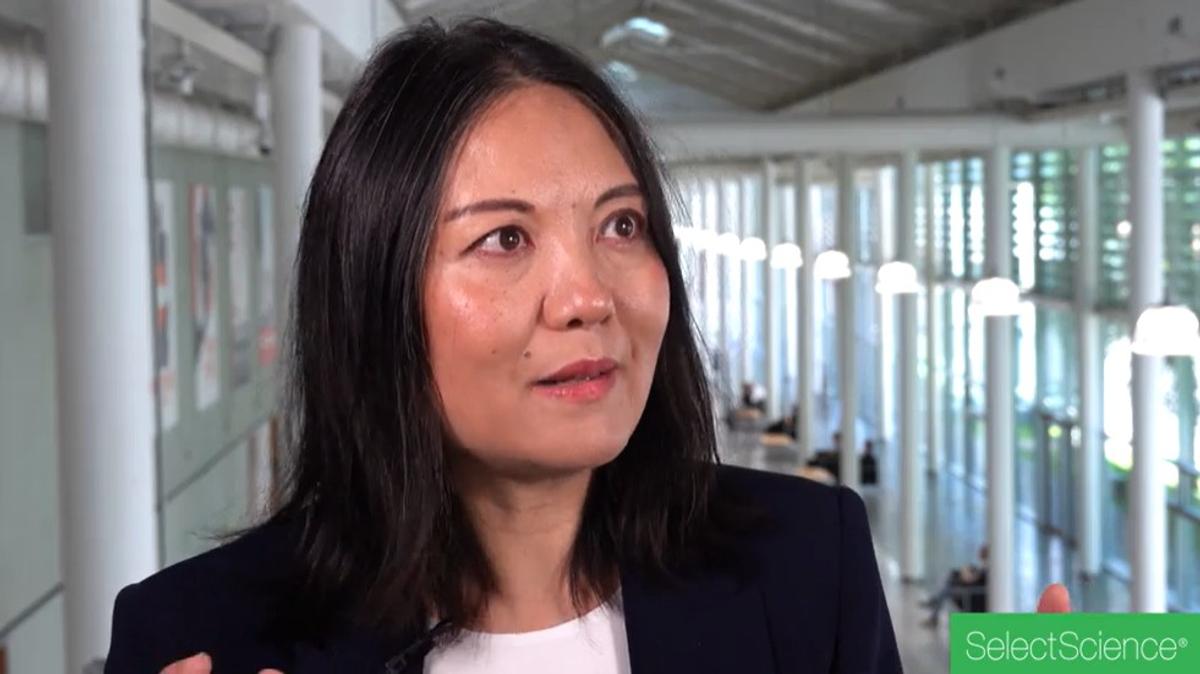
Vivian Lu Tan was the co-chair of SLAS Europe 2026
Topics covered in this video
- How does the VBCF support cutting-edge life science research?
- How do the VBCF's innovation initiatives enable scaling and standardization of experiments with lab automation and robotics?
- Why are automation and AI technologies vital for scientific research and innovation?
- In what ways does integrating lab automation with AI and machine learning enable closed-loop experimentation and data-driven discovery in modern life sciences?