
Technology trends in food quality analysis: What to look out for at RAFA 2019
Portable food scanners, food fraud, human biomonitoring and foodomics will all be discussed at this year’s symposium
21 Oct 2019Next month’s international symposium on Recent Advances in Food Analysis, RAFA 2019, November 5-8, Prague, Czech Republic, will bring together scientists from across the industry to discuss the latest analytical and bioanalytical strategies and technologies for food quality and safety control.
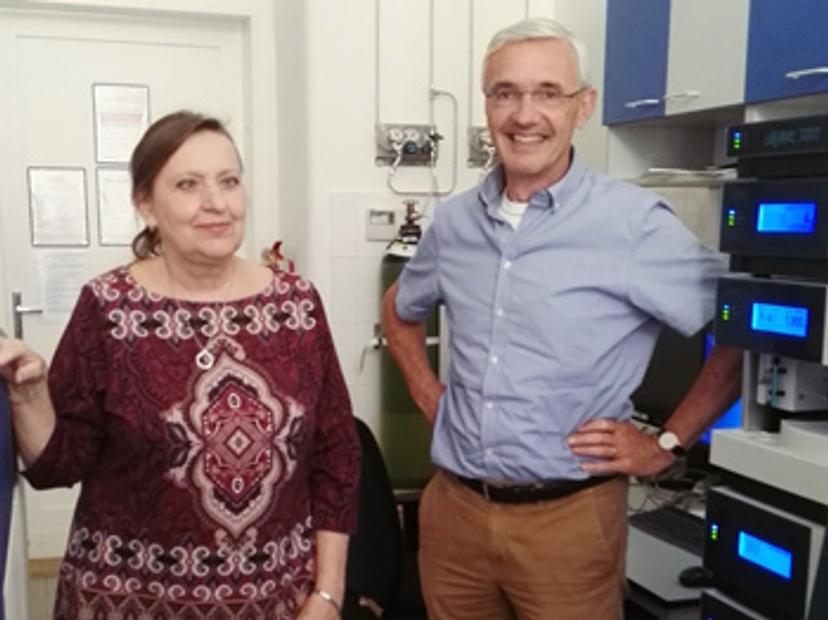
Co-chaired by Prof. Jana Hajslova, University of Chemistry and Technology, Prague, and Prof. Michel Nielen, RIKILT Wageningen University & Research, Wageningen, the event will also cover challenges and novel approaches in food and natural product analysis.
In this SelectScience interview, Prof. Nielen discusses the biggest trends in food analysis, key methods and technologies advancing the field and what to look out for at RAFA 2019 – including portable instruments for food testing, advanced chemometric data tools and developments in legislation.
What do you see as the biggest topics in food quality analysis and why are they important?
Food authenticity analysis and testing for fraud in the food chain have become big topics in recent years, particularly since the horsemeat scandal. And because of the general trend towards more sustainable and circular agricultural practices there will be even more room for fraud due to increased recycling and waste streams.
What are some of the current challenges associated with food quality analysis?
Sample preparation remains the key challenge: food represents a much more heterogenous group of sample matrices than just water or biofluids, and typical detection methods in food analysis such as biosensors and mass spectrometers are rather vulnerable for sample matrix interferences.
What trends have you seen in the methods and technologies used in food quality testing?
RAFA 2019 will showcase major developments in portable, rapid and non-invasive instruments, often referred to as “food scanners,” which are expected to facilitate a massive increase in the number of food samples we’re able to test. Optical spectroscopy (such as hyperspectral UV scanners covering visible and near-infrared wavelengths with image recognition) is a great example, and is experiencing a resurgence in food studies due to successful instrument miniaturization, the availability of advanced chemometric data handling tools, wireless data communication and ‘Big Data’ compatibility – in many cases, ordinary smartphones will provide a readout system.
What’s more, major developments in biochemical assays, such as strip tests, lateral flow devices, and biosensors will be showcased at the meeting, as will advances in portable MS – though these tend to move more slowly in food analysis than other fields.
Tell us a little about the upcoming RAFA 2019 meeting.
Apart from classical major topics such as Authenticity & Fraud and Food Contaminants we will see a range of upcoming topics at RAFA 2019 such as, workshops and sessions on Portable Food Analysis, Human Biomonitoring, Circularity & Sustainability, Foodomics.
Being the world’s leading food analysis event with 800+ participants, the event will not only offer the latest analytical methods and trends for food quality and safety testing, but also developments in legislation, reference laboratories and beyond the EU issues in the USA and China.
What do you see for the future of food quality analysis and its impact on the general public?
Within the next decade, food inspectors, farmers, retailers, and even consumers, will be demanding the ability to test food themselves. To this end, I anticipate that rapid, smartphone-based technologies with built-in and remote quality assessment features will supersede laborious laboratory practices – delayed action due to analytical limitations will not be acceptable.
See more information about RAFA 2019 here.
See our Food Quality Special Feature here >>