SlideQC: An AI-based tool for automated quality control of whole-slide digital pathology images

14 Aug 2023

Artifacts may be introduced during tissue collection and processing, slide preparation, or when generating whole slide images (WSI). The presence of artifacts has a negative impact on the digital pathology workflow as they may hinder clinical reporting. Furthermore, artifacts may lead to false positive and false negative results when deploying image analysis algorithms or computer-aided diagnosis systems to WSI. Manual quality control of WSI is a time-consuming procedure and therefore automated quality control tools, which report and exclude artifacts, are highly desirable to streamline digital pathology workflows. To automate the quality control step, Indica Labs developed SlideQC, an AI-based quality control tool that automatically detects, reports, and outlines artifacts, such as air bubbles, dust/debris, folds, out-of-focus areas, and pen marks, on H&E stained WSI, in both research and clinical workflows. In this eBook, Indica Labs introduces SlideQC.

HALO AP®

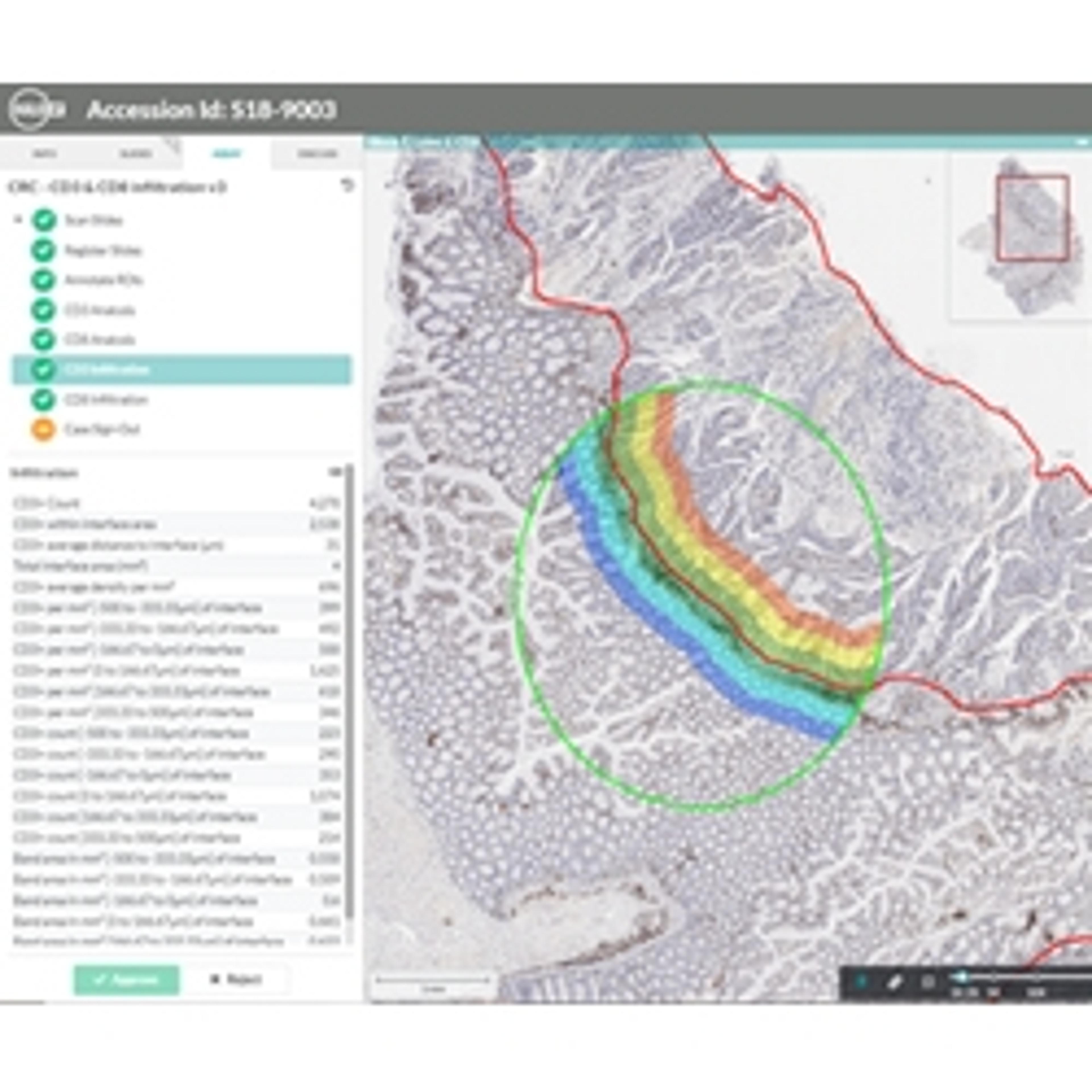
Streamline your anatomic pathology workflows. HALO AP brings case-centric digital pathology slide management, collaboration, and quantitative analysis to your Anatomic Pathology lab.  The browser-based HALO AP interface provides anywhere, anytime access to digital slides for remote sign-out, secondary consultations as well as quantitative IHC workflows. With LIS/LIMS integration, multiple deployment options and end-to-end implementation support, Indica Labs makes it easy for your Anatomic

(4)

Tags

Cell / Tissue CultureCell culture or tissue culture is used to study the biology of cells or tissues and to isolate cellular products in an environment which can be manipulated and well defined. Accurately control your culture environment with bioreactors or culture incubators, bind your cells to a surface or together with an extracellular matrix. Distinguish cell types with differential media or proliferate cells with certain characteristics using selective media. Enrich your media with supplements such as growth factors, sera and vitamins. Find the best cell and tissue culture products, kits and equipment in our peer-reviewed product directory: compare products, check customer reviews and receive pricing direct from manufacturers.Light MicroscopyLight microscopes or optical microscopes are used to visualize microscale objects under magnification, including cells, clinical specimens and materials. Lab equipment for light microscopy includes confocal microscopes, fluorescence microscopes, zoom and stereo microscopes. Microscope slides and imaging reagents are available for visualizing samples, as well as various microscope stages and incubators for large or temperature-sensitive samples. Find the best light microscopes in our peer-reviewed product directory: compare products, check customer reviews and receive pricing direct from manufacturers.Artificial Intelligence / Machine LearningArtificial intelligence (AI) and machine learning (ML) are transformative technologies used to analyze complex data, identify patterns, and make data-driven predictions across diverse scientific fields. Automate the analysis of large or complex data sets using AI algorithms and leverage machine learning models to improve diagnostics, accelerate drug discovery, and refine experimental design. Discover the best AI/ML software, platforms, and analytical tools in our peer-reviewed product directory: compare features, read customer reviews, and request pricing directly from manufacturers.Tissue ProcessingTissue processing involves preparing biological tissue samples for microscopic analysis, including fixation, embedding, and sectioning. This process is essential for histopathology and diagnostic applications. Explore tissue processing products in our peer-reviewed product directory; compare products, check reviews, and get pricing directly from manufacturers.Digital PathologyDigital pathology involves the use of digital imaging and computational tools to analyze pathology slides. It is transforming diagnostics, research, and education by offering enhanced image storage and analysis. Explore digital pathology solutions in our peer-reviewed product directory; compare products, check reviews, and get pricing directly from manufacturers.Quality ControlQuality control is needed in all production processes. Quality control is a monitoring procedure or set of procedures that are put in place to ensure that a manufactured product adheres to a defined set of quality criteria. AutomationAutomation in laboratories and manufacturing processes enhances efficiency, precision, and scalability by reducing the need for manual intervention. It plays a critical role in improving productivity, minimizing human error, and accelerating workflows in fields like diagnostics, drug development, and industrial testing. Automation technologies include robotic systems, automated liquid handlers, and process control systems that streamline complex tasks and ensure consistent, reproducible results. Explore our peer-reviewed product directory to discover the best automation solutions, compare options, read user reviews, and get prices directly from manufacturers.
SlideQC: An AI-based tool for automated quality control of whole-slide digital pathology images