
Reproducible DNA Amplification in PCR
Reproducible DNA Amplification in PCR
26 Mar 2016Nowadays, PCR can be robust and easy—but you can still run into difficulties. Make sure to get the most out of your PCR with some simple tricks, with this informative infographic.
Related products
Request Quote for All Products
Mastercycler nexus X2 Thermal Cycler
EppendorfThe Mastercycler nexus X2 gives you the ability to run two totally independent protocols at the same time. Smaller assays fit nicely on the 32-well-block — larger assays can exceed 48 samples and run on the 64-well-block. The larger block is available with a gradient function. As every member of the Mastercycler nexus family, the Mastercycler nexus X2 can be combined with all other family members in a network of up to 3 units. In combination with Eppendorf’s PCR Tubes, PCR Strips or divisible plates, the Mastercycler nexus X2 will give you consistent and publishable results — every day! Features: Large block for large assays — small block for small assays Intuitive graphic programming Universal block for strips, 0.1 mL, 0.2 mL and 0.5 mL PCR tubes Small footprint Optional gradient for PCR optimization E-mail notification Flexlid concept allows use of all types of consumables with automatic height adjustment of the lid Applications: Standard PCR Cycle sequencing Fast PCR Optimizing a PCR
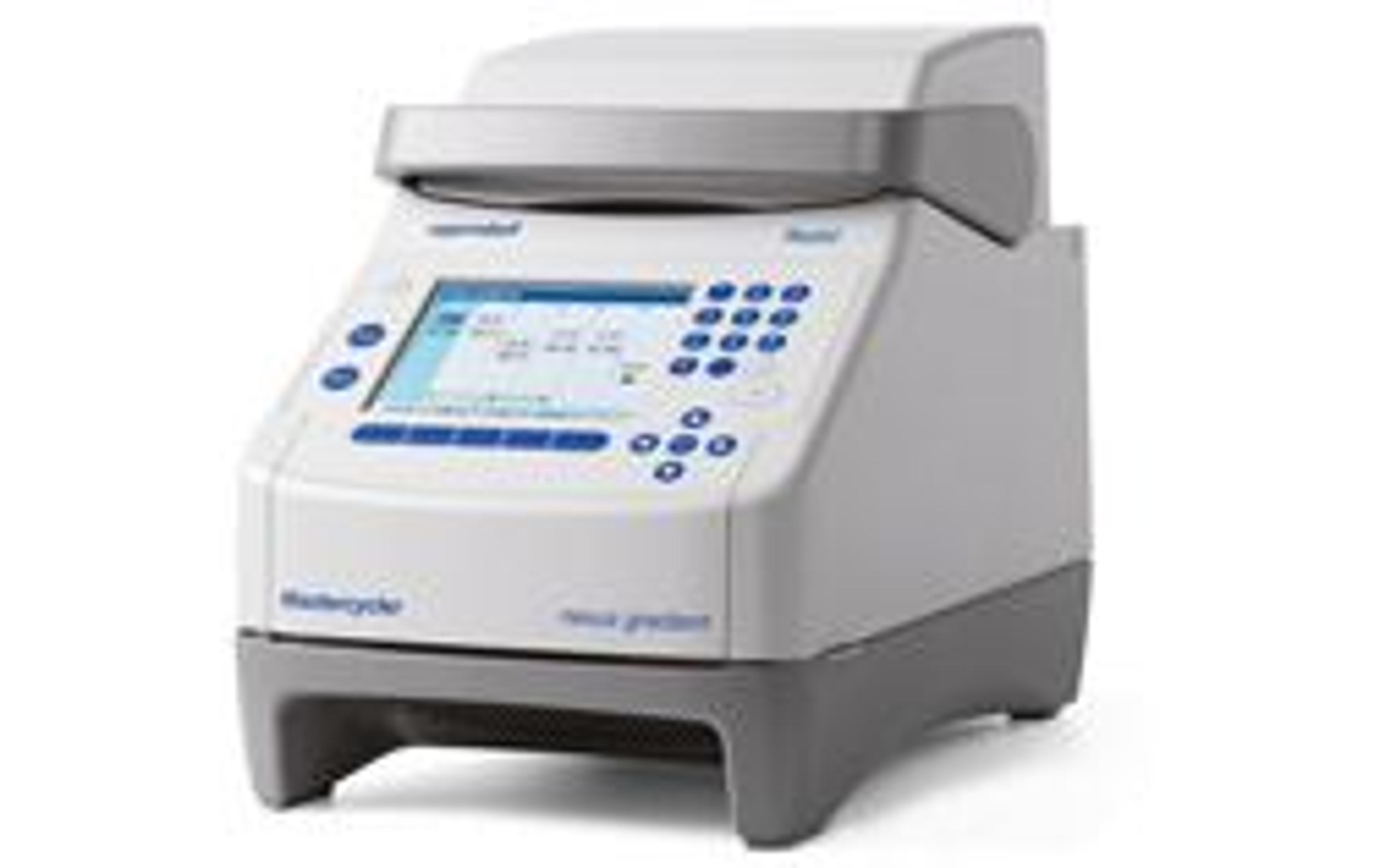
Eppendorf Mastercycler Nexus PCR Cycler
EppendorfWith its low noise level, the Mastercycler nexus can be used all day in the lab without disturbing any parallel work going on. Additionally, the low power consumption helps to save money and to be eco-friendly. Eppendorf Mastercycler nexus Family In the age of networking, the new Mastercycler nexus is your reliable companion when it comes to the daily routine of PCR. It is easy to use, does not need much space or energy and sends you an e-mail when it is done – what else do you need from a PCR cycler? Combine, Connect, Control ◾Combine up to 3 units for ultimate throughput! ◾Connect your Mastercycler nexus to your computer network and get a status e-mail to your desk! ◾Control all the relevant parameters of your PCR through the intuitive software Do you just need an affordable, flexible and reliable PCR instrument? The Mastercycler nexus is exactly that. It brings the reliability and ease of use of an Eppendorf cycler at an affordable price. Low energy consumption, easy expansion to 3 units and a small footprint make it not only fit to your budget, but also to your precious lab space. Due to the flexlid concept, the cycler can deal with all types of PCR consumables, from low volume all the way up to 0.5 mL PCR tubes. Of course, all common PCR plates fit – and if your throughput becomes even higher, you can just connect one or two Mastercycler nexus eco to your Mastercycler nexus. Gradient with SteadySlope Technology The gradient option of the Mastercycler nexus features the SteadySlope technology to ensure that the heating and cooling ramp rates are identical in both gradient and normal operation. Thus, you can expect identical temperature control characteristics in both optimization and routine experiments. Programming the gradient is easy and intuitive – so that novice users can get started quickly and safely. A true gradient with 12 different temperatures is an extremely powerful tool that can help you to optimize your PCR. Based on its recent analysis of the PCR instrumentation market, Frost & Sullivan recognizes Eppendorf with the 2012 European Green Excellence Award for its Mastercycler nexus.