
Qualitative and Quantitative Analyses of Water-Soluble Vitamins and Flavonoids in Pomegranate Aril Juice, Skin, and Commercially Available Fruit Juice Using the ACQUITY UPLC H-Class with PDA Detector
12 Jun 2014This application note describes a comparative and quantitative study of water-soluble vitamins like ascorbic acid, thiamine, riboflavin, cyanocobalamin, and quercetin flavonoid in aril juice, skin, and commercially available fruit juice of pomegranate. The ACQUITY UPLC H-Class System with PDA Detector is used to perform the method development and the rapid routine analyses thereafter.
Related products
Request Quote for All Products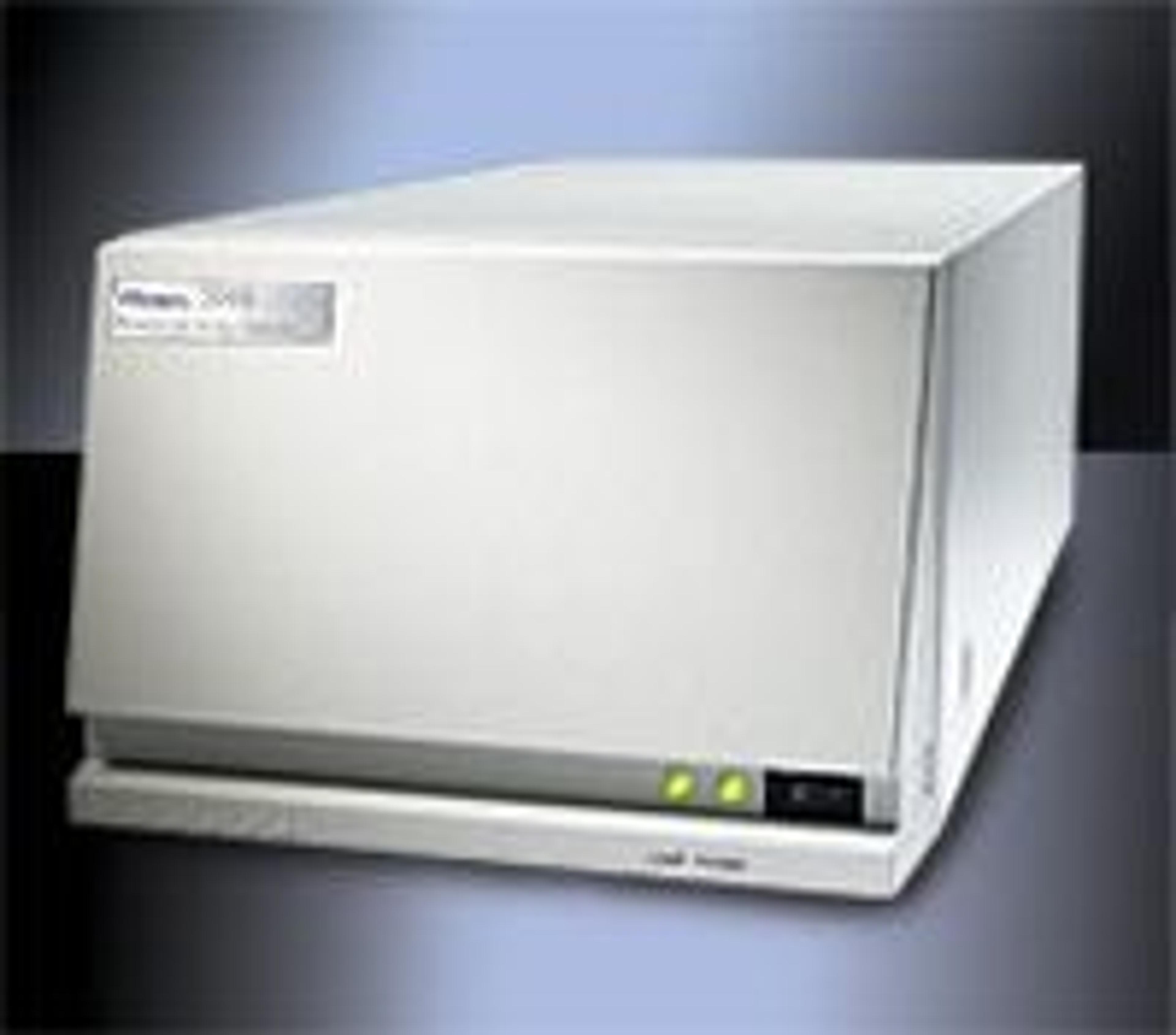
2998 Photodiode Array (PDA) Detector
WatersThe 2998 Photodiode Array (PDA) Detector offers advanced optical detection for Waters analytical HPLC, preparative HPLC, or LC/MS system solutions. Providing unprecedented trace impurity detection and quantitation, the 2998 PDA Detector’s integrated software and optics innovations deliver high chromatographic and spectral sensitivity. Enhanced software control provides flexibility for simultaneous 2D and 3D operation with either Empower™ or MassLynx™ Software. The Waters 2998 PDA Detector is designed for a range of laboratory applications, including trace impurity detection and quantification, compound identification and method development. Features of the Waters 2998 Photodiode Array PDA Detector: • Patented TaperSlit™ flow cell ensures high sensitivity while maintaining optimal spectral performance • Maximum signal-to-noise performance of <10 µAU • Simultaneous quantification of high- and low-level components within a single chromatographic separation for extended linear range • Flexible sampling rates for normal and fast LC separations from 1 to 80 Hz • Definitive compound identification & co-elution detection • Superior linear range with constant optical bandpass • Spectral exposure optimization to maximize the signal-to-noise across the entire wavelength range with a single Deuterium lamp • Thermal wander management for maximum baseline stability
ACQUITY UPLC HSS T3 Columns for Polar Compound Retention
WatersACQUITY UPLC® HSS (High Strength Silica) T3 Columns contain the first and only 100% silica particle designed, tested and intended for use in applications up to 15000 psi/1000 bar. The ACQUITY UPLC® HSS particle is not an HPLC particle. High pore volume HPLC particles do not possess the mechanical stability necessary to withstand the high column packing and operating pressures of UPLC® separations. The first ligand chemistry in this UPLC®-certified column family utilizes T3 bonding in order to retain and separate polar organic compounds. ACQUITY UPLC® HSS T3 columns possess the superior polar-compound retention, aqueous mobile phase compatibility and ultra-low MS bleed of Atlantis® T3 columns. Easier Method Transfer Since Atlantis® T3 HPLC and ACQUITY UPLC® HSS T3 columns utilize T3 bonding, LC methods can be transferred from HPLC to UPLC® separations. Because Atlantis® and HSS particles are different substrates, some method modification and/or optimization may be required. A compelling benefit of UPLC® technology is the ease and speed at which this method optimization can occur since UPLC® separations offer greater resolution in less time. Moving from XBridge™ HPLC to ACQUITY UPLC® BEH columns is nearly seamless, as the hybrid particle substrates differ only in particle size. However, because of T3 bonding it should be straightforward to make simple adjustments to successfully transfer a separation from an Atlantis® T3 HPLC column to an ACQUITY UPLC® HSS T3 column.