Miniaturized Drug Sensitivity and Resistance Testing with the Echo® Liquid Handler and Access™ Workstation

17 Jan 2014

Recently identified associations between variants of cancer genes and drug resistance increase the value for comprehensive drug sensitivity and resistance testing in combination with molecular profiling of cancer cells. This application note discusses the implementation of miniaturized drug sensitivity and resistance testing, at the Institute of Molecular Medicine in Finland (FIMM), with assay-ready plates produced by the Echo liquid handler.

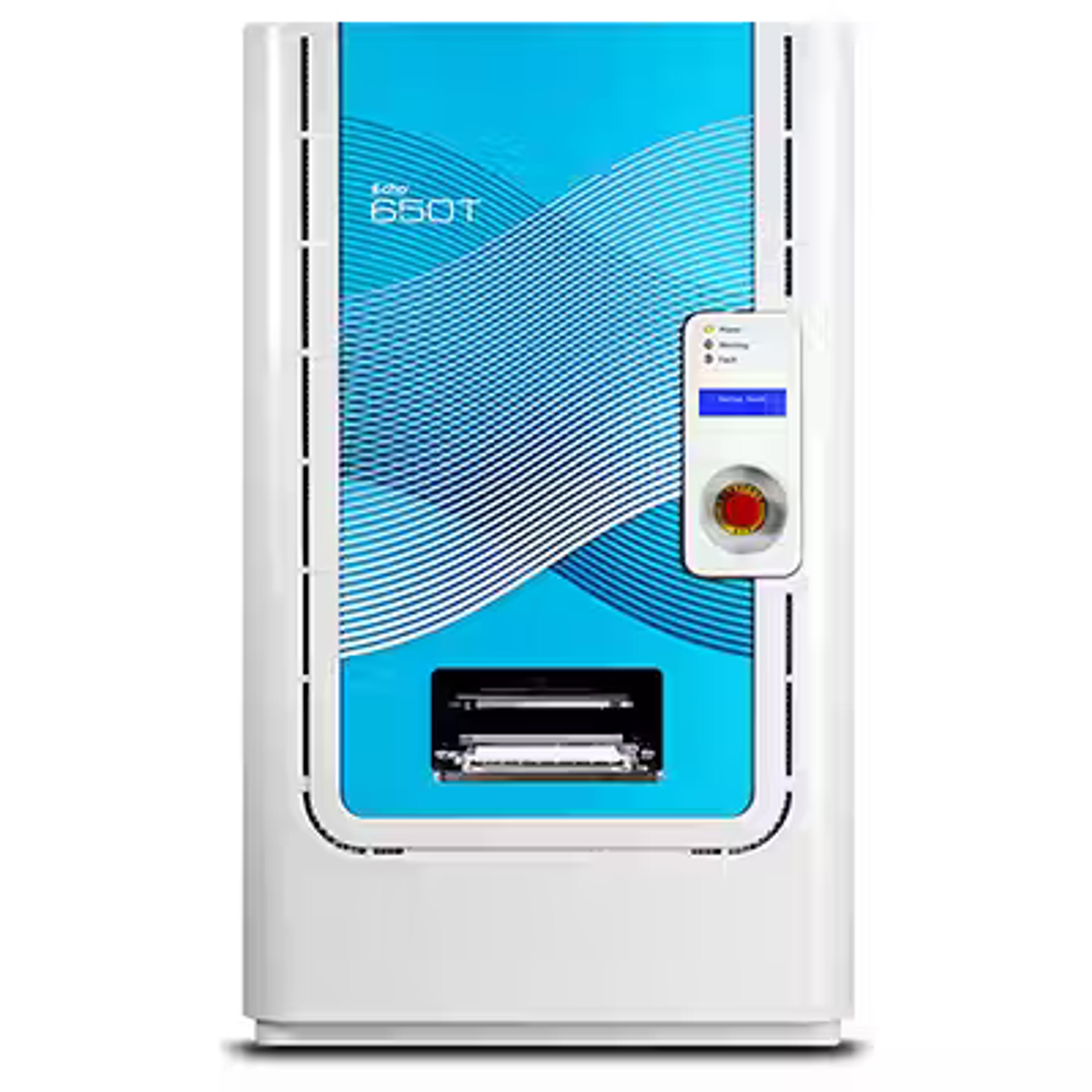
Echo® 650 Acoustic Liquid Handler

Beckman Coulter Life Sciences

Enables assay miniaturization in a broad range of applications. Transfer from 384-well and 1536-well microplates. Accurate, precise, contact-free acoustic transfer in volumes as low as 2.5 nL Transfer from Echo Qualified sample tubes* and microplates.
(22)

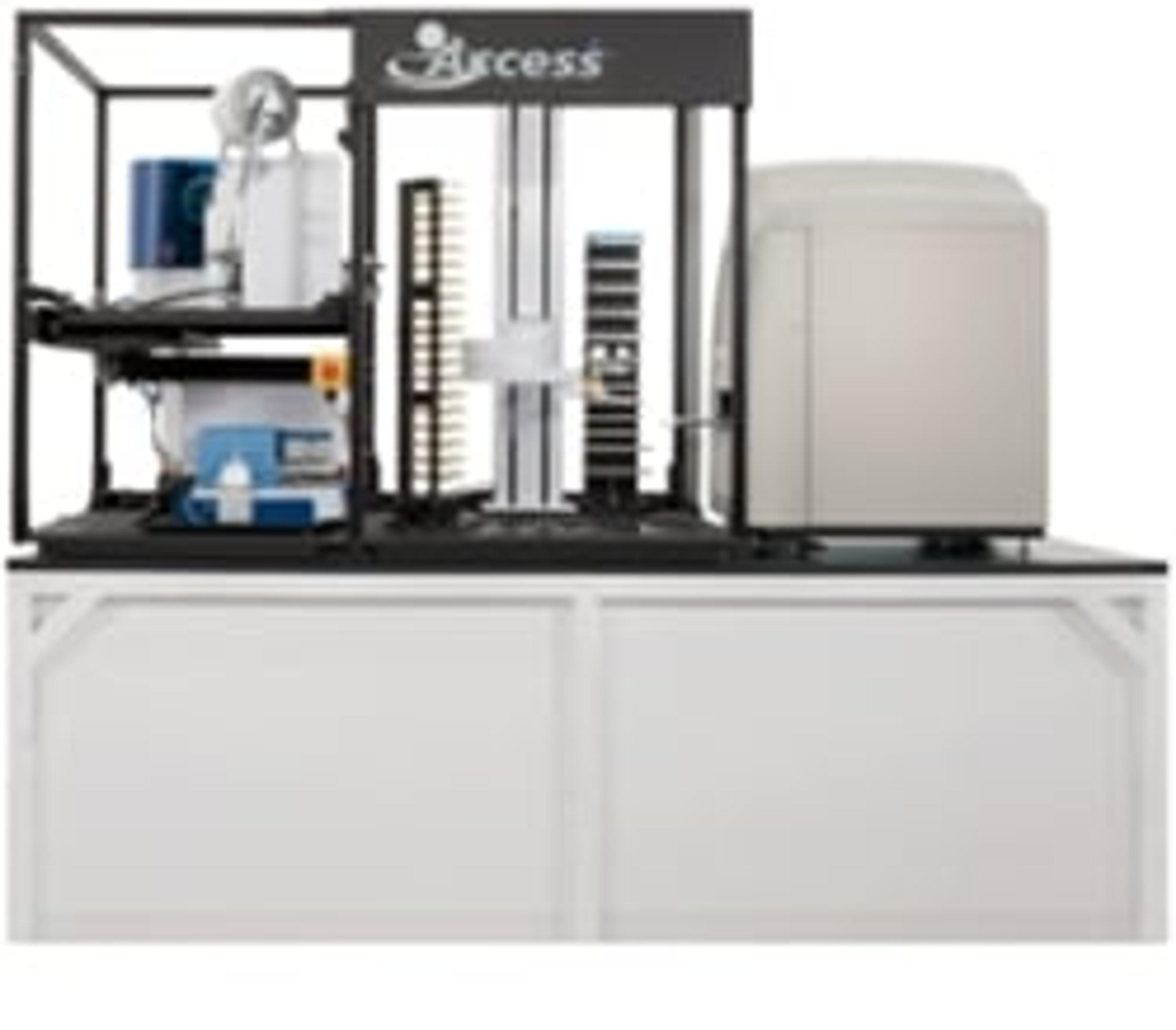
Access™ Laboratory Workstation

Small-Scale Automation with Large-Scale Results   Access™ laboratory workstations multiply the benefits of the Echo® liquid handler by improving overall assay throughput and reproducibility. With the ability to integrate a variety of devices and the modularity to scale when needed, each workstation offers the flexibility required by frequently-changing assay requirements.  All Access workstations are optimized at install and include all safety mechanisms required for CE compliance. Access workstations use Labcyte Tempo™ automation control software to manage the system configuration and schedule automated routines. Protocols created from Echo® software applications can be imported into Tempo™ software and quickly converted into fully automated routines. Support for a Range of Applications Assay ready plate preparation Lead optimization and secondary screening assays High-throughput gene expression assays Automated protein crystallography setup

(7)

Tags

High-Content ScreeningHigh-content screening (HCS), also known as high-content analysis (HCA), is a high-throughput technique used in drug discovery to identify substances that alter the phenotype of cells. HCS uses fluorescent microscopic imaging and automated image analysis to investigate cellular events such as apoptosis, cell viability, GPCR activation, oxide production, neurite outgrowth, and cell signaling. Find the best fluorescent labeling reagents, cellular assays, and high-content imaging systems in our peer-reviewed product directory: compare products, check customer reviews and receive pricing direct from manufacturers.Robotic InstrumentsRobotic instruments can be used for high-throughput automation of many lab processes. Such processes use instruments for assays like cell based assays and ELISA, for sample preparation like shakers, centrifuges and incubators, and for analysis such as sequencing and western blot analyzers. Useful features of robotic instruments include speed, reproducibility, barcode readers, software and automation.Robotic WorkstationsRobotic workstations are automated platforms enabling the user to perform high-throughput, multi-application processes, from sample preparation tasks such as PCR set-up, DNA purification and NGS library preparation, to integrated sample prep and analysis workstations. Automation makes processes consistent, fast, precise and fully walk-away. Find the best robotic workstations in our peer-reviewed product directory: compare products, check customer reviews and receive pricing direct from manufacturers.Automated Liquid HandlingAutomated liquid handling equipment is used to mix, dilute and dispense allotted volumes of liquid into microplates and other vessels automatically. The robotic, liquid handling arms can dispense from single channel to 3456 multichannel as well as operate nanoliter dispensing, enabling high throughput of samples. Find the best automated liquid handlers in our peer-reviewed product directory: compare products, check customer reviews and receive pricing direct from manufacturers.Cancer ResearchAlthough cancer is often referred to as a single condition, it actually consists of more than 100 different diseases. Microscopy, mass spectrometry, high throughput sequencing and flow cytometry are some of the most common techniques employed in cancer research labs.