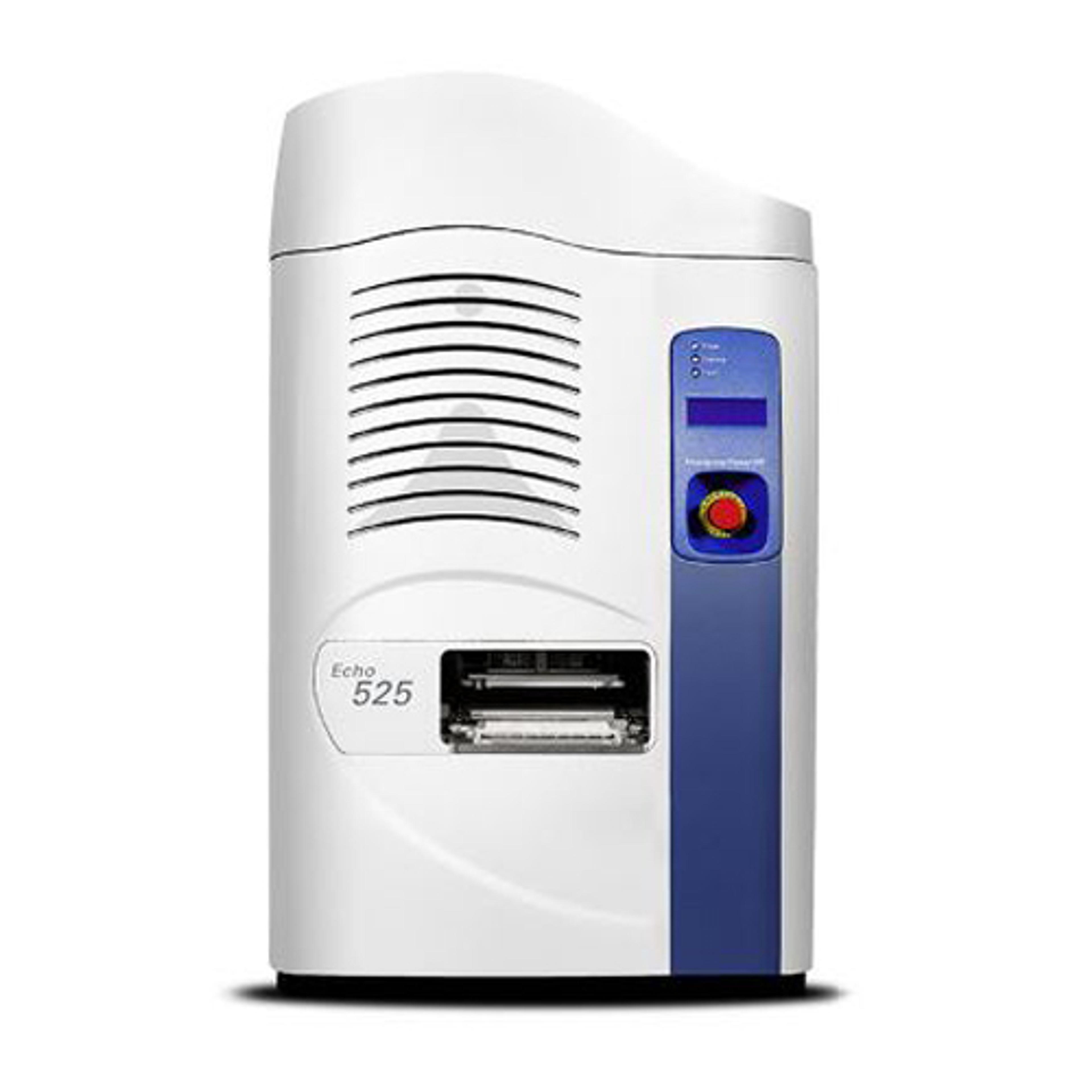
Miniaturized 16S rRNA Amplicon Sequencing with the Labcyte Echo 525 Liquid Handler

21 Jun 2018

Our understanding of the microbial communities in human health, metagenomics, and metataxonomics has been growing rapidly in recent years and is being increasingly elucidated every day. Amplicon sequencing of highly conserved prokaryotic 16S ribosomal RNA (rRNA) regions has long been the standard technique used to assess the diversity and phylogenetic classification of these communities. While advances in next-generation sequencing are enabling routine whole-genome shotgun sequencing in microbial communities, 16S rRNA amplicon sequencing is still frequently used for quick diagnosis of samples. Here, a standard Illumina 16S rRNA amplicon sequencing library preparation is performed at miniaturized scale using the Labcyte Echo® 525 Liquid Handler, effectively reducing reaction volumes and input sample while maintaining sufficient read depth to accurately capture the community. The result is a significantly cost-reduced workflow per sample, saving reagent costs, operational time costs, and valuable sample DNA.

Echo® 525 Liquid Handler

Beckman Coulter Life Sciences

The Echo 525 platform, like the other Echo liquid handler models, is designed to use sound energy to transfer reagents. Unlike the other Echo models, the Echo 525 platform transfers at a larger volume increment (25 nL). This enables the more rapid transfer of aqueous reagents required in biochemical and genomics assays setup.

(4)

Tags

Automated Liquid HandlingAutomated liquid handling equipment is used to mix, dilute and dispense allotted volumes of liquid into microplates and other vessels automatically. The robotic, liquid handling arms can dispense from single channel to 3456 multichannel as well as operate nanoliter dispensing, enabling high throughput of samples. Find the best automated liquid handlers in our peer-reviewed product directory: compare products, check customer reviews and receive pricing direct from manufacturers.Next Generation SequencingNext-generation sequencing (NGS), also known as whole-genome sequencing, high-throughput sequencing and massive parallel sequencing, produces and analyses thousands to millions of nucleotide sequences at once. Sequencing systems operate via varying technologies depending on the manufacturer, including sequencing by synthesis, ligation, pyrosequencing, ion semiconductor and single-molecule real-time sequencing. For NGS, library preparation is paramount to successful sequencing. In this section, explore a range of library preparation kits, from targeted, amplicon-based or hybridization-based kits including epigenomic, transcriptomic and genomic workflows to fragmentation kits. Find the best next-generation sequencing products in our peer-reviewed product directory: compare products, check customer reviews and receive pricing direct from manufacturers.Acoustic Liquid HandlingLibrary PreparationLibrary preparation is a critical step in sequencing workflows, where DNA or RNA samples are converted into libraries for high-throughput, next generation sequencing. This step ensures accurate results and minimizes biases. Explore library preparation kits in our peer-reviewed product directory; compare products, check reviews, and get pricing directly from manufacturers.MetagenomicsNGS AutomationNGS automation streamlines next-generation sequencing workflows, increasing throughput, accuracy, and reproducibility. Automated solutions enhance productivity in genomic research, clinical diagnostics, and personalized medicine. Browse peer-reviewed tools to compare products, read reviews, and get pricing.MicrobiomeMicrobiome research focuses on the complex communities of microorganisms living in and on humans, animals, plants, and environments. It plays a crucial role in health, disease, and ecological balance. Explore tools and resources for microbiome analysis, including sequencing platforms and bioinformatics software.Liquid HandlingLiquid handling involves the precise transfer, mixing, and dispensing of liquids in laboratory settings. It is essential for accurate and consistent results in biological, chemical, and pharmaceutical research. Automated liquid handling systems improve efficiency and reduce human error in sample preparation and analysis. Explore liquid handling tools in our peer-reviewed product directory; compare products, read customer reviews, and get pricing directly from manufacturers.