
Method Optimization for LC-MS Analysis of Vitamin D Metabolite Critical Pairs in Serum
14 Jul 2014Analysis of vitamin D metabolites has continued to be a topic of interest in recent publications, primarily as biomarkers for possible disease states and vitamin deficiency. There is also an interest in analytical means to differentiate the D2 and D3 forms from the D2 and D3 epimers because of their different degrees of bioactivity. Ascentis® Express F5 gives a fast and efficient analytical method for 25-hydroxyvitamin D and related forms from serum samples.
Related products
Request Quote for All Products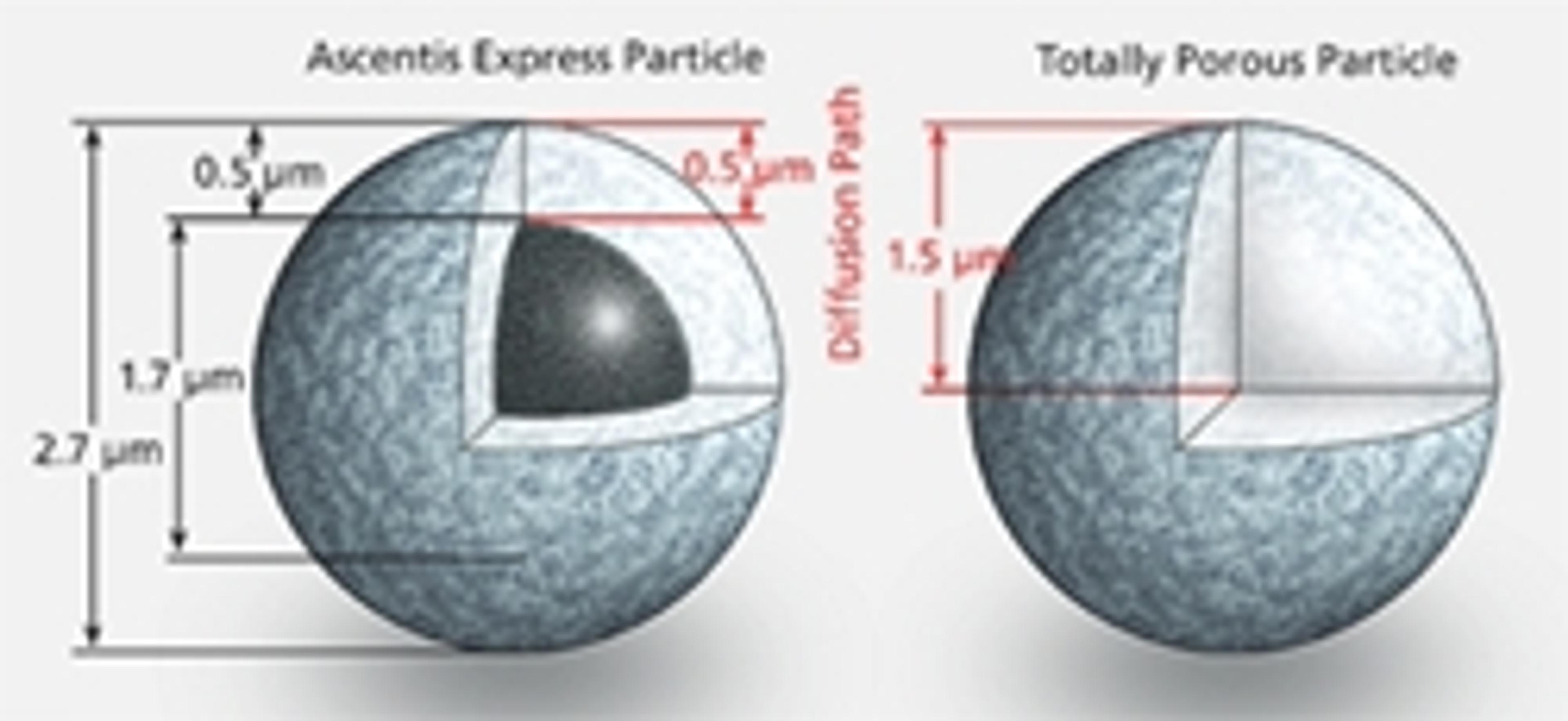
Ascentis® Express F5 HPLC Columns
Sigma-Aldrich SupelcoThe pentafluorophenylpropyl (PFP) stationary phase of Ascentis® Express F5 provides a stable, reversed-phase packing with electron-deficient phenyl rings due to the presence of electronegative fluorines. In addition to forming p-p and mildly steric interactions, F5 phases also retain compounds by polar interactions. As a result of having both polar and non-polar character, F5 phases can show dual-mode retention behavior, sometimes producing a “U-shaped” retention as a function of acetonitrile content of the mobile phase, with retention increasing at both low and high concentrations of ACN (reversed-phase and HILIC retention modes). Ascentis Express F5 can be used for basic, acidic, or neutral compounds with alternate selectivity from C18. Column Details: Chemistry: Reversed Phase, Hydrophilic Interaction Particle Size: 2.7, 5.0 μm Pore Size: 90 Å Length: 20, 30, 50, 75, 100, 150, 250 mm ID: 2.1, 3.0, 4.6 mm
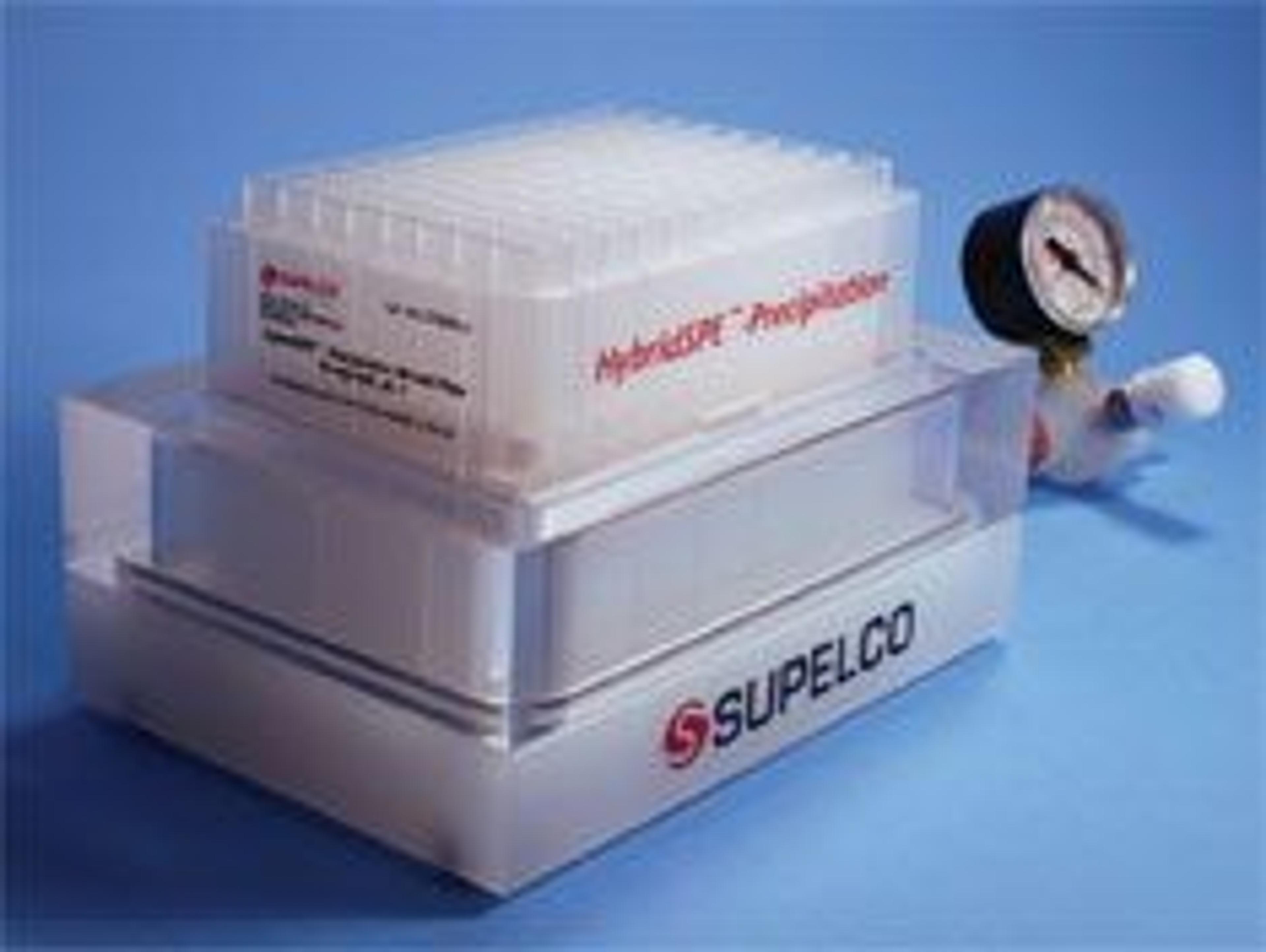
HybridSPE®-Precipitation, 96-well Plate, pk of 1
Sigma-Aldrich SupelcoPatent pending HybridSPE – Precipitation (HybridSPE-PPT) technology is a simple and generic sample prep platform designed for the gross level removal of endogenous protein and phospholipid interferences from biological plasma and serum prior to LC-MS or LC-MS/MS analysis. Biological plasma or serum is first subjected to protein precipitation via the addition and mixing of acidified acetonitrile. Precipitated proteins are then removed by centrifugation and the resulting supernatant is loaded on the HybridSPE-PPT 96-well plate or cartridge which acts as a chemical filter that specifically targets the removal of endogenous sample phospholipids. The phospholipid retention mechanism is based on a highly selective Lewis acid-base interaction between the proprietary zirconia ions functionally bonded to the HybridSPE-PPT stationary phase and the phosphate moiety consistent with all phospholipids. The resulting eluent is ready for immediate LC-MS or LC-MS-MS analysis. An alternative “In-well Precipitation” method is available for the HybridSPE-PPT 96-well version in which biological plasma/serum is first added to the 96-well plate followed by acidified acetonitrile (precipitation agent). After a brief mixing/vortexing step, vacuum is applied to the 96-well plate. Because the 96-well version contains a series of low porosity hydrophobic filters/frits, the packed-bed filter/frit assembly acts as a depth filter facilitating the concurrent removal of both phospholipids and precipitated proteins during the extraction process.